Mr Kidman's Classroom



Revise the key ideas
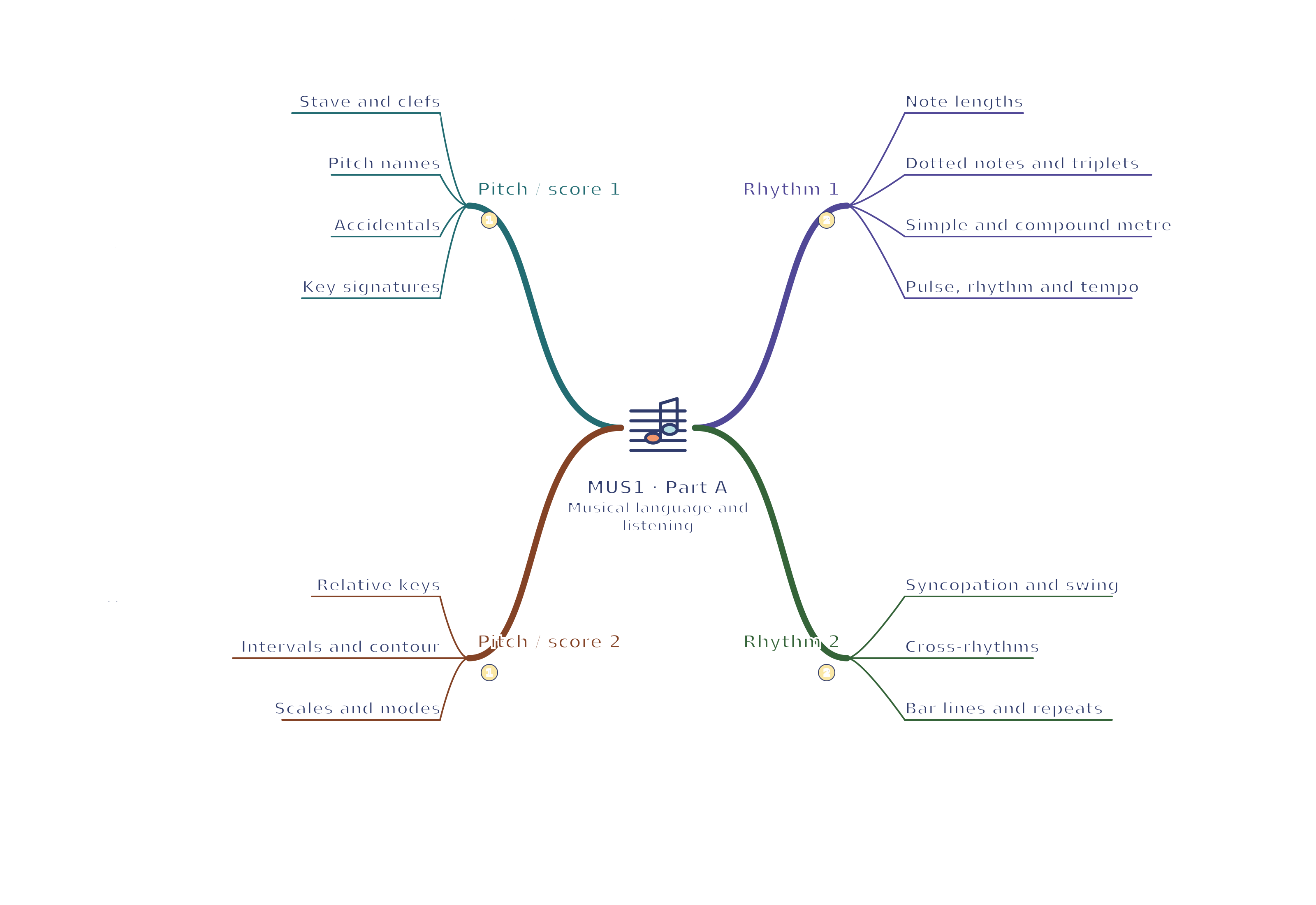
Pitch and notation
- Stave and clefs — A stave has five lines and four spaces; adjacent positions move one letter name. Treble clef locates G above middle C on the second line from the bottom; bass clef locates F below middle C on the fourth. Ledger lines extend the stave. A score aligns parts so simultaneous events can be read vertically.
- Pitch names — Treble lines upwards are E G B D F and spaces F A C E. Bass lines upwards are G B D F A and spaces A C E G. Middle C lies on a ledger line below treble or above bass. Identify the clef before naming a note; octave placement matters when playing.
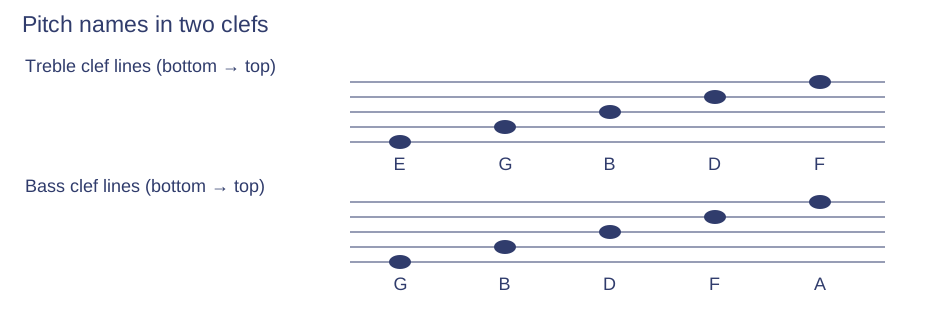
Original teaching diagram. Apply it with the full explanation. - Accidentals — A sharp raises a pitch by one semitone, a flat lowers it by one and a natural cancels an alteration. In ordinary notation an accidental applies to that pitch in its octave for the remainder of the bar, unless cancelled. A tied note keeps its pitch across a bar line. C sharp and D flat can be enharmonic on a piano but have different spelling roles.
- Key signatures — Sharps occur in the order F C G D A E B; flats B E A D G C F. Major keys with up to four sharps are G D A E, and up to four flats F B flat E flat A flat; C has neither. Count and identify the altered letters rather than assuming every accidental signals a new key.
- Relative keys — A minor shares C major's signature; E, B, F sharp and C sharp minor share G, D, A and E major's. D, G, C and F minor share F, B flat, E flat and A flat major's. The tonal centre and melodic/harmonic evidence distinguish relatives. In harmonic minor the seventh scale degree is raised as an accidental when needed.
- Intervals and contour — C to E is a third because C D E spans three letters. A semitone is the smallest step between adjacent equal-tempered piano keys; a tone is two semitones. An octave spans eight letter positions and repeats a pitch class. Stepwise/scalic motion moves along a scale; a leap skips scale steps. Range is the distance between highest and lowest notes, not loudness.
- Scales and modes — A major scale follows tone tone semitone tone tone tone semitone; natural minor follows tone semitone tone tone semitone tone tone. Chromatic motion uses semitones; a mode is a scale organisation with its own tonal centre and interval pattern. A pentatonic collection contains five different pitches per octave. A microtone is smaller than a semitone; do not force every tradition into piano tuning.
Original synthesised listening illustration: Hear a C major scale followed by C natural minor; compare the third, sixth and seventh.
Compare these isolated features with varied real repertoire; this is not an authentic traditional performance or exam extract.
Rhythm, metre and score signs
- Note lengths — A semibreve equals four crotchets, a minim two, a crotchet two quavers, and a quaver two semiquavers. Matching rests represent equivalent silence. Absolute duration depends on tempo and which note value carries the beat. Beams connect short notes to show rhythmic groups; stems do not alter pitch.
- Dotted notes and triplets — A dot adds half the original value: a dotted crotchet lasts three quavers. Three quavers marked as a triplet occupy the duration normally taken by two quavers. A tie joins two same-pitch notes into one sustained duration; a slur groups different notes for connected phrasing. These signs have different playing effects.
- Simple and compound metre — In 2/4, 3/4 and 4/4 the main beats are crotchets divided into two quavers. In 6/8 two dotted-crotchet beats each divide into three quavers. The top figure counts units named by the bottom figure, but those units are not always the main beats. A 3/4 bar and a 6/8 bar can both contain six quavers yet have different grouping.
Original synthesised listening illustration: The first group accents pairs of quavers; the second accents groups of three. Count the grouping.
Compare these isolated features with varied real repertoire; this is not an authentic traditional performance or exam extract.
- Pulse, rhythm and tempo — Pulse is the recurring beat; rhythm is the pattern of durations and accents against it; metre organises beats into groups. Tempo is the speed, often expressed in beats per minute with a specified note value. An anacrusis is an incomplete opening upbeat before a full bar. A rest can shape phrasing without stopping the underlying pulse.
- Syncopation and swing — Syncopation emphasises an unexpected weak beat or off-beat, sometimes through a tie across a stronger beat. Swung quavers use unequal long-short timing rather than equal subdivision; their ratio varies with style and tempo. Dotted rhythms specify durations in notation and are not automatically the same as swing.
- Cross-rhythms — A three-against-two pattern places three equally spaced attacks in one part against two in another over the same span. Polyrhythm combines contrasting rhythmic patterns; cross-rhythm emphasises conflicting grouping within that combination. Irregular metres such as 7/8 may group as 2+2+3. Explain the actual grouping heard instead of calling every off-beat a cross-rhythm.
- Bar lines and repeats — A bar line divides metres; a double bar can mark a section boundary. Repeat dots send the performer back to the matching sign or opening. First and second endings select different continuations on successive passes. Follow the score's order before interpreting its musical structure; written repetition may still include changes in performance.
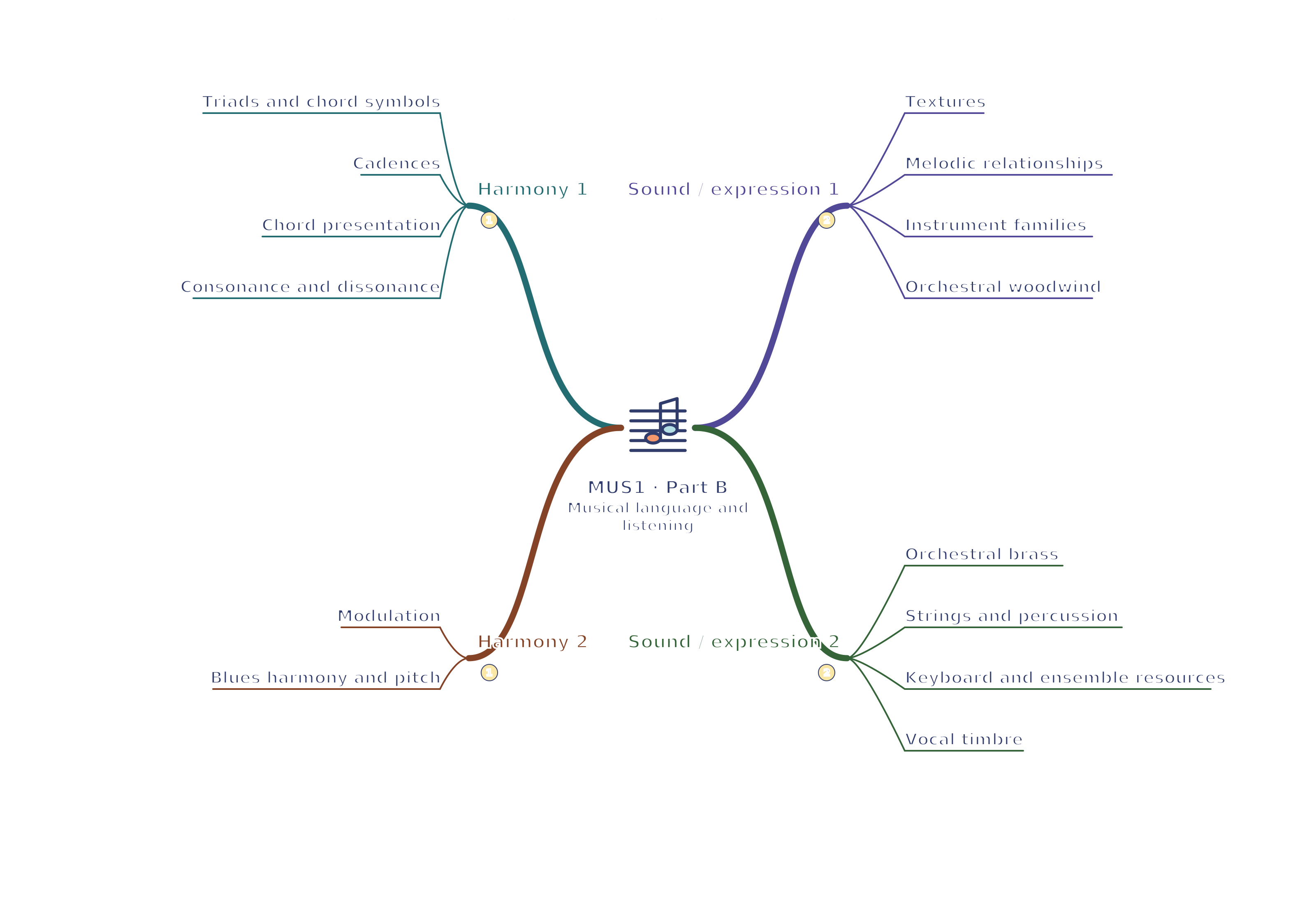
Harmony and tonality
- Triads and chord symbols — A triad stacks root, third and fifth. C major is C E G; C minor C E flat G. In a major key I, IV and V identify tonic, subdominant and dominant major triads. Lower-case numerals can identify minor chords. G7 denotes G B D F, a dominant seventh chord; a numeral's meaning depends on the key.
- Cadences — A perfect cadence moves V to I, an imperfect cadence ends on V, a plagal cadence moves IV to I and an interrupted cadence moves V to another chord, commonly vi in a major key. Listening requires locating the phrase ending and bass/harmonic movement. Loudness alone does not establish a cadence type.
Original synthesised listening illustration: Three separated examples: V–I, IV–I and V–vi in C major. Hear the different arrivals.
Compare these isolated features with varied real repertoire; this is not an authentic traditional performance or exam extract.
- Chord presentation — Block chords sound notes together; a broken chord or arpeggio spreads them in time. A drone sustains or repeats a pitch while other lines change. Comping is rhythmic chordal accompaniment, often in jazz or popular music. Harmonic rhythm means the rate of chord changes, which can differ from the speed of melodic notes.
- Consonance and dissonance — Dissonant combinations create tension in a tonal setting; their treatment may involve preparation or resolution. Diatonic notes belong to the prevailing scale; chromatic notes extend beyond it. Atonal music does not establish a conventional key centre. Not every dissonance means the music is atonal, and minor tonality is not automatically sad.
- Modulation — Modulation changes key, for example from tonic to dominant or between relative major and minor. Look for sustained harmonic emphasis and cadences in the destination, not merely one altered note. A composer may temporarily tonicise a chord without establishing a long new section. Describe evidence proportionately.
- Blues harmony and pitch — A common twelve-bar blues uses I for bars 1–4, IV for 5–6, I for 7–8, V for 9, IV for 10 and I for 11–12, sometimes with a V turnaround at the end. Variants exist. Blue notes involve expressive flattening or inflection, especially of thirds, fifths and sevenths; performers need not fit rigid equal-tempered pitches.
Texture, timbre and expression
- Textures — Monophony is one melodic line, including several performers in unison. Homophony combines a principal melody with subordinate accompaniment or chordal movement. Polyphony/counterpoint combines independent melodic lines. Thin/thick describes density; solo describes a performer or role and does not establish the whole texture. A countermelody can coexist with a main tune.
- Melodic relationships — Unison parts share pitches, possibly in different octaves. Parallel motion moves in the same direction at a maintained interval; contrary motion moves in opposite directions. A descant is a higher added melody; an obbligato is an essential accompanying part, often prominent. A round or canon overlaps the same melody with delayed entries, creating imitation.
- Instrument families — Strings usually sound through bowed or plucked vibrating strings; woodwind through an air column excited by a reed or blowing edge; brass through lip vibration; percussion through struck, shaken or scraped material. Flute belongs to woodwind despite often being metal. Piano strings are struck, harpsichord strings plucked and organ sound is produced through pipes or electronic imitation.
- Orchestral woodwind — Flute has a blowing edge rather than a reed and can have an airy or clear tone; piccolo sounds higher. Clarinet uses a single reed and has contrasting register colours. Oboe and bassoon use double reeds, with bassoon typically lower. These are practical listening clues, not guarantees: dynamics, articulation, register and recording can change the perceived colour.
- Orchestral brass — Trumpet often provides a bright higher-register sound; horn can have a rounded middle-register colour; trombone uses a slide for pitch adjustment and tuba a low range. Valves or slides alter effective tubing length. Brass can be muted or played softly, so do not identify the family solely by loudness or assume it always carries fanfares.
- Strings and percussion — Violin, viola, cello and double bass are the principal bowed-string family, ordered broadly from higher to lower range; each can also play pizzicato. Harp is plucked. Timpani have definite adjustable pitches; cymbals, snare and bass drum commonly have less definite pitch. Percussion can contribute rhythm, accents, sustained colour or a pitched line according to the resource.
- Keyboard and ensemble resources — Piano combines struck strings with a wide range and touch-sensitive dynamics; harpsichord plucks strings and organ can sustain tones through its sound-generating system. A duet has two performers, a trio three; string orchestra centres on string forces, while a jazz group can combine rhythm section, winds and other resources. Group size does not by itself establish texture or genre.
- Vocal timbre — Soprano, alto, tenor and bass are conventional voice-range categories. A cappella means without instrumental accompaniment. Syllabic setting uses mainly one note per syllable; melismatic setting several. Lead vocals may interact with backing vocals or a choir. Scat uses improvised vocal sounds rather than ordinary text. Listen for technique as well as voice range.
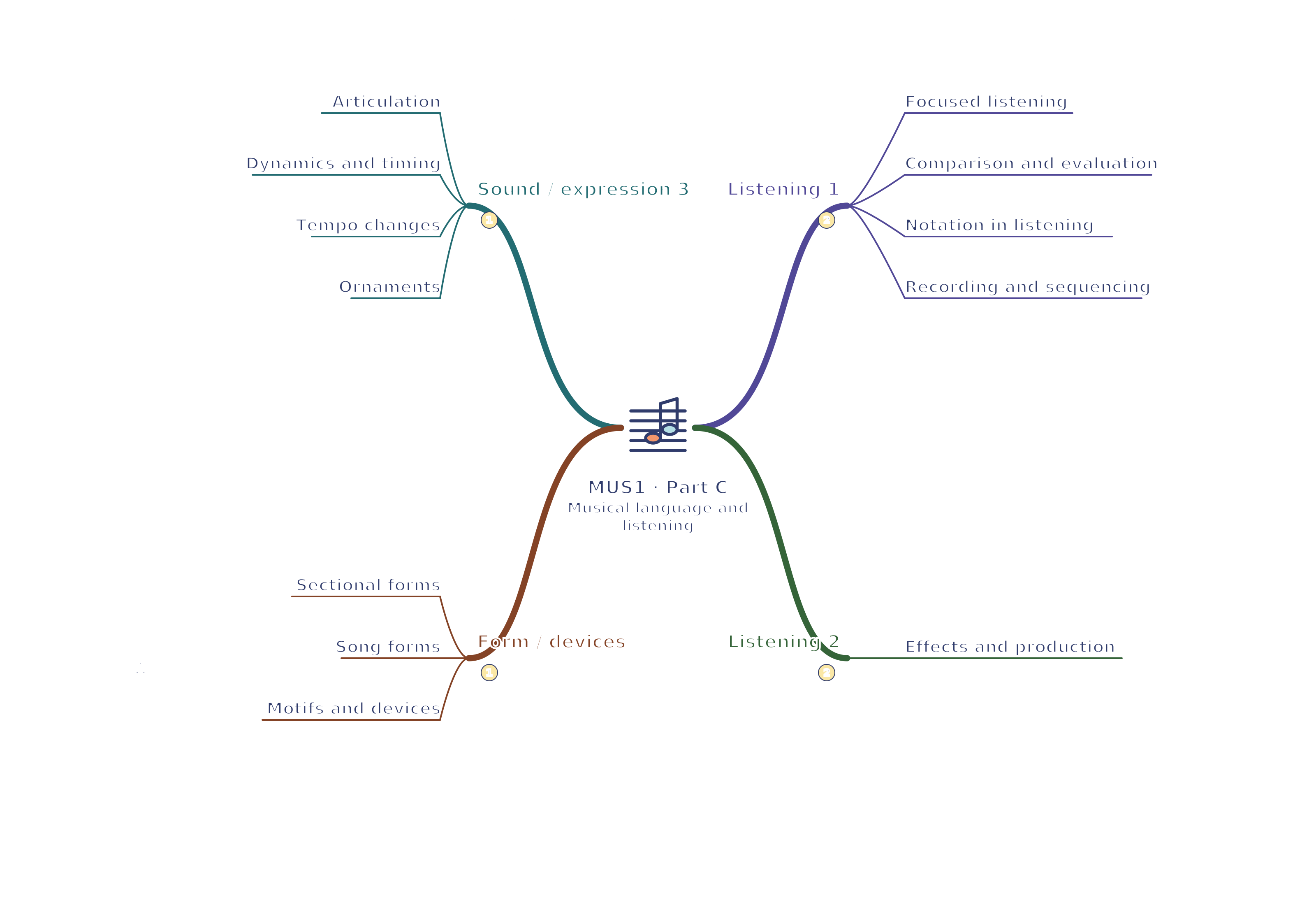
- Articulation — Legato/slurred connects notes; staccato shortens and separates them. Bowed strings use arco, plucked strings pizzicato. Tremolo rapidly repeats a note or alternates pitches; tonguing shapes wind attacks. An accent emphasises an event; sforzando is a sudden strong emphasis. These are distinct from playing the entire section loudly.
- Dynamics and timing — pp/pianissimo is very soft, p/piano soft, mp/mezzo piano moderately soft, mf/mezzo forte moderately loud, f/forte loud and ff/fortissimo very loud. Crescendo increases loudness; diminuendo decreases it. Largo is broadly slow, andante walking-paced, moderato moderate, allegro fast, vivace lively and presto very fast; exact speeds vary with context.
- Tempo changes — Accelerando speeds up; rallentando and ritenuto indicate slowing or holding back, with context determining the effect. Allargando broadens, usually with slower, fuller delivery. Rubato flexes timing expressively while preserving musical shape. A pause/fermata holds a note or rest beyond its ordinary value. A marked tempo and expressive flexibility can coexist.
- Ornaments — A trill alternates a written pitch and its neighbour; a mordent briefly moves to a neighbour and back. A turn decorates the principal note using surrounding notes. A grace note is small notation attached to a main note; an acciaccatura is a short crushed grace note, commonly shown with a slash. Exact conventions depend on period and context.
Structure and developing material
- Sectional forms — Binary form has two main sections, AB; ternary returns to its opening, ABA. Rondo repeatedly returns a refrain between contrasting episodes, for example ABACA. Theme and variations changes aspects of a recurring idea while retaining recognisable identity. Actual pieces may modify these outlines; compare melody, key and texture to locate sections.
- Song forms — Strophic songs use the same music for successive verses; through-composed songs develop without a recurring whole verse setting. A verse often carries changing words while a chorus returns familiar text/music. An introduction opens, a bridge connects or contrasts, an instrumental break removes the lead vocal, a coda closes and a tag repeats a short closing idea. A middle eight is a contrasting passage, not necessarily eight bars in every song.
- Motifs and devices — Repetition restates an idea; sequence repeats a pattern at a different pitch; imitation transfers it between parts. An ostinato repeats a short pattern, and a riff can be a distinctive recurrent instrumental figure. Inversion reverses interval directions. Call and response alternates a leader's phrase with an answering group. Identify the changed pitches, rhythm or instrumentation instead of listing devices without evidence.
Listening evidence and technology
- Focused listening — First establish pulse and broad sound sources, then follow melody, bass and accompaniment on repeated hearings. Locate changes by phrase, bar or time. Link feature and effect: a crescendo with rising register can build intensity. An instrument guess is stronger with evidence about range, attack and sustained sound; be prepared to qualify uncertain identifications.
- Comparison and evaluation — Compare like with like: one extract's homophonic texture against another's overlapping independent entries. Explain how a feature serves purpose or mood, recognising alternatives. Avoid unsupported generalisations such as all minor music being sad. Technical vocabulary should identify something audible or visible, not decorate a response with unrelated terms.
- Notation in listening — Locate the starting note and beat, follow the pattern and use repeated hearings to test uncertain details. For dictation compare direction, interval and duration rather than guessing a complete phrase at once. Written and sounding pitch can differ on transposing instruments; follow the question's stated convention. Original examples here illustrate techniques, not an authentic OCR test.
- Recording and sequencing — A sequencer arranges events over time; MIDI transmits performance/control instructions rather than recording an audio waveform. Multitracking records separate parts, overdubbing adds further takes and a mixing desk balances levels. Quantising moves events towards a timing grid; it may remove expressive microtiming. Sampling reuses recorded sound; a synthesiser creates sound electronically.
- Effects and production — Amplification increases a signal; distortion changes its shape and harmonic content. Reverb suggests reverberant space; delay/echo repeats the signal. Panning positions sound across stereo channels. Attack is the start of a sound's envelope. A vocoder shapes a carrier sound using another signal, often speech. A remix rearranges an existing recording; collage and overlay combine materials. Listen for the actual result, not assumed equipment.