Mr Kidman's Classroom



Revise the key ideas
Purpose, narrative and resources
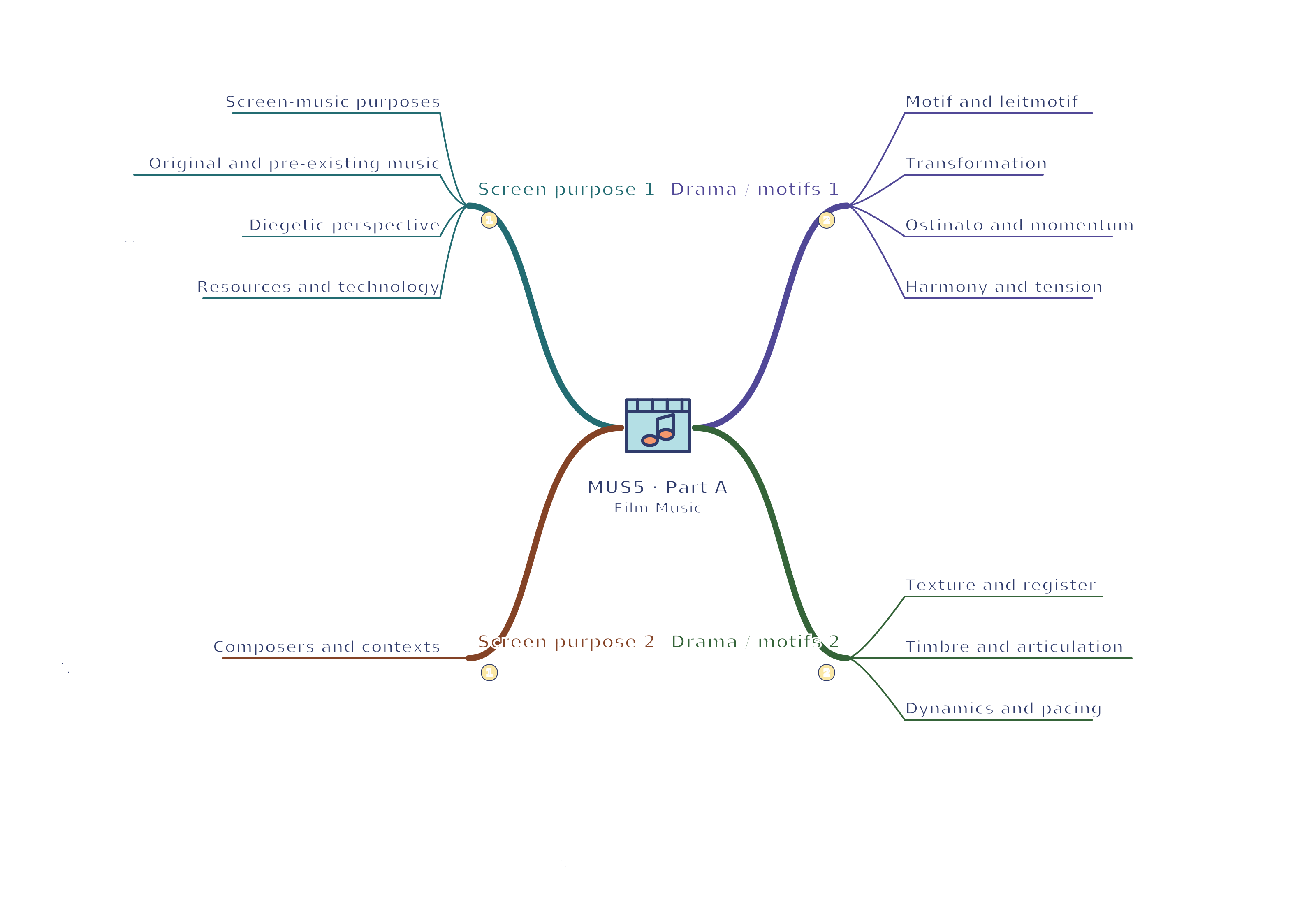
- Screen-music purposes — Music can establish location, time, mood or a character's perspective, and connect scenes. A cue can complement the action or create deliberate contrast, such as calm music under disturbing images. Explain a specific sound and its narrative effect; avoid a fixed equation between an instrument and an emotion.
- Original and pre-existing music — Films can use specially written music, earlier Western classical music or existing songs, sometimes combining them. The context of the image can change the perceived meaning of a familiar work. Identify the music's role and arrangement rather than assuming a pre-existing piece was originally composed for that film.
- Diegetic perspective — Diegetic music belongs to the story world, such as an on-screen band or radio. Non-diegetic underscore is presented to the audience without being heard by the characters. A film can shift or blur the boundary. Sound effects and dialogue also shape the overall soundtrack; not every sound is part of the musical score.
- Resources and technology — A composer may use orchestral instruments, small ensembles, voices, synthesisers or transformed samples. Recording and mixing balance the layers with dialogue. Artificial sounds can suggest an unfamiliar setting; acoustic resources can also be processed. Hearing a sustained tone does not by itself prove a live orchestra or a particular synthesiser was used.
- Composers and contexts — John Williams's orchestral scores, Bernard Herrmann's distinctive instrumental writing and Hans Zimmer's combinations of acoustic/electronic resources provide listening choices. Earlier classical music also appears in films, for example Strauss in 2001: A Space Odyssey. These are repertoire examples, not prescribed works; analyse a specific cue and its film context.
Motifs, harmony and dramatic development
- Motif and leitmotif — A motif is a short recognisable musical idea. A leitmotif acquires an association with a character, place, object or idea through use in the narrative. It can change orchestration, rhythm, mode or register while remaining recognisable. A recurring tune is not automatically a character leitmotif unless that association is established.
- Transformation — A bright theme may return slower, fragmented or reharmonised when a character's situation changes. Explain what is retained and what changes. Sequencing can shift pitch; inversion reverses interval direction; rhythmic augmentation lengthens values. Narrative interpretation should be linked to the actual cue rather than an invented plot detail.
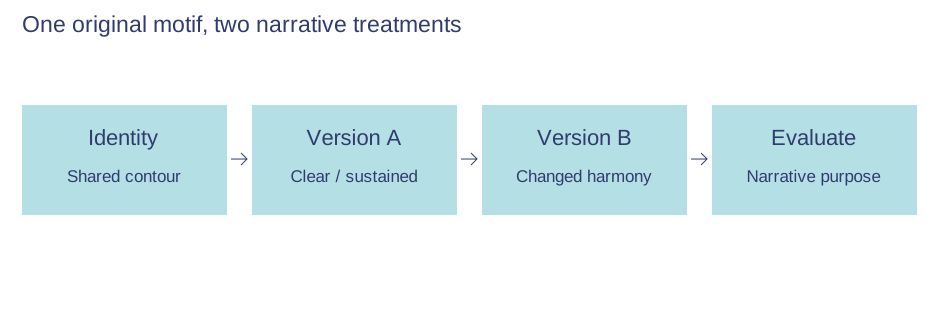
Original teaching diagram. Apply it with the full explanation. - Ostinato and momentum — An ostinato can repeat a rhythmic, melodic or harmonic figure beneath changing material. Faster subdivisions, added layers or rising register can increase intensity without increasing the main tempo. Silence or stopping the pattern may mark a turning point. Repetition can also represent stasis, depending on harmony and context.
- Harmony and tension — Dissonance, chromatic movement, unresolved harmony, pedal notes and delayed cadences can sustain tension. Major/minor changes can alter colour, but context matters. A drone can create continuity while the melody changes above it. Explain a harmonic event and its resolution, or lack of one, instead of calling every tense cue atonal.
- Texture and register — A sparse solo line can expose vulnerability or draw attention; thick orchestral layers can create scale. High register can add brilliance or strain, while a low sustained layer can add weight. These are possible effects, not universal meanings. Listen for the relationships between parts and the visual context.
- Timbre and articulation — Pizzicato strings, tremolo, muted brass or a sharp percussion attack can shape a scene's energy. Legato lines may connect a sustained emotion; staccato gestures can punctuate movement. Instrument combinations matter. Distinguish the sound's envelope and articulation from its overall dynamic level.
- Dynamics and pacing — A crescendo, accelerando or increasingly dense texture can lead towards a dramatic arrival. Sudden changes or silence may have a stronger effect than a continuous increase. Rubato can suit lyrical passages but tightly synchronised action may require exact timing. Identify the specific parameter that changes.
Synchronisation and video games
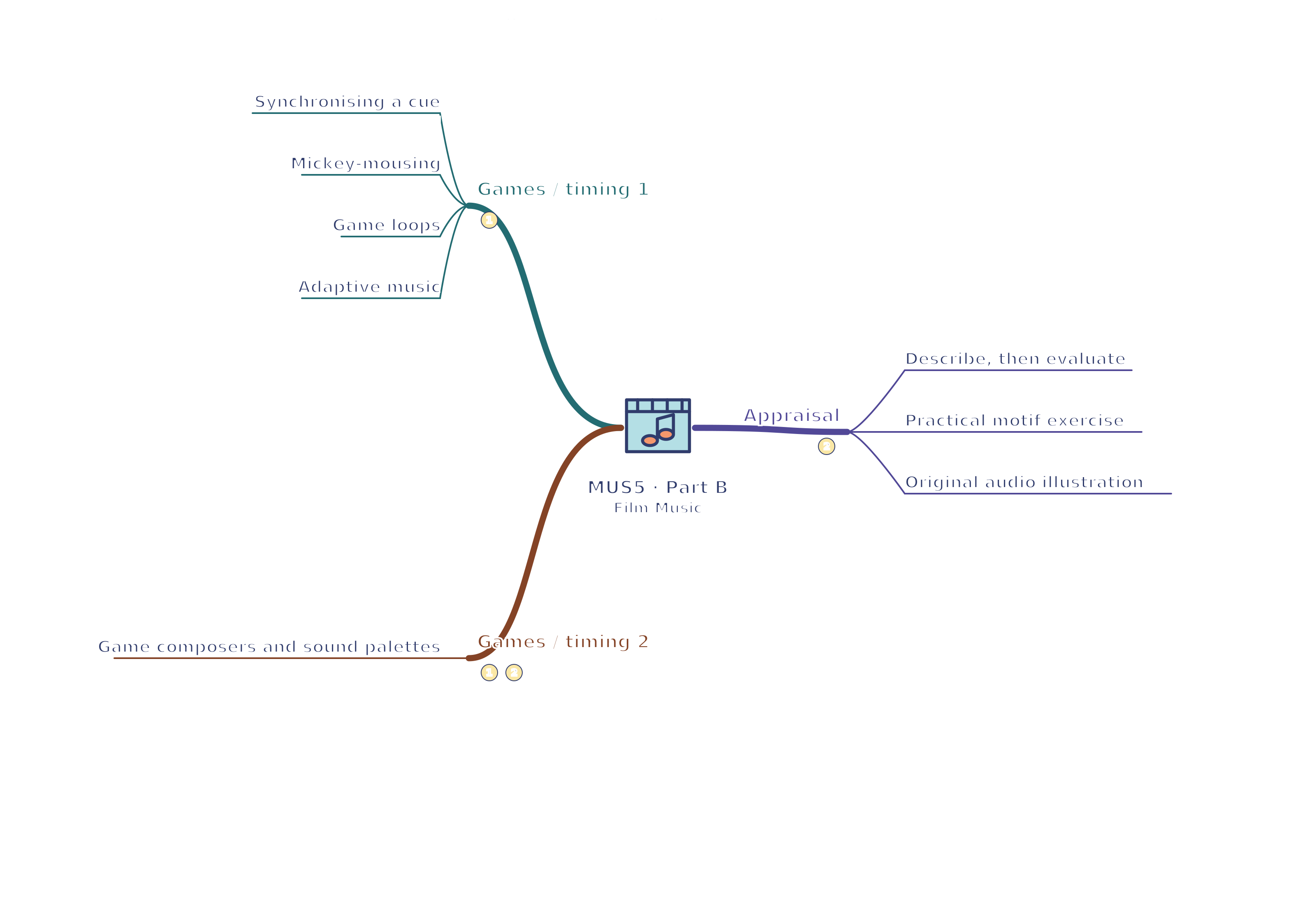
- Synchronising a cue — A hit point is a moment that the music needs to align with, such as a cut, reveal or impact. Composers can adjust tempo, bar lengths, rests or structure while preserving musical coherence. Not every movement needs an accent. Plan cue points before choosing all the notes.
- Mickey-mousing — Music may closely mirror footsteps, falls or gestures through rhythms, contours and accents. This technique can be comic or stylised; it is not required for every cue. Broader emotional underscore can intentionally avoid literal correspondence. Analyse how closely the musical and visual events align.
- Game loops — A loop needs a convincing return from its end to its beginning. The player may stay in an area longer than expected, so a fixed film-like progression may not fit. Test repeated playback for abrupt cuts or unintended silence. Changing texture within a loop can add variety without destroying its repeatability.
- Adaptive music — Vertical layering adds/removes concurrent parts according to game state; horizontal resequencing changes the order of musical sections. Transitions can be quantised to beats or bars for continuity. Explain how a change in gameplay could lead to a musical change. Adaptive music is not merely turning the same track louder.
- Game composers and sound palettes — Koji Kondo and Nobuo Uematsu provide named game-music listening examples. Earlier systems imposed limits on voices and timbres; contemporary scores may use orchestras, samples and interactive engines. Resources vary by platform and production. Chiptune is a particular electronic sound practice, not every soundtrack written for a game.
Appraisal and composition exercises
- Describe, then evaluate — Locate a passage and describe its rhythm, melody, harmony, texture and sound sources. Then explain how selected features suit the scene. A supported comparison might contrast a sparse repeated drone with a rich resolved orchestral cadence. Separate what is heard from an inference about intention.
- Practical motif exercise — Write a short original motif, then retain its contour while changing rhythm, register, harmony or instrumentation. Play both versions and explain which narrative situations they could support. The exercises on this site are teaching examples; they are not responses to an OCR live brief or commercial soundtrack copies.
- Original audio illustration — The local synthesised motif exercise presents a short idea and a contrasting version. Listen for shared contour and changed rhythm, pitch collection and accompaniment. Give a time location and musical description. The sound demonstrates transformation; it is not an authentic film score or an assessed student's work.
Original synthesised listening illustration: A short C-major motif is followed by a slower minor-coloured version with retained contour.
Compare these isolated features with varied real repertoire; this is not an authentic traditional performance or exam extract.