Listen, read notation and make music. Quick checks support concepts; demonstrate broader listening and practical skills through your PLC tasks.
Revise the key ideas
Concerto principles and Baroque context
Concerto roles — A concerto sets featured instrumental material against a larger accompanying group, often through contrast and dialogue. A solo concerto features one soloist; a concerto grosso contrasts a small concertino with the larger ripieno. A solo passage may retain accompaniment. Identify roles by who leads the material, not merely which part is loudest.
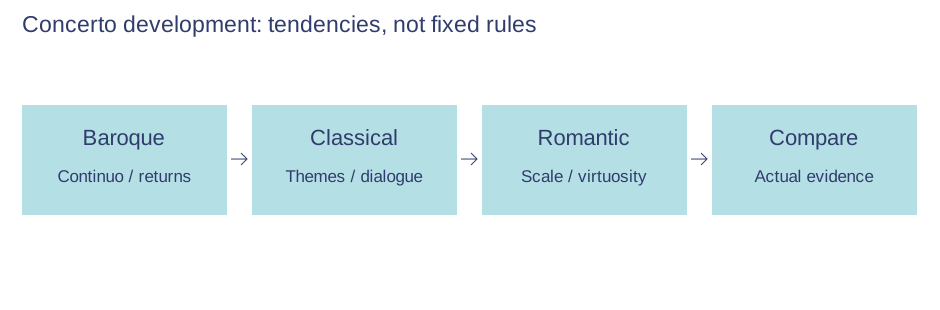
Chronology and context — The course spans Baroque, Classical and Romantic concertos. Approximate period labels help organise listening but do not imply every work on one date has identical features. Compare instruments, orchestral size, harmonic language, form and solo demands, then connect those changes to performance settings and audiences.Original teaching diagram. Apply it with the full explanation.
Baroque resources — Many Baroque concertos use a string orchestra with basso continuo: a bass line supported by a chord-playing instrument such as harpsichord or organ, often with cello. The concertino can include different instrumental combinations. The harpsichord's plucked strings make a different attack from a piano's struck strings. Avoid hearing every keyboard as a modern piano.
Ritornello — A ritornello is returning material, commonly played by the ensemble, interspersed with solo episodes. Returns may be shortened or occur in related keys. Listen for a recognisable figure, instrumentation and cadence rather than expecting every return to be an exact full copy. This is a common Baroque procedure, not the only concerto structure.
Baroque melodic devices — A sequence repeats a pattern at different pitches; imitation transfers an idea between parts. Motor rhythms can maintain forward motion and ornaments decorate the line. Overlapping independent lines produce contrapuntal texture. Explain the device actually audible; a repeated same-pitch figure is repetition rather than a pitch sequence.
Contrast and phrasing — Baroque contrasts may come from changes of ensemble and register as well as dynamics. Repeated rhythmic patterns and long melodic lines can sustain momentum towards cadences. Terraced dynamic changes are a useful tendency in some works, not a rule excluding gradual expression. Keyboard resources and performance practice affect the result.
Vivaldi and Bach — Vivaldi's violin concertos illustrate energetic ritornello/episode contrasts; Bach's Brandenburg concertos explore varied solo groups and contrapuntal interaction. Listen to an actual chosen movement and identify its forces and returns rather than assuming all examples use the same combination. Titles and composers provide context, not proof of a feature without listening.
Classical concerto
Classical orchestral change — Classical orchestras generally centre on strings with pairs of woodwinds, horns and sometimes trumpets/timpani, according to the work. Woodwinds can have melodic dialogue rather than only reinforce harmony. Forces vary. More performers do not automatically produce polyphony; the relationship between lines determines texture.
Piano development — The piano increasingly replaces the harpsichord as a featured concerto instrument. Keyboard touch can affect loudness, supporting shaped phrases and solo-orchestra contrasts. Earlier fortepianos differ from modern concert grands in volume and timbre. Changes in instruments help explain compositional possibilities but do not erase individual composers' choices.
Themes and phrasing — Classical concerto themes often use clearer phrase divisions, periodic question/answer relationships and varied accompaniment. A melody-and-accompaniment texture can alternate with more contrapuntal writing. Cadences articulate divisions. Avoid claiming that every phrase has exactly four bars or every Classical work is entirely homophonic.
First-movement structure — A common first-movement design presents orchestral material and a solo exposition, develops ideas and returns them in a recapitulation. Tonal contrast and resolution help define the form. The orchestra and soloist need not present everything identically. Not all movements are sonata form: later movements can use rondo, variation or other designs.
Cadenza — A cadenza is an extended solo passage, often near a movement's close, typically with greater rhythmic freedom and reduced or absent orchestral accompaniment. It can transform the movement's themes and show technique. Cadenzas could be improvised in some traditions or written out. A cadenza is not the same thing as a harmonic cadence.
Dialogue and accompaniment — Listen for theme transfer, short answers, accompaniment figures and joint arrivals. The soloist is not necessarily active throughout, and the orchestra is not merely background. Changes between tutti and solo textures help create dramatic shape. Balance allows thematic roles to be heard clearly.
Mozart and Beethoven — Mozart's concertos often show detailed dialogue with winds and clear thematic contrast. Beethoven's concertos can expand dramatic scale and the soloist's relationship with the orchestra. Both descriptions need testing against a selected passage. Use named examples such as Mozart's Piano Concerto No.21 and Beethoven's Piano Concerto No.4 as listening choices, not prescribed set works.
Romantic expansion
Virtuosity and solo identity — Romantic soloists often use wider range, rapid passagework, double stopping or powerful chordal writing where the instrument allows. Virtuosity concerns demanding control, not merely playing loudly or quickly. A lyrical quiet passage may be equally expressive. Explain how a solo passage develops musical character or contrast.
Orchestral growth — Many Romantic orchestras add stronger brass, larger strings and more varied percussion/woodwind, although resources depend on the score. Instrument improvements extend projection and chromatic capability. A soloist must remain audible against these forces; orchestration can thin accompaniment or contrast registers. Size alone does not identify the exact instrument heard.
Harmony and melody — Romantic writing may use chromatic harmony, more remote modulations, long expressive melodies and delayed cadences. Rubato and dynamic shading can shape tension and release. Diatonic passages and clear themes still occur. Describe where a harmonic or phrasing change happens instead of labelling every chromatic note a modulation.
Structure and development — Concertos may extend movement lengths and link or recall material across movements. Transformation preserves a recognisable idea while changing mood, rhythm, key or instrumentation. Standard movement patterns remain useful reference points but composers modify them. Follow actual returns and contrasts rather than fitting every work to a fixed template.
Romantic examples — Mendelssohn's Violin Concerto in E minor, Tchaikovsky's violin/piano concertos and Brahms's concertos offer contrasting examples of solo writing and orchestral treatment. Select specific movements and locate melodic, harmonic and textural evidence. A composer's nationality alone does not establish a concerto's musical features.
Commissioners and audiences — Court, church and aristocratic patronage shape much earlier production; public concerts, professional solo careers and larger venues become increasingly important over time. This is a historical tendency, not a complete replacement on a single date. Explain how available players, instruments and audience expectations can influence scale and display.
Concerto listening and practical application
Compare evidence across periods — Continuo and ritornello may support a Baroque interpretation; balanced thematic dialogue and piano writing a Classical one; expanded orchestration and chromatic virtuosity a Romantic one. Features overlap and later composers revive earlier styles. Use several audible observations and a justified conclusion, acknowledging ambiguity where appropriate.
Analyse a passage — Follow the bass and cadence, then identify the featured line, accompaniment and any returning motif. Explain how repetition, sequence, imitation or ornament develops the phrase. Relate dynamics and articulation to the dialogue. Practical study can involve playing a motif with contrasting accompaniment, not reproducing an entire concerto from memory.
Related large-scale genres — A symphony is generally a multi-movement orchestral work without a continuously featured concerto soloist. Sonata can name a whole instrumental work, while sonata form names a movement structure. These meanings are related but distinct. Identify the forces and formal function rather than relying only on a title.
Test yourself
30 questions · Random sets of 10. These quick checks support revision; practise longer explanations and justified judgements too.
Mind map
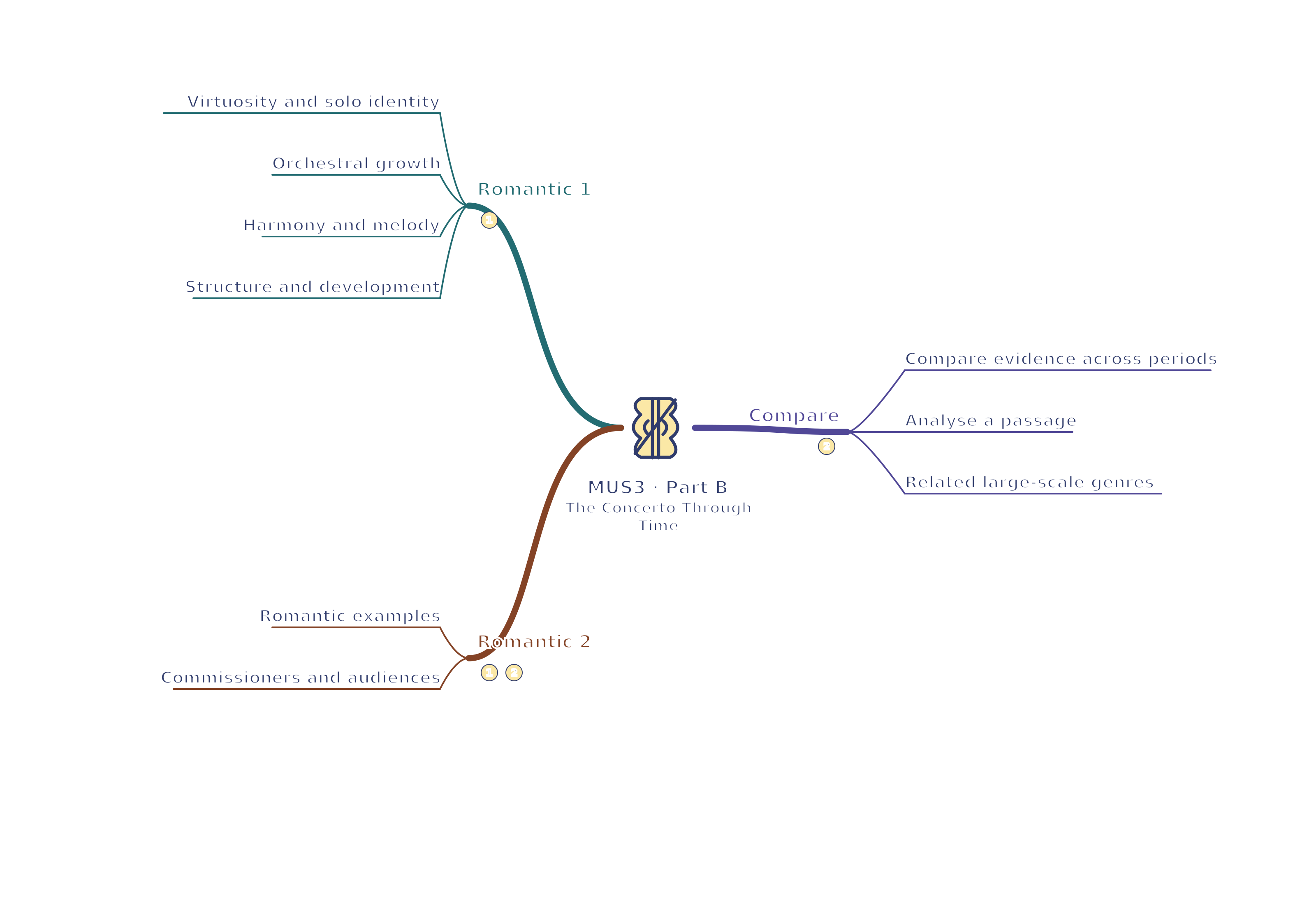
Use the branches to recall the ideas and explain their connections. Check the revision notes for the full detail.
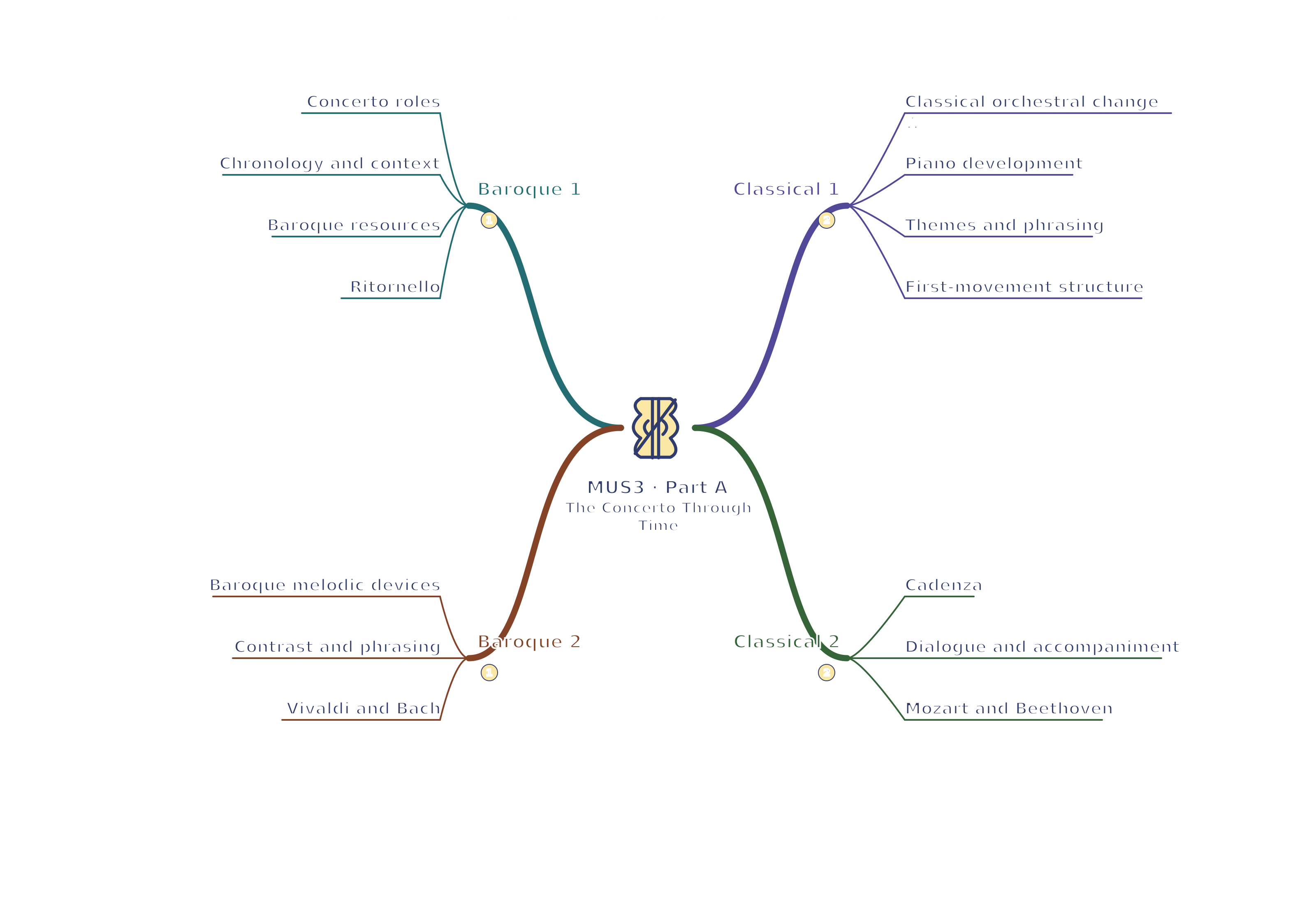
View MUS3 · Baroque 1 / Baroque 2 / Classical 1 / Classical 2 mind mapOpen the full-size map to zoom. Download the PDF to print on A4 or enlarge to A3.
 Mr Kidman's Classroom