Listen, read notation and make music. Quick checks support concepts; demonstrate broader listening and practical skills through your PLC tasks.
Revise the key ideas
Knowing your resource
Personal instrument study — Choose your own resource with your teacher: acoustic/electronic instrument, voice, rapping, beatboxing, DJ-ing or sequencing are possible routes. Record its comfortable range, characteristic timbre and techniques. Explain where the sound changes across registers and what cannot be executed reliably. This site provides a framework, not an invented range for your chosen instrument.
Technique and setup — For an instrument consider posture, breathing, fingering, bowing or striking appropriate to it; singers plan breath support and clear diction. Electronic performers check input levels, routing and controls. Use comfortable volume and take breaks. A technique is useful when it produces the intended sound consistently without strain, not simply because it looks difficult.
Range and timbre — A line within the nominal range may still be awkward because of register transitions, repeated leaps or breath length. Test it slowly and listen. Transposition or a different octave may help where the task permits. Distinguish written pitch, sounding pitch and tessitura: the region in which a part mainly lies.
Context and genre — A bowed string tone, sung ornament or electronic effect can serve different roles in solo, ensemble or dance contexts. Investigate real performances by musicians using your resource, noting venue, audience and conventions. Respect stylistic differences instead of assuming one classical performance model applies to every route.
Solo practice and interpretation
Selecting repertoire — Discuss difficulty with your teacher and choose material that demonstrates your skills. Excessive difficulty can undermine pitch, rhythm and fluency; an easier piece still needs expressive detail. Check OCR's current difficulty criteria for your route rather than treating a published instrumental grade as an automatic GCSE mark.
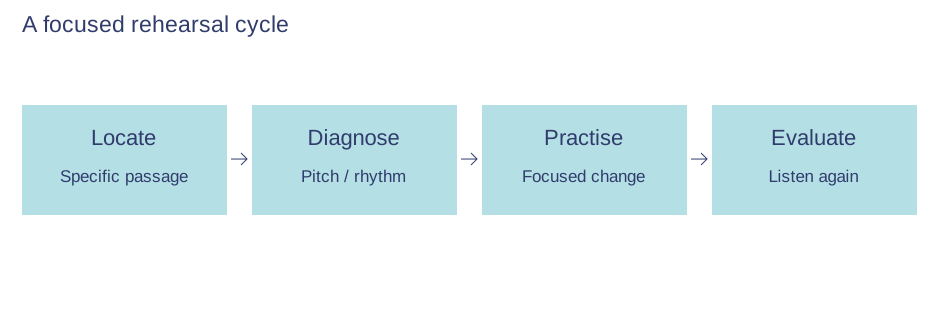
Practice diagnosis — Mark a short difficult passage, identify its precise error and choose a focused action. Count or tap the rhythm, practise fingering or tune slowly, then reassemble. Set an achievable tempo and increase it only when the passage is secure. Repeating the whole piece without diagnosing the error can reinforce the same mistake.Original teaching diagram. Apply it with the full explanation.
Pulse and recovery — Practise steady pulse with a metronome, then test without it. Start at several points so recovery does not depend on returning to the opening. Keep going through a minor slip where musically appropriate. Fluent performance means coherent continuity, not hiding errors by rushing or losing the ensemble's place.
Intonation and accuracy — Tune the resource where appropriate and compare sustained pitches against a reliable reference. Singers and variable-pitch instruments adjust pitch through listening and technique. Check difficult intervals slowly. Accuracy also involves rhythm, rests and score directions; a correct note played at the wrong time is not an accurate reading.
Phrasing and breathing — Locate phrase starts, peaks and endings; plan breath or bow changes where they support the line. Shape articulation and dynamics towards significant notes and cadences. Listen back for chopped phrases or unnecessary accents. Phrasing can be expressive without ignoring rests or the composer's structural cues.
Expression and style — Use contrasts with a purpose: restrained verse versus fuller chorus, or a lyrical solo over softer accompaniment. Match ornaments and tone to stylistic expectations while maintaining control. A loud performance is not automatically expressive; changes should clarify mood, phrasing and structure.
Evidence-led improvement — Record a rehearsal, identify a time and feature, then compare it with the intended result. An effective target is to stabilise quaver timing in a named phrase, not merely to get better. Re-record after focused practice and judge whether the chosen intervention worked. Keep notes that support learning rather than inventing grades.
Ensemble interaction
A genuine ensemble role — An ensemble involves musically significant parts interacting and adjusting together. A learner needs an independently identifiable contribution; simple unison doubling does not demonstrate an independent ensemble part. A solo with ordinary backing accompaniment is not automatically ensemble evidence. Discuss current OCR eligibility with your teacher for unusual arrangements.
Count-ins and cues — Agree tempo, an audible or visible count-in, entries after rests and cues for transitions. Rehearse difficult joins and endings, including the exact release of the final sound. Looking and listening between players can be as important as reading one's own part. Assign responsibility for cues rather than relying on chance.
Balance and listening — Let the principal melody be heard and adjust accompaniment, bass and percussion accordingly. When another player has the theme, your part may need to retreat. Check blend, tuning and shared articulation. In a duet or trio the balance can change repeatedly; a fixed volume throughout may obscure dialogue.
Timing and adaptation — Rehearse entrances, syncopation and rests against the group's pulse. Follow an agreed expressive slowing together rather than continuing independently. If someone slips, use the shared form and listening cues to recover. Ensemble control combines individual preparation with responsive coordination.
Group rehearsal — Locate a passage where balance, intonation or timing breaks down. Isolate parts, agree a change and repeat the section. Give factual feedback about the sound rather than personal judgements. Afterwards play through to check that the local repair works in the whole structure.
Technology, voice and assessment
Sequenced performance — Program rhythm, duration, velocity, articulation and phrasing intentionally, using suitable sounds. Inspect timing and balance across tracks and check the complete export. A mechanical default quantised playback may lack style even when notes are correct. OCR has route-specific criteria for realising sequenced performances; consult those rather than assuming acoustic-instrument criteria apply unchanged.
DJ and vocal routes — DJs may demonstrate selection, beatmatching, transitions and control of decks; scratching alters playback rhythmically. Rapping involves rhythmic precision and delivery; beatboxing shapes layered vocal percussion. Plan transitions and texture as well as isolated effects. The selected route must meet the applicable assessment conditions and evidence requirements.
Recordings and reference material — Check microphones or direct inputs for clipping and unwanted noise, then listen to the whole saved file. Make the learner's role identifiable in ensemble or multitrack work. Provide the score, lead sheet or permitted alternative reference material agreed with the teacher. Reference material describes the intentions; performance quality is what is assessed.
Performance requirements — Across the integrated and practical components, performances total at least four minutes, including at least one minute of ensemble performance. Work must meet supervised/authenticated completion requirements for the award year. Duration alone does not determine quality. Confirm deadlines, evidence and any route-specific restrictions through the current specification and your teacher.
Assessment dimensions — Teachers assess musical quality using the current relevant criteria, including accuracy/fluency, technical control and expression/interpretation, with ensemble interaction where applicable. Sequencing has specific criteria. A quiz can check vocabulary and decisions but cannot award a performance mark. Demonstrate practical goals by playing, singing or realising the music and listening critically.
Test yourself
30 questions · Random sets of 10. These quick checks support revision; practise longer explanations and justified judgements too.
Mind map
Use the branches to recall the ideas and explain their connections. Check the revision notes for the full detail.
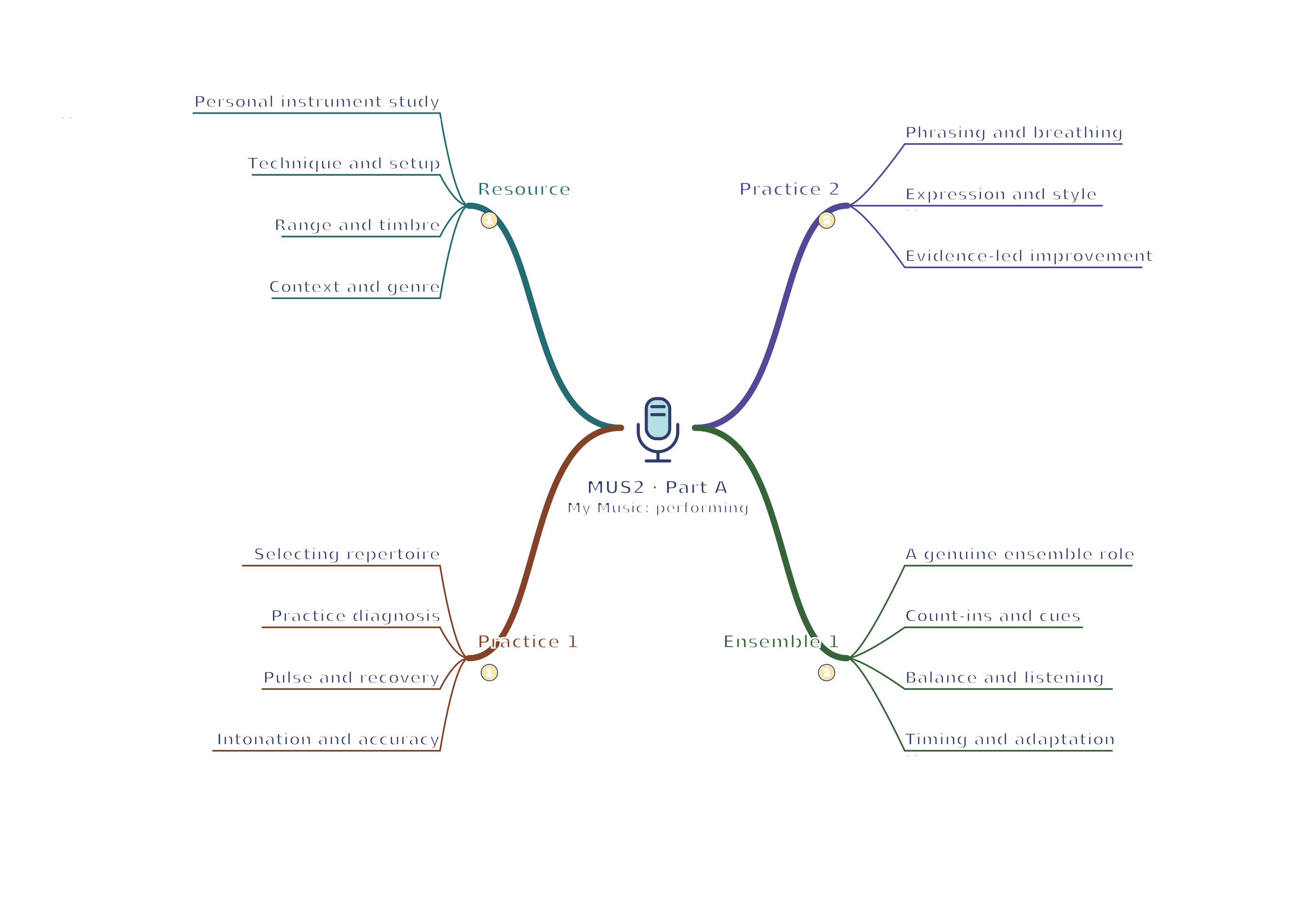
MUS2 · Resource / Practice 1 / Practice 2 / Ensemble 1
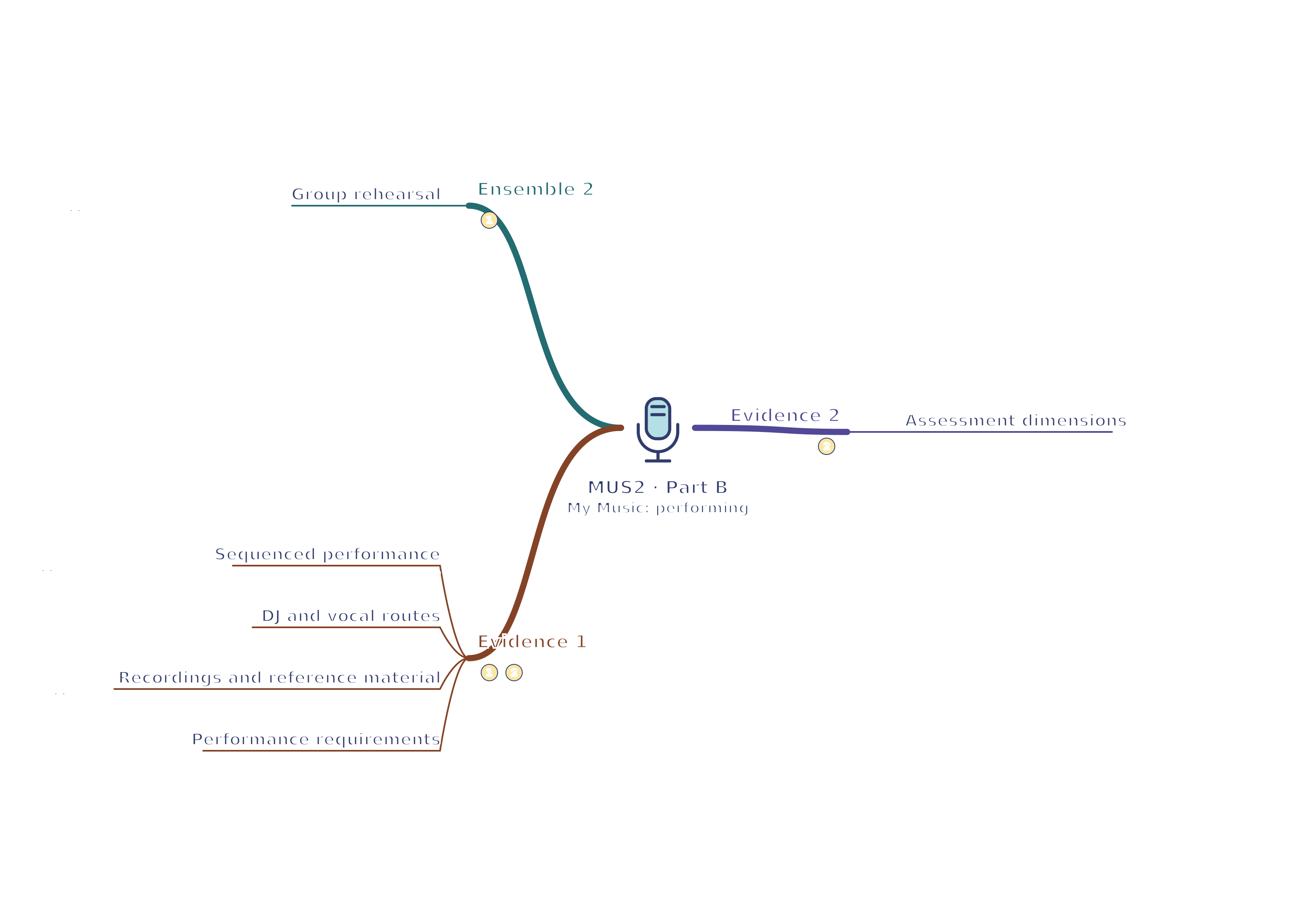
View MUS2 · Resource / Practice 1 / Practice 2 / Ensemble 1 mind mapOpen the full-size map to zoom. Download the PDF to print on A4 or enlarge to A3.
 Mr Kidman's Classroom