Explain systems and solve computing problems. The 30 quick questions support recall and application; practise full algorithms, programs and evaluations using the PLC tasks.
Revise the key ideas
Ethics society and privacy
Ethical reasoning — Ethics concerns whether actions are right or fair; law concerns what is legally allowed. An action may be legal but still raise ethical concerns, such as intrusive tracking. Identify the affected people, benefits, risks and safeguards before making a supported judgement.
Privacy and surveillance — Location tracking may support safety or personalised services, but reveal sensitive routines. Consider necessity, consent, who can access records, retention and misuse. Collecting more data than needed increases exposure; promised benefits alone do not settle the privacy question.
Digital access — Online learning and services can widen access for some while excluding people lacking devices, reliable connections or digital skills. Accessible design and alternatives can reduce barriers. Avoid assuming age, wealth or disability automatically determines every person's experience.
Work and automation — Automation can improve productivity and remove hazardous tasks, but displace some work and require retraining. New roles may emerge without benefiting every displaced worker. Evaluate specific tasks and groups rather than claiming technology always creates or destroys all employment.
Culture and communication — Digital media enable rapid communication and preservation or sharing of cultural material. They also amplify misinformation, abuse and narrow viewpoints. Moderation, verification and user choice affect outcomes; exposure to content does not prove everyone changes behaviour identically.
Algorithmic decisions — Automated decisions may be efficient but reproduce unequal patterns in training data or chosen criteria. People need ways to understand, challenge and correct consequential decisions. A computer's involvement is not evidence that a judgement is automatically neutral or accurate.
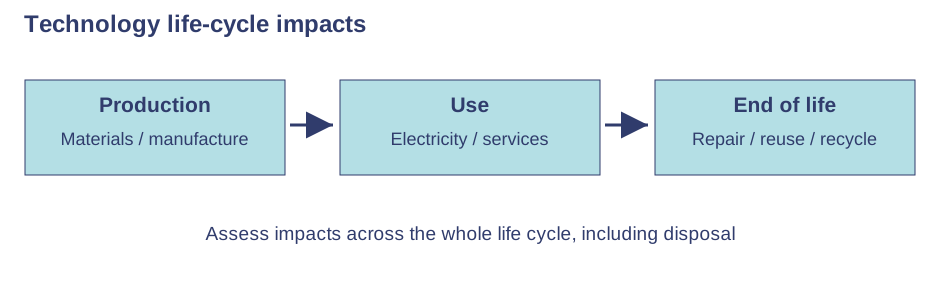
Environmental production — Mining raw materials, manufacturing and transport consume resources and can pollute. Device production has impacts before the user switches it on. Evaluate durability, repairability and responsible sourcing as well as electricity used during operation.Use the labels alongside the associated explanation.
Environmental use and disposal — Devices and data centres use electricity, with emissions depending partly on supply. Discarded electronics can contain hazardous substances; reuse, repair and appropriate recycling recover value and reduce waste. Remote work can reduce travel but still has equipment and energy costs.
Constructing an evaluation — For a school's monitoring proposal, explain a specific safety benefit, a privacy risk and proportionate safeguards, then reach a judgement. Distinguish stakeholders rather than listing generic advantages. Evidence and practical constraints should support the decision.
Legislation
Data Protection Act 2018 — The Act forms part of the UK data-protection framework alongside UK GDPR. Personal data identify or relate to an identifiable person. Organisations need a lawful basis and must process data fairly, transparently, for appropriate purposes and with suitable security; consent is not the only possible lawful basis.
Data-protection principles — Relevant principles include minimisation, accuracy, purpose limitation and keeping data no longer than needed. People have rights such as access and correction, with conditions and exceptions. A revision scenario should connect the principle to a specific action, such as correcting a wrong pupil address.
Computer Misuse Act 1990 — The Act addresses unauthorised access, access intended to support further offences and unauthorised acts impairing systems, among other provisions. Knowing a password or finding an unlocked computer does not confer permission. Approved testing needs authorisation and a defined scope.
Copyright Designs and Patents Act 1988 — Copyright controls uses such as copying or distributing protected software and media, subject to licences and legal exceptions. Buying a copy does not normally grant a right to publish unlimited copies. Acknowledging the creator alone does not automatically make every use permitted.
Law in scenarios — Taking private records without authority can involve computer misuse and data protection; distributing pirated software concerns copyright. More than one framework can apply. Explain the act and why it matters rather than treating each law as a one-word label for all technology problems.
Software licensing
Purpose of a licence — A licence specifies permitted use, copying, modification or redistribution. Software ownership and permission to use it differ. Read conditions: price alone does not establish the licence type or permission to alter source code.
Open-source software — Open-source licences provide source code and rights to inspect, modify and redistribute under their conditions. Some require distributed derivatives to retain particular terms. Open source can be sold; it does not mean no copyright, no rules or no possible security flaws.
Proprietary software — Proprietary software usually withholds source code and restricts modification or redistribution. It may be paid or supplied free of charge. Users may receive vendor support and a consistent product, but depend on the vendor's terms, updates and continued availability.
Choosing a licence — A school with technical expertise may value adaptable open-source software; another may prefer a supported proprietary package. Compare compatibility, support, total costs and freedom to modify. Neither category guarantees that all software is reliable, cheap or suitable.
Test yourself
30 questions · Random sets of 10. These quick checks support revision; practise longer explanations and justified judgements too.
Mind map
Use the branches to recall the ideas and explain their connections. Check the revision notes for the full detail.
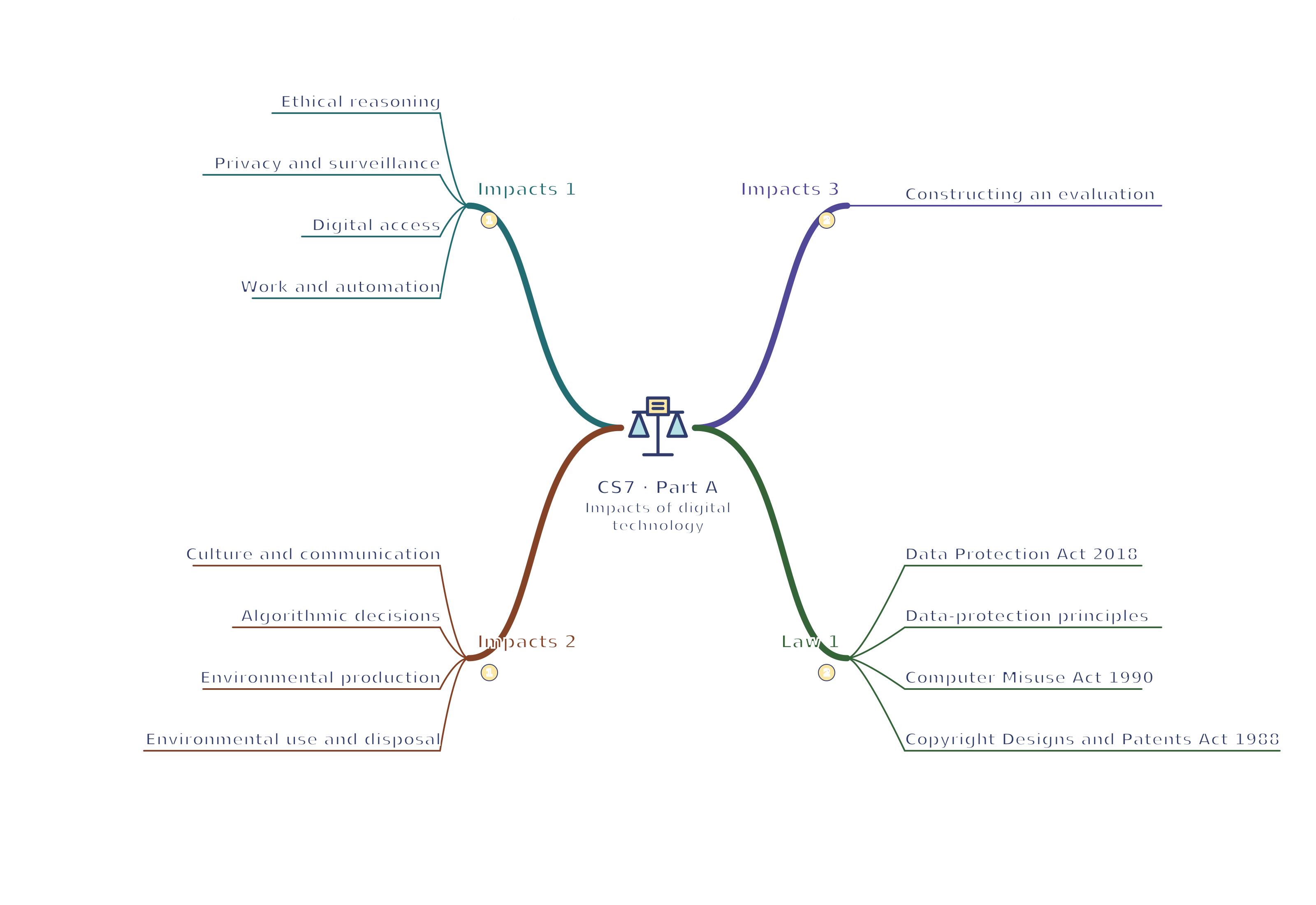
CS7 · Impacts 1 / Impacts 2 / Impacts 3 / Law 1
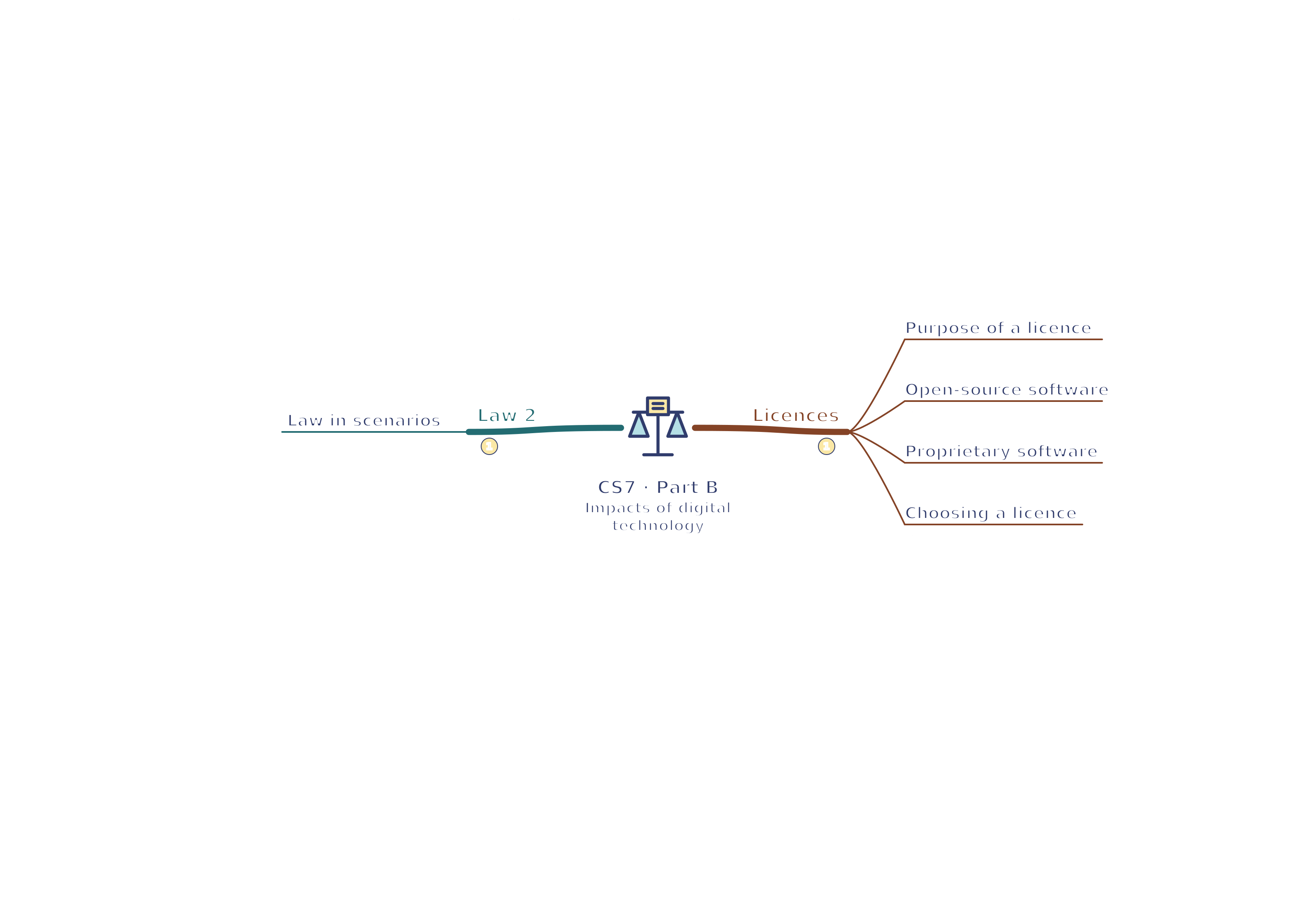
View CS7 · Impacts 1 / Impacts 2 / Impacts 3 / Law 1 mind mapOpen the full-size map to zoom. Download the PDF to print on A4 or enlarge to A3.
 Mr Kidman's Classroom