Mr Kidman's Classroom



Revise the key ideas
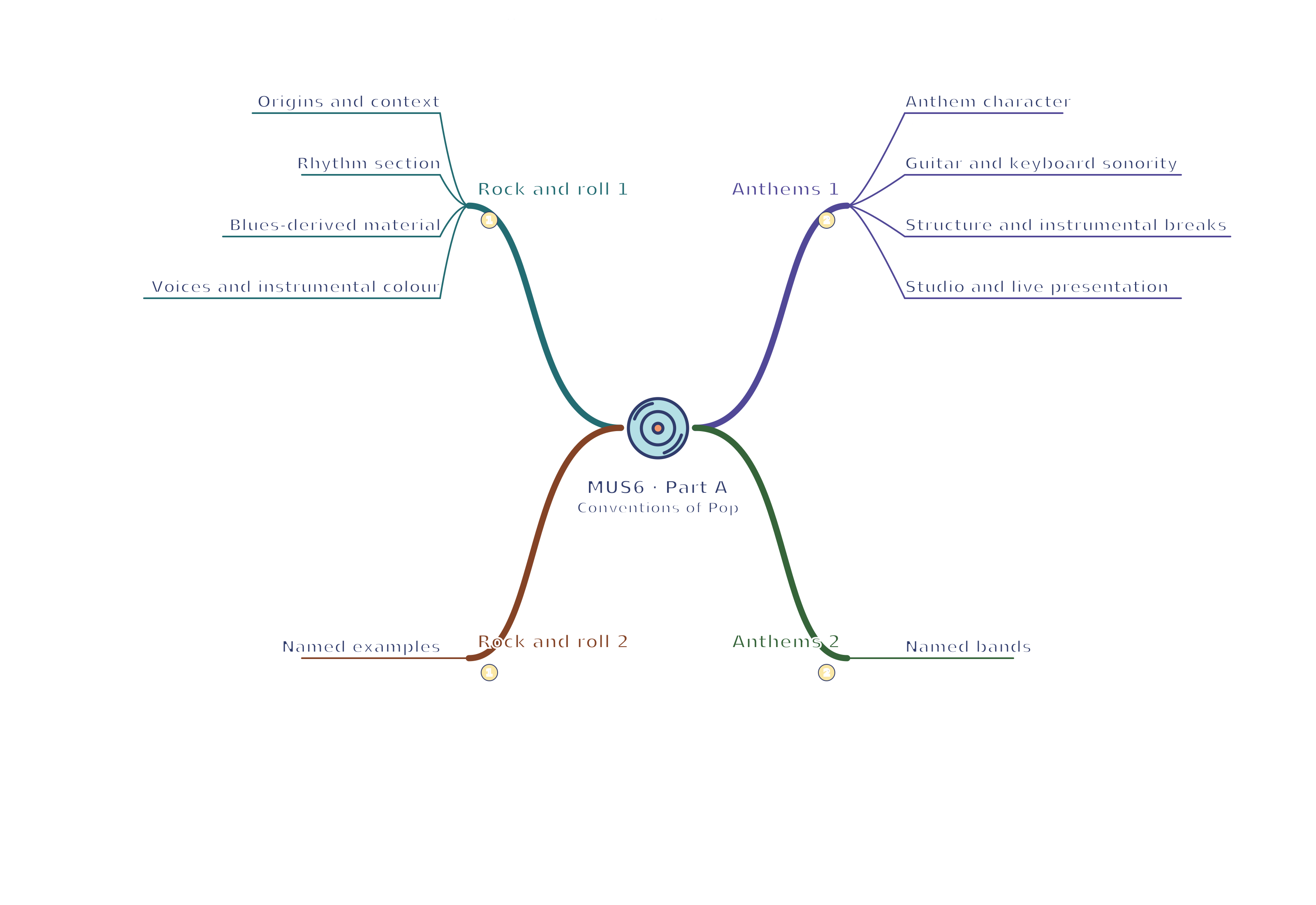
Rock and roll
- Origins and context — 1950s/1960s rock and roll draws on African American rhythm and blues and other influences including country. Dance, youth culture, broadcasting and records help its spread. Credit musical roots without treating all artists or audiences as identical. Context helps explain a style; it cannot replace analysis of an actual recording.
- Rhythm section — A drum backbeat commonly accents beats two and four in quadruple time; bass and rhythm guitar/piano support pulse and harmony. Boogie patterns, walking bass and shuffle or straight subdivisions may occur. A walking bass moves regularly, often outlining chords. Hear the pattern instead of assuming every rock-and-roll track has identical rhythm.
- Blues-derived material — Twelve-bar blues, primary chords, repeated riffs and call/response are common resources. A riff can recur beneath vocals or in breaks. Blue-note inflection and pentatonic material contribute to melodic character. Not every song uses twelve-bar blues, and a three-chord song is not automatically that form.
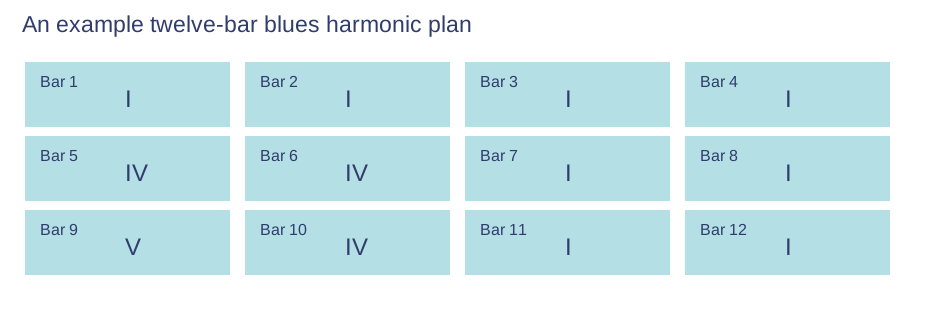
Original teaching diagram. Apply it with the full explanation. - Voices and instrumental colour — Lead singers may use energetic diction, slides or shouted effects, interacting with backing voices. Electric guitar, piano and saxophone can provide solos or fills. A fill occupies space between principal phrases; a stab is a short accented attack. Explain the audible vocal/instrumental role without assuming every technique appears in every song.
- Named examples — Chuck Berry's guitar-led songs, Little Richard's vocal/piano delivery and Elvis Presley's recordings offer rock-and-roll listening choices. Studio arrangement and performance versions can differ. Identify a rhythmic, melodic or structural feature and relate it to the named recording. No lyrics or recordings are reproduced here.
Rock anthems
- Anthem character — 1970s/1980s rock anthems often foreground memorable choruses, riffs and dramatic builds suited to live or mass audience participation. An anthem is not defined solely by volume. Compare repeated melodic hooks, emphatic rhythms and sectional contrasts. Audience response and production can reinforce the effect.
- Guitar and keyboard sonority — Electric guitars may use distortion, sustained notes, bends and power chords; keyboards and synthesisers can add layers. A power chord emphasises root and fifth, often without a third, so it does not alone establish major/minor quality. Effects change sonority, while a guitar's playing technique shapes attacks and phrasing.
- Structure and instrumental breaks — A song may combine introduction, verses, choruses, bridge/middle eight, instrumental break and coda. The arrangement can build across repeated choruses by adding harmonies or instruments. A solo may develop an existing motif rather than introduce unrelated material. Map the actual recording instead of assuming a single universal form.
- Studio and live presentation — Overdubbing can create multiple guitar or vocal layers beyond what one performer plays live. Stadium amplification, monitor systems and stage arrangements affect delivery. Compare versions in terms of balance, density and interaction. A studio multitrack is not evidence that all layers were performed simultaneously by one player.
- Named bands — Queen, Bon Jovi and Guns N' Roses provide contrasting examples of hooks, riffs, vocal delivery and instrumental resources. Queen's We Will Rock You uses a striking repeated rhythmic pattern; do not infer that every Queen track shares it. Discuss a selected recording rather than treating a group name as a genre definition.
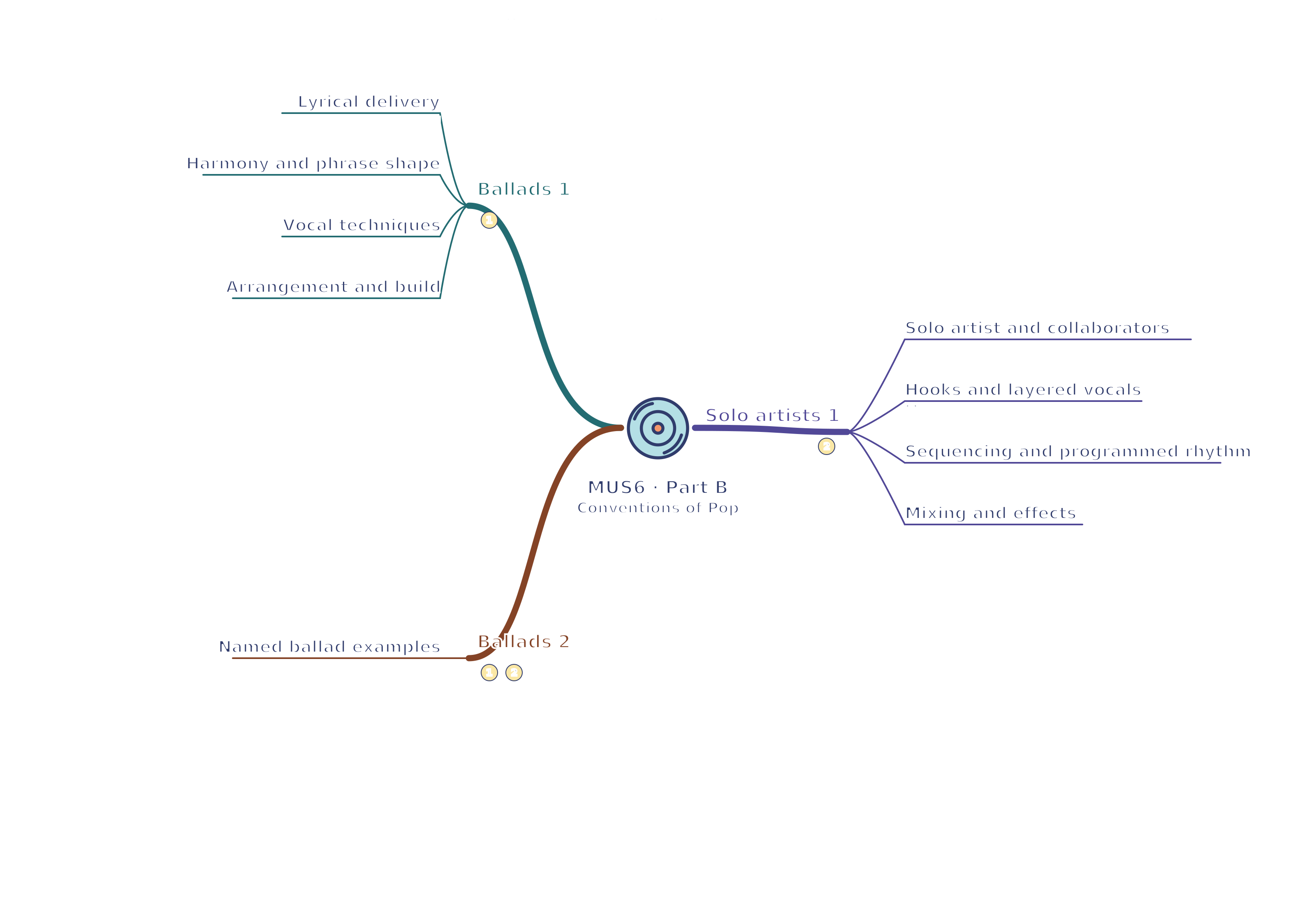
Pop ballads
- Lyrical delivery — 1970s–1990s pop ballads often use a slower or moderate pace, clear melody and expressive phrasing. Piano, guitar, strings or electronic accompaniment can support the voice. Ballads can use varied metres and dynamic levels; not every slow song has the same structure or mood. Analyse the sound without copying the text.
- Harmony and phrase shape — A chord progression may return beneath changing verses or lead towards a strong chorus cadence. Broken-chord accompaniment can maintain motion below longer vocal notes. Modulation can intensify a later section, but it is not compulsory. Locate actual harmonic and melodic arrivals rather than guessing a key change from increased loudness.
- Vocal techniques — Syllabic phrases can communicate clearly; melismatic passages extend a syllable through several pitches. Breath, register change, vibrato, slides and dynamic shading can shape intensity. A microphone allows intimate delivery. Describe an identifiable technique and its effect rather than assuming all expressive singing is melismatic.
- Arrangement and build — A sparse opening can add bass, drums, backing vocals or strings later. Layered harmony or a rising register may emphasise the chorus. Distinguish an increase in density from a faster tempo. A quieter ending can be a deliberate structural resolution rather than a weaker performance.
- Named ballad examples — Elton John, Bette Midler and recordings of Bob Dylan's Make You Feel My Love provide listening choices associated with the course's ballad study. Different cover versions can retain the song while changing tempo, instrumentation and delivery. Attribute the version heard and explain its arrangement, rather than assuming the composition and recording are identical things.
Solo artists and contemporary production
- Solo artist and collaborators — From 1990 onwards, solo artists work across many styles with producers, songwriters and session performers. Solo artist describes presentation, not necessarily authorship of every note or absence of backing musicians. Examine credits and the audible arrangement. Style and marketing can change across one artist's career.
- Hooks and layered vocals — A hook is a memorable recurring feature; it can be a sung phrase, riff or production sound. Lead and backing vocals may alternate, harmonise or be layered through overdubs. A vocoder or pitch processing can reshape a vocal timbre. Identify what is actually repeated and how it functions in the song.
- Sequencing and programmed rhythm — Drum machines create programmed percussion; sequencers arrange events, loops and sampled material. MIDI carries instructions while audio stores a sound waveform. Quantising adjusts timing towards a grid and may be combined with deliberate swing or humanisation. Electronic production can coexist with live playing.
- Mixing and effects — Panning separates layers in stereo; EQ changes frequency balance; compression reduces dynamic range; reverb suggests space; delay repeats material. Distortion can be an intentional colour. Changing track levels is not the same as changing the notes or harmony. Explain the audible effect without claiming to know the exact software used.
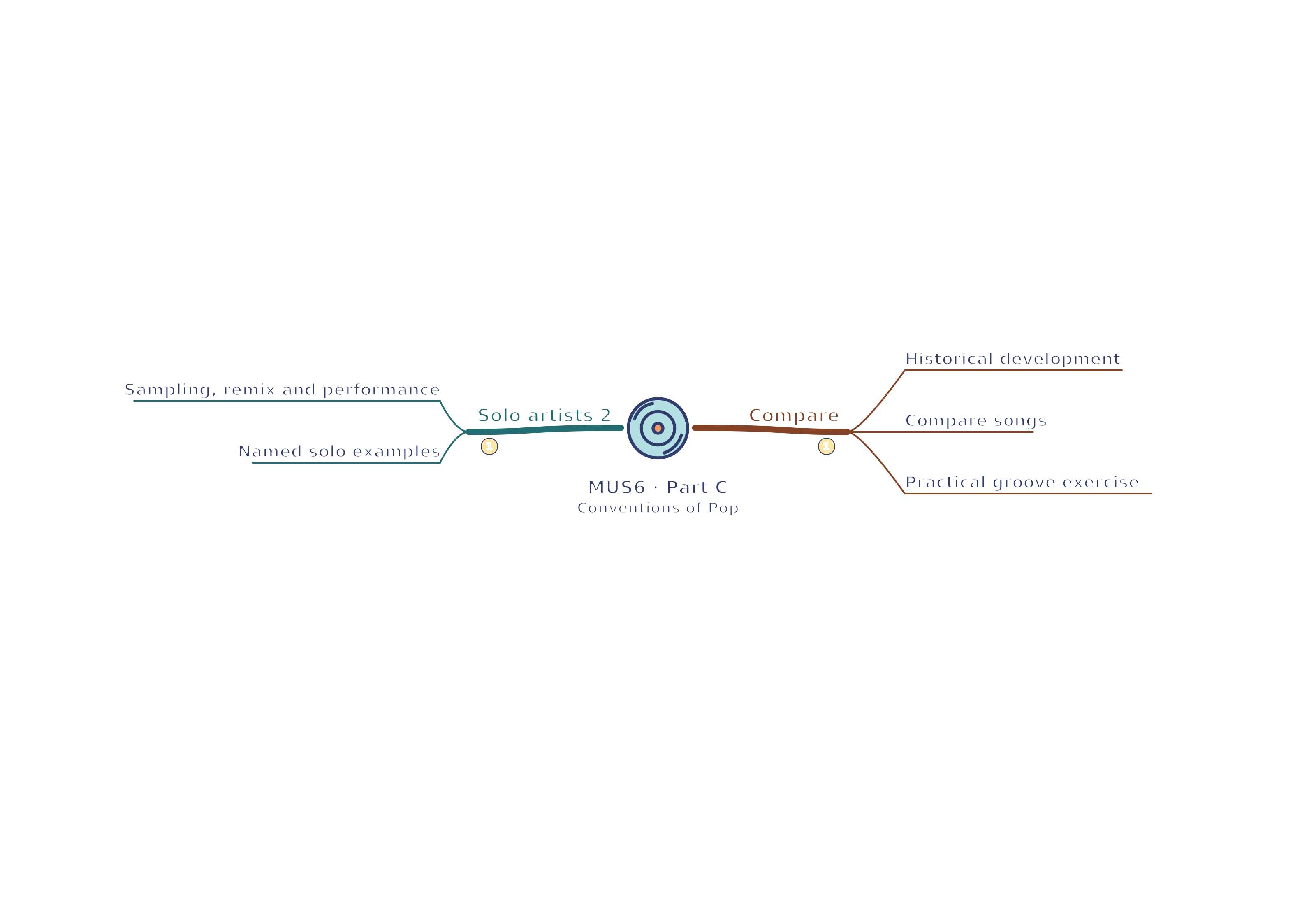
- Sampling, remix and performance — Sampling incorporates a recorded sound, while a remix reworks an existing recording through arrangement or production. DJ scratching changes playback rhythmically; looping repeats a segment. A collage or overlay combines materials. Authorship, licensing and assessment rules matter for practical work; these notes do not authorise submitting others' recordings as original composition.
- Named solo examples — Michael Jackson, Kylie Minogue and Adele offer contrasting post-1990 repertoire choices. Compare dance-production layers, vocal articulation, harmonic pattern and texture in selected tracks. Present-day styles continue to change; the course is not restricted to these examples or a fixed list of contemporary artists.
Popular music comparison and development
- Historical development — Compare acoustic/electric resources, amplification, multitracking, synthesis, digital distribution and live venues across the studied genres. Technology can expand possibilities without dictating a composer's choices. The music industry influences access and promotion, but musical evidence is still needed for a style comparison.
- Compare songs — Compare metre/groove, melody, harmony, vocal delivery, texture, form and production in two extracts. Relate selected differences to genre and context. Do not call a song a ballad solely because a piano is heard, or rock solely because a guitar is present. A feature's role and its combination with others support an interpretation.
- Practical groove exercise — Create an original short groove with a bass line, chordal part and melodic hook. Vary density between verse-like and chorus-like sections and preserve pulse. Record and evaluate balance and coherence. The local illustration demonstrates layer relationships and is not a copy of an artist's song or an OCR assessed composition.
Original synthesised listening illustration: Hear a repeating bass, off-beat higher attacks and an original melodic figure over a steady pulse.
Compare these isolated features with varied real repertoire; this is not an authentic traditional performance or exam extract.