Use precise historical evidence to explain causes, consequences and changes. The 30 quick questions support recall and application; practise the broader written tasks in your PLC too.
Revise the key ideas
The setting and trench system
Western Front — The Western Front developed into entrenched warfare after the early mobile campaigns of 1914. Britain's sector included parts of northern France and Flanders in Belgium. Large casualty numbers, industrial weapons and difficult ground shaped medical needs and the ability to reach wounded soldiers.
Ypres salient — A salient is a part of a front projecting into enemy territory. The Ypres salient was vulnerable to attack from several sides. Fighting around Ypres included the German chlorine attack in 1915 and the muddy Third Battle of Ypres, or Passchendaele, in 1917.
Somme — The Battle of the Somme in 1916 produced very large numbers of casualties, particularly on its first day. Medical services needed to sort and move patients quickly while shellfire damaged routes. Use this context to explain pressure on evacuation rather than treating a battle name as sufficient evidence.
Arras — Preparations for the Battle of Arras used tunnels and caves, including an underground hospital. Sheltered treatment and links underground reduced some exposure to shellfire. Protection did not remove shortages, crowding or the challenge of moving casualties from the surface.
Cambrai — The Battle of Cambrai in 1917 is associated with large-scale tank use and a stored blood supply prepared for casualties. It illustrates adaptation to planned offensives. Distinguish this organised blood bank from an immediate direct transfusion between a donor and a patient.
Trench organisation — Frontline trenches faced the enemy; support and reserve trenches housed additional troops and supplies. Communication trenches connected lines. Dugouts, barbed wire and fire steps shaped movement. The same narrow routes needed to carry troops, equipment and casualties, producing congestion and exposure.
Terrain and transport — Shelling broke roads and railways, while mud and waterlogged ground made stretcher carrying slow. Darkness could offer protection but hinder navigation. Telephone wires and other communications could be damaged. Delayed care increased blood loss, shock and infection risks.
Ill health, injuries and gas
Trench foot — Standing in cold water and wet boots damaged circulation and tissue, causing trench foot. Severe cases could require amputation. Dry socks, inspections, rubbing feet and drainage helped prevention, but maintaining these measures during heavy fighting was difficult.
Other illness — Body lice spread trench fever, while poor sanitation and contaminated food or water contributed to disease such as dysentery. Crowding, sleep loss and stress weakened soldiers. These illnesses created medical demand alongside battle wounds; not every casualty had been shot.
Psychological injury — Soldiers could experience shaking, nightmares, paralysis or distress described as shell shock. Recognition and treatment were inconsistent, and some sufferers faced suspicion or punishment. Avoid assuming everyone had the same symptoms or that all doctors understood the condition as modern PTSD.
Rifle wounds — Rifle and machine-gun bullets caused penetrating wounds, fractures and bleeding. A small entry wound could conceal serious internal damage. Clothing and dirt could enter the wound, making infection possible; locating and removing every fragment was not always the priority over stabilising the patient.
Explosive wounds — Shells and other explosives caused multiple, irregular injuries and embedded fragments. Soil and clothing contamination increased the chance of infection, including gas gangrene. Severe blood loss and shock could kill before infection developed, so treatment needed to address several dangers.
Head injuries — A soldier's head could be exposed above a trench while much of the body was sheltered. Britain's steel helmet, introduced during the war, reduced some injuries from fragments. It did not make soldiers immune to bullets, and greater survival could leave complex injuries needing specialist care.
Gas effects — Chlorine and phosgene damaged breathing, while mustard gas caused burns and blistering as well as eye and lung damage. Protection improved from early cloth measures to respirators, but warnings, fit and speed mattered. Gas injury did not always lead to immediate death.
Infection context — Doctors entered the war with knowledge of microbes and methods of sterilisation. Battlefield dirt, delays and shortage of clean facilities still made infection difficult to prevent. Antibiotics such as penicillin were not available as wartime treatments in 1914–18.
Personnel and the evacuation chain
RAMC — The Royal Army Medical Corps provided medical officers, orderlies and an organised system of care. Nurses, including those in military nursing services and voluntary organisations, cared for patients at facilities further from the firing line. Their work depended on transport, equipment and coordination.
Stretcher bearers — Stretcher bearers collected casualties and carried them towards aid posts, often under fire. Multiple bearers might be needed to cross mud or obstacles. Immediate first aid could reduce bleeding, but reaching a soldier promptly could be impossible during an attack.
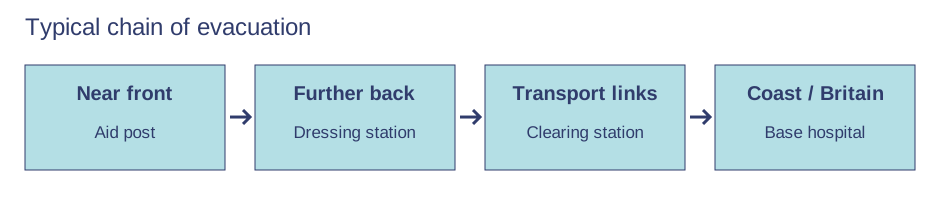
Aid posts — Regimental aid posts offered initial medical attention near the front. Staff dressed wounds and tried to stabilise casualties before movement. They could not provide the full surgery or recovery facilities of a base hospital; proximity meant danger and limited space.
Field ambulance — A field ambulance was a mobile RAMC medical unit that ran facilities such as advanced and main dressing stations. Do not confuse the unit with a motor ambulance. Dressing stations reassessed patients, treated less severe wounds and prepared others for further evacuation.
Clearing stations — Casualty clearing stations were usually placed behind the frontline with access to routes for onward evacuation. They sorted casualties by urgency and likely benefit from treatment and carried out important operations. Their role balanced prompt surgery with pressure from large numbers of wounded.
Base hospitals — Base hospitals near coastal ports offered more extensive facilities, specialist care and recovery time. Some soldiers returned to duty; others travelled by hospital ship to Britain. The chain was an adaptable system: urgent cases could be operated on before reaching a base hospital.
Transport stages — Stretchers were essential near trenches; horse and motor ambulances could carry patients where routes allowed. Ambulance trains moved many patients over longer distances, and hospital ships took some to Britain. Engines increased capacity but did not solve shell damage, mud or traffic congestion.
Evacuation trade-off — Moving hospitals back protected staff and facilities, while moving surgical care forward reduced delay. Decisions depended on combat conditions and patient need. A simple diagram of the chain shows typical stages, not a rigid route followed by every wounded soldier.Selected overview. Explain the qualifications using the notes.
Surgery, X-rays and blood
Wound excision — Surgeons removed dead or badly damaged tissue and foreign material to reduce infection. This was especially important for contaminated wounds. Wounds might be left open initially rather than immediately closed; judging viable tissue required skill and further operations could be needed.
Carrel–Dakin — The Carrel–Dakin method irrigated wounds with an antiseptic solution to help control infection. It complemented surgical cleaning rather than replacing it. Supplying solution, equipment and regular care created practical demands, especially when casualty numbers were high.
Thomas splint — The Thomas splint held a fractured leg steady, reducing movement, further tissue damage and blood loss during evacuation. Wider use from 1916 markedly improved survival for suitable injuries. It was an adaptation of an existing device, showing that applying earlier knowledge can matter as much as invention.
X-ray origins — Wilhelm Röntgen discovered X-rays in 1895. They allowed doctors to locate some internal problems without exploratory surgery. Wartime units applied an existing technology; developing portable equipment and trained operators made it useful closer to casualties.
Mobile X-rays — Mobile X-ray units helped surgeons locate metal fragments and assess broken bones. Machines were fragile, required electricity and could be slow; radiation exposure posed risks. Not every unit or casualty could access imaging immediately.
Transfusion — Karl Landsteiner's early-twentieth-century work on blood groups helped explain why some transfusions caused dangerous reactions. Compatible blood could replace lost blood and improve survival. Early transfusion still often required a nearby donor, restricting use during emergencies.
Stored blood — Developments in anticoagulants such as sodium citrate prevented clotting, and refrigeration improved storage. These changes allowed blood to be collected before it was urgently needed. Storage was limited and blood needed appropriate handling; it did not become an unlimited supply.
Cambrai blood bank — Oswald Hope Robertson organised a blood supply for Cambrai in 1917 using stored compatible blood. This enabled more prompt transfusions without finding a donor at the moment of injury. Distinguish the storage contribution from earlier work by doctors using direct transfusion.
War and change — Large numbers of similar wounds encouraged specialist experience, experiments and organised provision. Military funding and pressure promoted adoption of useful techniques. War also killed staff, destroyed infrastructure and obstructed treatment; explain both acceleration and limits rather than calling war simply beneficial.
Historical enquiry and evidence
Useful evidence — Judge a source against the question being investigated. Explain what its details reveal, how the author's role and purpose affect those details, and how contextual knowledge supports or qualifies them. A source is not useless merely because its creator had a viewpoint.
National sources — Official army reports may reveal organisation or statistics but may present successes selectively. Newspapers reveal what the public was told and may be censored. Medical articles can explain methods but may focus on unusual cases rather than typical experience.
Local sources — Hospital records can show admissions or outcomes but may omit casualties treated elsewhere. A photograph shows a selected moment and may be posed. A diary records one person's experience, which may be detailed but not representative; compare evidence before generalising.
Follow-up enquiry — Select a detail worth investigating, ask a focused follow-up question, identify a source likely to contain evidence, and explain how it would help. For a claim that mud delayed evacuation, timings in a medical unit's war diary could test where and when delays occurred.
Evidence limits — A survival rate needs its date, injury type and sample before comparison. Later memoirs may use hindsight, while contemporary records can also omit information. Cross-checking independent evidence strengthens an enquiry; no single type of source is automatically completely reliable.
Test yourself
30 questions · Random sets of 10. These quick checks support revision; practise longer explanations and justified judgements too.
Mind map
Use the branches to recall the ideas and explain their connections. Check the revision notes for the full detail.
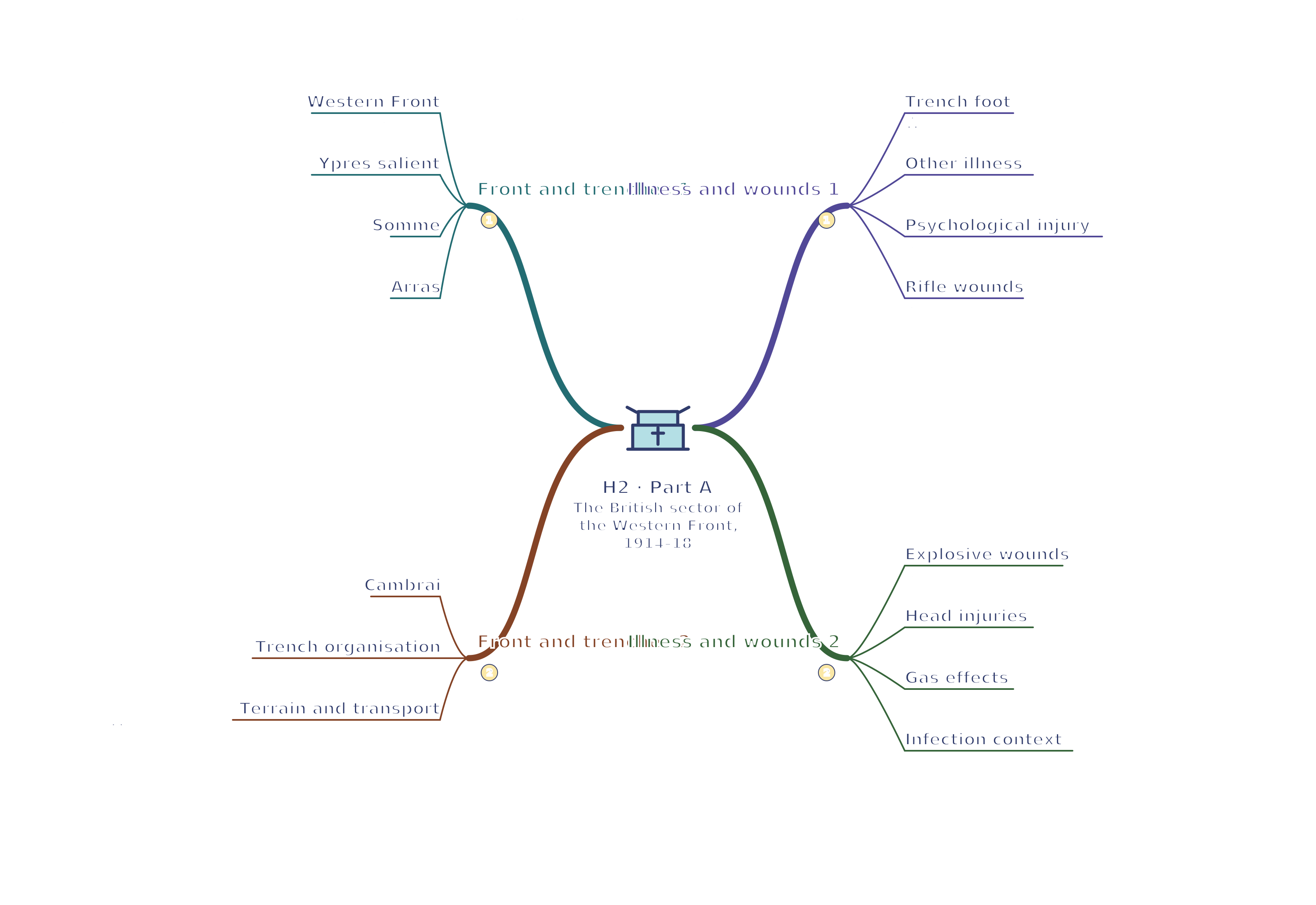
H2 · Front and trenches 1 / Front and trenches 2 / Illness and wounds 1 / Illness and wounds 2
View H2 · Front and trenches 1 / Front and trenches 2 / Illness and wounds 1 / Illness and wounds 2 mind mapOpen the full-size map to zoom. Download the PDF to print on A4 or enlarge to A3.
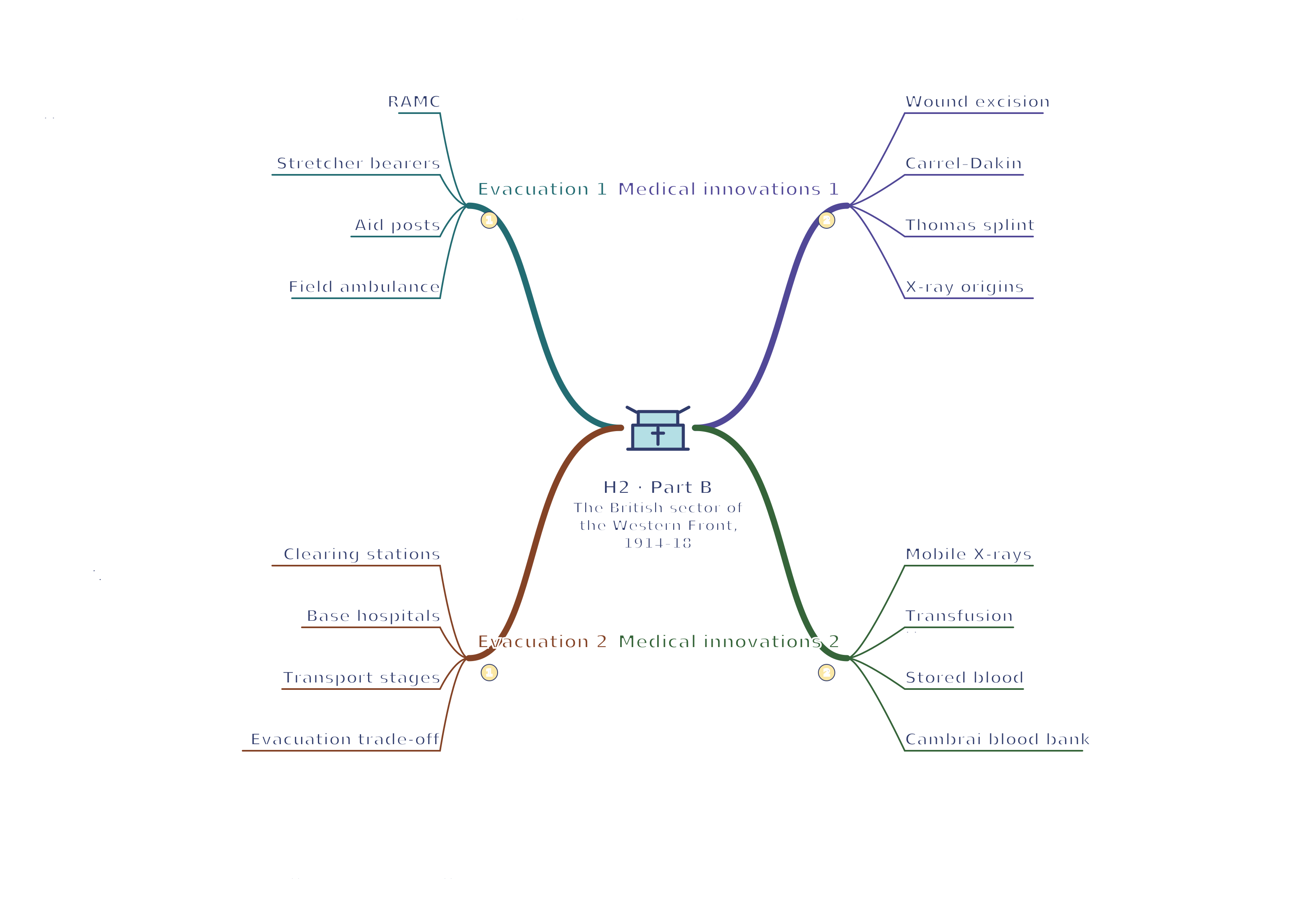
H2 · Evacuation 1 / Evacuation 2 / Medical innovations 1 / Medical innovations 2
View H2 · Evacuation 1 / Evacuation 2 / Medical innovations 1 / Medical innovations 2 mind mapOpen the full-size map to zoom. Download the PDF to print on A4 or enlarge to A3.
Other illness: Lice, contaminated water and exhaustion harmed health
Psychological injury: Shell shock had varied symptoms and disputed causes
Rifle wounds: Bullets could penetrate deeply and damage organs
Illness and wounds 2
Explosive wounds: Shrapnel tore tissue and carried dirt into wounds
Head injuries: Trench exposure increased need for protective helmets
Gas effects: Chlorine, phosgene and mustard gas caused different harm
Infection context: Germ theory and asepsis existed before the war
Evacuation 1
RAMC: Medical corps organised treatment and evacuation
Stretcher bearers: Danger and difficult ground slowed first assistance
Aid posts: Close to fighting: dress wounds and stabilise patients
Field ambulance: A medical unit staffed dressing stations, not just a vehicle
Evacuation 2
Clearing stations: Near transport: triage and urgent operations
Base hospitals: Further back: specialist treatment and longer recovery
Transport stages: Stretchers, horses, motors, trains and ships connected care
Evacuation trade-off: Distance improved safety but delayed lifesaving care
Medical innovations 1
Wound excision: Remove damaged tissue to reduce infection risk
Carrel–Dakin: Irrigation used an antiseptic solution in wounds
Thomas splint: Stabilising leg fractures reduced damage during movement
X-ray origins: 1895 discovery enabled imaging before wartime use
Medical innovations 2
Mobile X-rays: Locate fragments and fractures; equipment had limits
Transfusion: Matching blood groups improved safety before the war
Stored blood: Citrate and cooling allowed blood to be kept for use
Cambrai blood bank: Robertson prepared stored blood for the 1917 battle
Medical innovations 3
War and change: Urgency accelerated adoption but caused enormous harm
Enquiry 1
Useful evidence: Use content, provenance and context for a specific enquiry
National sources: Army reports, newspapers and articles answer different questions
Local sources: Records, photographs and personal accounts have different reach
Follow-up enquiry: Ask a precise question and name a suitable record
Enquiry 2
Evidence limits: Missing figures and survival affect conclusions
Connections
Front and trenches 1 → Illness and wounds 1: Terrain and trench conditions created illness and delayed assistance.
Front and trenches 2 → Illness and wounds 2: Difficult movement increased the danger from serious wounds and infection.
Part connections
H2 · Front and trenches 1 / Front and trenches 2 / Illness and wounds 1 / Illness and wounds 2: Front and trenches 1 → Illness and wounds 1 — Terrain and trench conditions created illness and delayed assistance.
H2 · Front and trenches 1 / Front and trenches 2 / Illness and wounds 1 / Illness and wounds 2: Front and trenches 2 → Illness and wounds 2 — Difficult movement increased the danger from serious wounds and infection.
H2 · Evacuation 1 / Evacuation 2 / Medical innovations 1 / Medical innovations 2: Evacuation 1 → Evacuation 2 — Forward stabilisation and rear facilities formed a flexible evacuation chain.
H2 · Evacuation 1 / Evacuation 2 / Medical innovations 1 / Medical innovations 2: Medical innovations 1 → Medical innovations 2 — Cleaner wounds and imaging supported more effective surgical decisions.
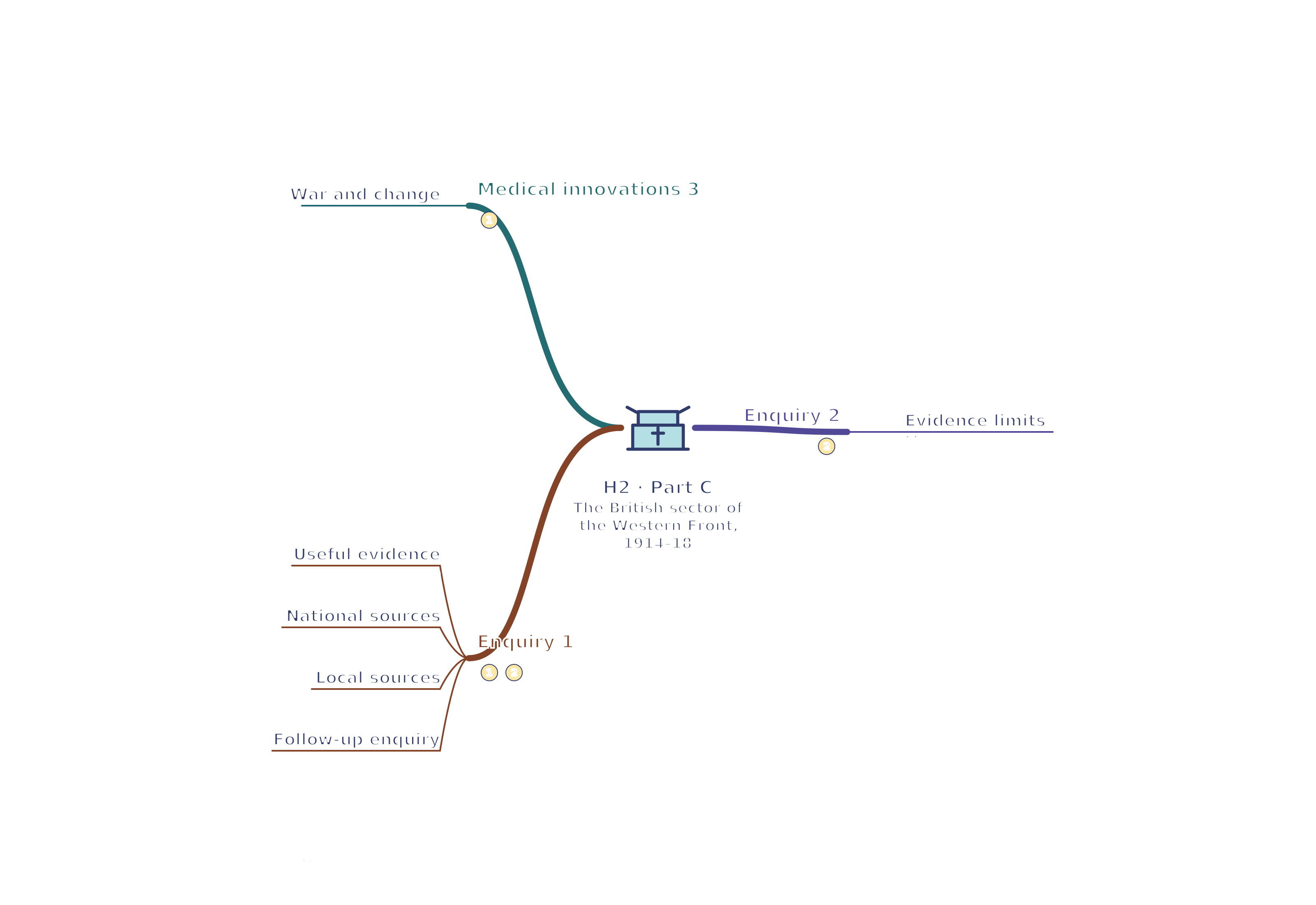
H2 · Medical innovations 3 / Enquiry 1 / Enquiry 2: Medical innovations 3 → Enquiry 1 — Claims about medical innovation can be investigated through reports and records.
H2 · Medical innovations 3 / Enquiry 1 / Enquiry 2: Enquiry 1 → Enquiry 2 — Different evidence needs a focused enquiry and careful checks of its reach.
 Mr Kidman's Classroom