Use precise historical evidence to explain causes, consequences and changes. The 30 quick questions support recall and application; practise the broader written tasks in your PLC too.
Revise the key ideas
Revolution and the Weimar Constitution, 1918–19
War ends — By late 1918 military defeat, shortages and unrest undermined Germany's government. Sailors' mutiny and revolution spread; Kaiser Wilhelm II abdicated and a republic was proclaimed. An armistice ended fighting on 11 November, but economic and political problems remained.
New republic — Friedrich Ebert and the Social Democrats sought a parliamentary republic. Some revolutionary groups wanted a communist system, while conservative elites distrusted democracy. The government relied on existing institutions and military support, helping survival while leaving opponents of democracy influential.
Democratic strengths — The Constitution provided an elected Reichstag, an elected president, rights and votes for adult men and women. Proportional representation gave parties seats broadly reflecting votes. These were real democratic strengths, even though later political conditions exposed vulnerabilities.
Constitutional weaknesses — Proportional representation often required coalitions, which could struggle to agree under crisis. Article 48 permitted presidential emergency action, later used extensively. These provisions did not make dictatorship inevitable: their effects depended on leaders, public support and economic conditions.
Early challenges, 1919–23
Stab-in-the-back myth — Nationalists claimed politicians, socialists and Jews had betrayed an undefeated army. This false explanation diverted blame from military defeat and delegitimised the republic's founders. The label November Criminals connected the new government to surrender despite its limited responsibility for the war's outcome.
Versailles terms — Germany accepted territorial losses, colonial losses, an army limited to 100,000, demilitarisation of the Rhineland and restrictions on weapons. Article 231 assigned responsibility used to justify reparations, set in 1921 at £6.6 billion. Many saw a dictated peace, blaming Weimar leaders who signed it.
Spartacist rising — Communist revolutionaries sought power in Berlin. The government used Freikorps, right-wing former soldiers, to suppress the rising; Rosa Luxemburg and Karl Liebknecht were murdered. Defeating a left-wing threat deepened divisions and showed dependence on forces hostile to democratic socialism.
Kapp Putsch — Wolfgang Kapp and armed supporters attempted a coup. The army would not reliably act against fellow soldiers, so government leaders fled. Workers' general strike paralysed the putsch. It showed both democratic resistance and the unreliability of some institutions defending the republic.
Ruhr occupation — France and Belgium occupied the Ruhr when Germany fell behind on deliveries. German workers practised passive resistance, halting production, while the government supported them. Lost output and expenditure worsened the financial crisis, making money printing increasingly destructive.
Hyperinflation — Printing money amid fiscal and production problems helped prices spiral. Savings and fixed incomes became nearly worthless; wages struggled to keep pace. Debtors could repay with devalued money, so not everyone lost equally. Economic instability damaged confidence in the republic.
Recovery and society, 1924–29
Stresemann stabilises — Gustav Stresemann ended passive resistance and introduced the Rentenmark in 1923 to stabilise money. These policies restored confidence alongside wider financial changes. Ending resistance was unpopular with nationalists, and stability did not immediately remove hardship or political resentment.
Dawes and Young — The Dawes Plan of 1924 reorganised reparations and supported American lending; the Young Plan of 1929 reduced the total and extended payments. Investment improved industry, but dependence on short-term foreign loans left Germany vulnerable when the US economy collapsed.
International acceptance — The Locarno agreements of 1925 accepted western borders and encouraged cooperation; Germany joined the League of Nations in 1926. Stresemann sought revision of Versailles through negotiation. Western reconciliation improved status without settling every border dispute or erasing nationalist opposition.
Living standards — Some workers gained higher real wages, welfare and better housing. Agricultural difficulties and unemployment persisted, and the middle classes could remain resentful after losing savings. The phrase Golden Years describes relative recovery, not prosperity for every German.
Women's lives — Women could vote and participate in politics, and some found new professional or office work. Urban leisure and fashion became more varied. Traditional family expectations, unequal pay and restricted opportunities remained; the New Woman image did not describe all women, especially in rural areas.
Weimar culture — Bauhaus design emphasised functional buildings; artists such as Otto Dix explored war and social inequality; cinema and cabaret expanded. Cultural experimentation showed new freedoms but offended some conservative Germans. Berlin's striking cultural life was not identical to life everywhere in Germany.
Early Nazis and the Munich Putsch
Party origins — Hitler joined the German Workers' Party in 1919 and became a leading speaker; the party became the National Socialist German Workers' Party in 1920. Its nationalist and antisemitic ideas attacked Versailles and democracy. The word socialist in its title did not mean it was a communist party.
Programme and SA — The Twenty-Five Point Programme included revision of Versailles, national unity and racist exclusion. The SA protected meetings, intimidated opponents and attracted supporters through discipline and spectacle. Nazi racial claims were ideological falsehoods, not valid accounts of human worth or ability.
Munich motives — Hyperinflation, resentment over the Ruhr and apparent support from some Bavarian figures encouraged Hitler to attempt a takeover. Mussolini's success in Italy provided inspiration. The assumption that authorities and the army would join proved mistaken.
Putsch events — Hitler and supporters seized a Munich meeting and tried to force cooperation from Bavarian leaders. Those leaders withdrew support; police stopped the march and the coup collapsed. Failure exposed the limits of Nazi strength outside their local base.
Putsch consequences — Hitler used his trial for publicity and received a relatively lenient sentence. In prison he produced Mein Kampf, outlining racist and expansionist ideology. After failure, he pursued power through elections and organisation while retaining violence and hostility to democracy.
Reorganisation — The party rebuilt after its ban ended, with regional organisation, propaganda and groups targeting different audiences. The Bamberg Conference of 1926 strengthened Hitler's control over internal disagreements. Organisation improved capacity but did not immediately create mass popularity during economic recovery.
Limited support — The Nazis won only a small share of votes in 1928. Recovery made revolutionary promises less attractive to many, while their extreme ideas repelled others. Later electoral growth therefore needs explaining through changed conditions as well as party organisation.
Depression and appointment, 1929–33
Depression — After the 1929 Wall Street Crash, American lenders withdrew funds and demand declined. German firms cut production and workers lost jobs; unemployment reached about six million in 1932. Coalition disputes over responses and emergency government weakened faith in parliamentary democracy.
Communist support — The Communist Party gained support among some unemployed and workers. Business leaders, landowners and middle-class voters feared communist revolution. This fear helped Nazi claims to defend order, though many voters had other motives and not all conservatives initially wanted Hitler as chancellor.
Nazi campaigning — Hitler promised jobs, national revival and strong leadership. Goebbels coordinated modern publicity, and messages were tailored to different groups. SA intimidation disrupted opponents. Explain how fear and promises connected with voters' experience rather than asserting that propaganda hypnotised everyone.
1932 elections — Hitler lost the presidential election to Hindenburg. The Nazis became the largest Reichstag party in July, then lost votes and seats in November while remaining largest. Hitler's eventual appointment was not a direct majority vote for dictatorship.
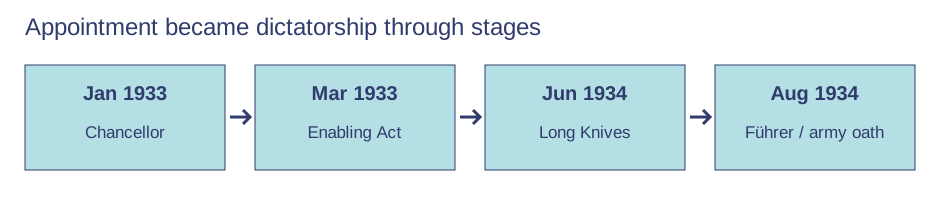
Political manoeuvres — Chancellors struggled to govern, and von Papen sought an arrangement in which conservative ministers would contain Hitler. Hindenburg appointed Hitler chancellor on 30 January 1933. Elite miscalculation and constitutional powers turned electoral strength into office; appointment did not yet give unlimited power.
Dictatorship and the police state, 1933–34
Reichstag Fire — The Reichstag burned in February 1933. Nazis blamed communists and used fear to justify emergency restrictions, arrests and suppression. The precise responsibility for the fire is debated; the central consequence is how the regime exploited it, not an unsupported claim that guilt is conclusively settled.
Enabling Act — The Enabling Act gave Hitler's government sweeping legislative powers after intimidation and the exclusion or repression of opponents. It undermined constitutional democracy. Subsequent bans on other parties and independent trade unions removed organised alternatives, combining legal forms with coercion.
Röhm and SA — Ernst Röhm wanted greater SA influence and a second revolution, alarming army leaders and conservatives. Hitler needed the army's support and feared a rival power base. The SA had helped Nazi growth, but its ambitions now threatened Hitler's alliances.
Long Knives — Hitler ordered the killing of Röhm, SA leaders and other perceived enemies. Propaganda portrayed the purge as defending Germany. It reduced internal threats and won army approval, demonstrating rule through violence rather than fair trials.
Führer — After Hindenburg died, Hitler combined presidential and chancellorial powers as Führer. The army swore loyalty to him personally. Dictatorship developed through a sequence of steps; the oath and removal of a separate head of state strengthened his position.Selected overview. Explain the qualifications using the notes.
SS and Gestapo — The SS and Gestapo pursued opponents through surveillance, arrest and terror. Concentration camps detained political opponents and others outside ordinary judicial protection. Informers and citizens' denunciations helped a police force that could not personally watch everyone.
Law under Nazism — Judges were expected to uphold Nazi priorities, and special courts punished opponents. Rights and impartial safeguards weakened. Courts, camps and policing worked together to deter dissent; a formally legal sentence did not establish justice or the truth of Nazi accusations.
Propaganda, religion and opposition
Goebbels — The Ministry of Propaganda controlled newspapers, radio and cultural activity. Cheap radios and public listening spread speeches; censorship reduced access to alternative views. Repetition and spectacle could encourage support, while terror discouraged disagreement; the effects cannot be measured from staged applause alone.
Rallies and sport — Rallies used flags, marching and speeches to display unity and Hitler's leadership. The Berlin Olympics presented a positive international image and concealed aspects of persecution. Such events were selective presentations, not evidence that racial ideology was valid or universally accepted.
Arts and culture — Books were burned and works labelled degenerate were excluded; approved art idealised race, rural life and heroism. Monumental architecture projected permanence and power; film entertained and conveyed political messages. Regulation narrowed what people could publish, see and discuss openly.
Catholic Church — The Concordat between the regime and the Vatican aimed to protect Church institutions while limiting political activity. Nazi actions later violated or undermined protections. It was an agreement with church authorities, not proof that all Catholics supported Nazism.
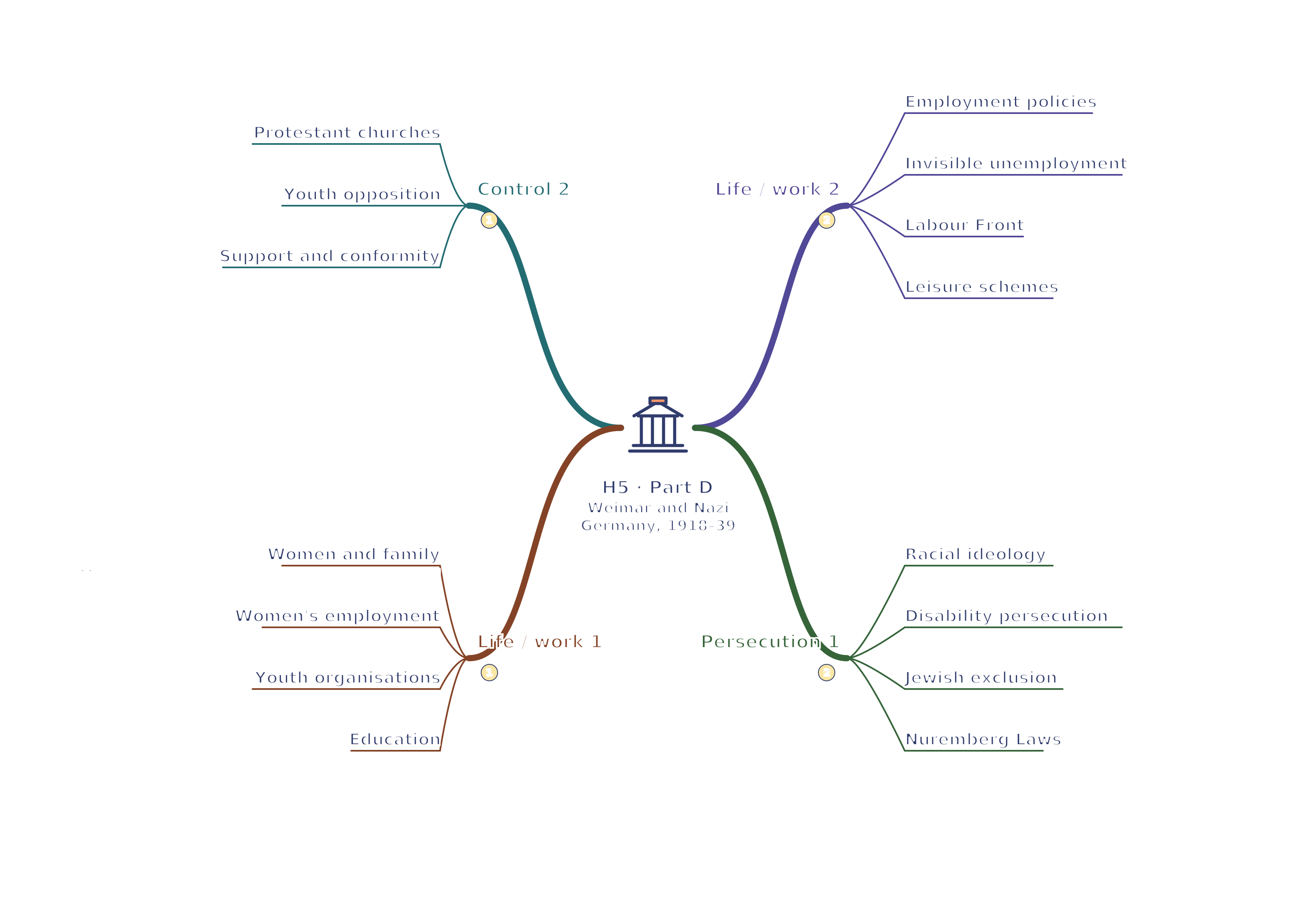
Protestant churches — Nazis encouraged a coordinated Reich Church and sympathetic German Christians. The Confessing Church resisted interference in doctrine and church independence. Pastor Martin Niemöller opposed state control and was imprisoned; resistance was varied and did not always oppose every aspect of Nazi policy.
Youth opposition — Some young people rejected regimentation through music, fashion or informal groups. Swing Youth favoured jazz and foreign styles; Edelweiss Pirates challenged Hitler Youth conformity. Opposition varied in scale and political commitment, so avoid presenting every participant as an organised revolutionary.
Support and conformity — Some Germans supported national revival or economic improvement; others complied to protect jobs and families, or lacked visible alternatives. Terror makes public behaviour a poor simple measure of private belief. Evidence of opposition and support needs careful judgement about time, group and context.
Women, youth and work, 1933–39
Women and family — Nazi policy encouraged women classified as racially acceptable to marry and have children through loans and awards. Traditional domestic roles and approved appearance were promoted. Policies excluded and persecuted other women, so they were not a universal programme benefiting every family.
Women's employment — Women were discouraged or barred from some professional opportunities, but rearmament later increased demand for workers. Economic pressures and family needs limited the ideal of all women remaining at home. Distinguish propaganda aims from actual employment patterns.
Youth organisations — The Hitler Youth emphasised physical training, obedience and preparation for military service; the League of German Maidens promoted fitness and domestic and maternal roles. Activities could attract participants but increasing compulsion restricted choice and competed with family and religious loyalties.
Education — Schools promoted Nazi ideology through history, biology and physical education; textbooks and teacher organisations were controlled. Racial claims were taught as fact despite being false. Jewish pupils and teachers faced exclusion and persecution, limiting access as well as shaping what was taught.
Employment policies — Autobahns, construction, the Reich Labour Service and expanding armaments created work; conscription removed men from unemployment totals. Rearmament was particularly important. Compulsion, preparation for war and exclusion make a falling total different from a simple improvement in everyone's welfare.
Invisible unemployment — Official totals did not count everyone without paid work, including some women pushed out of jobs and Jewish people excluded from employment. Conscripted men and labour-service members also changed recorded totals. Assess who is included before using statistics to claim universal prosperity.
Labour Front — Independent unions were abolished and the German Labour Front controlled labour relations. Workers lost the ability to strike or bargain freely, and hours could rise. Employment could provide security while restrictions reduced freedom; living standards require evidence about wages, prices, hours and conditions.
Leisure schemes — Strength Through Joy organised leisure activities and trips, promoting loyalty and managing free time. Beauty of Labour sought improved workplace surroundings. Not everyone could afford prestigious activities, and promised benefits such as the people's car did not all materialise before the war.
Racist persecution, 1933–39
Racial ideology — Nazis claimed a racial hierarchy and presented Jews and other groups as threats. These were racist falsehoods used to legitimise persecution. Slavs, Roma and Sinti, gay men and people with disabilities faced varied forms of discrimination, imprisonment and violence; their experiences were not identical.
Disability persecution — The 1933 sterilisation law targeted people labelled hereditarily ill, reflecting Nazi eugenics. Forced procedures violated consent and rights. Later wartime mass killing extended persecution, but detailed post-1939 genocide lies beyond this option's end date; do not blur the chronology.
Jewish exclusion — The April 1933 boycott targeted Jewish businesses; laws and intimidation excluded Jews from professions and public life. Economic and social pressure increased over time. Persecution was state-directed and also involved individual participation, benefiting some non-Jewish competitors while harming victims.
Nuremberg Laws — The Nuremberg Laws deprived Jews of full citizenship and prohibited marriages and sexual relations classified as between Jews and Germans. Nazi definitions depended on ancestry rather than personal belief. Legal exclusion made persecution systematic; these laws must be described as racist policies, not valid racial science.
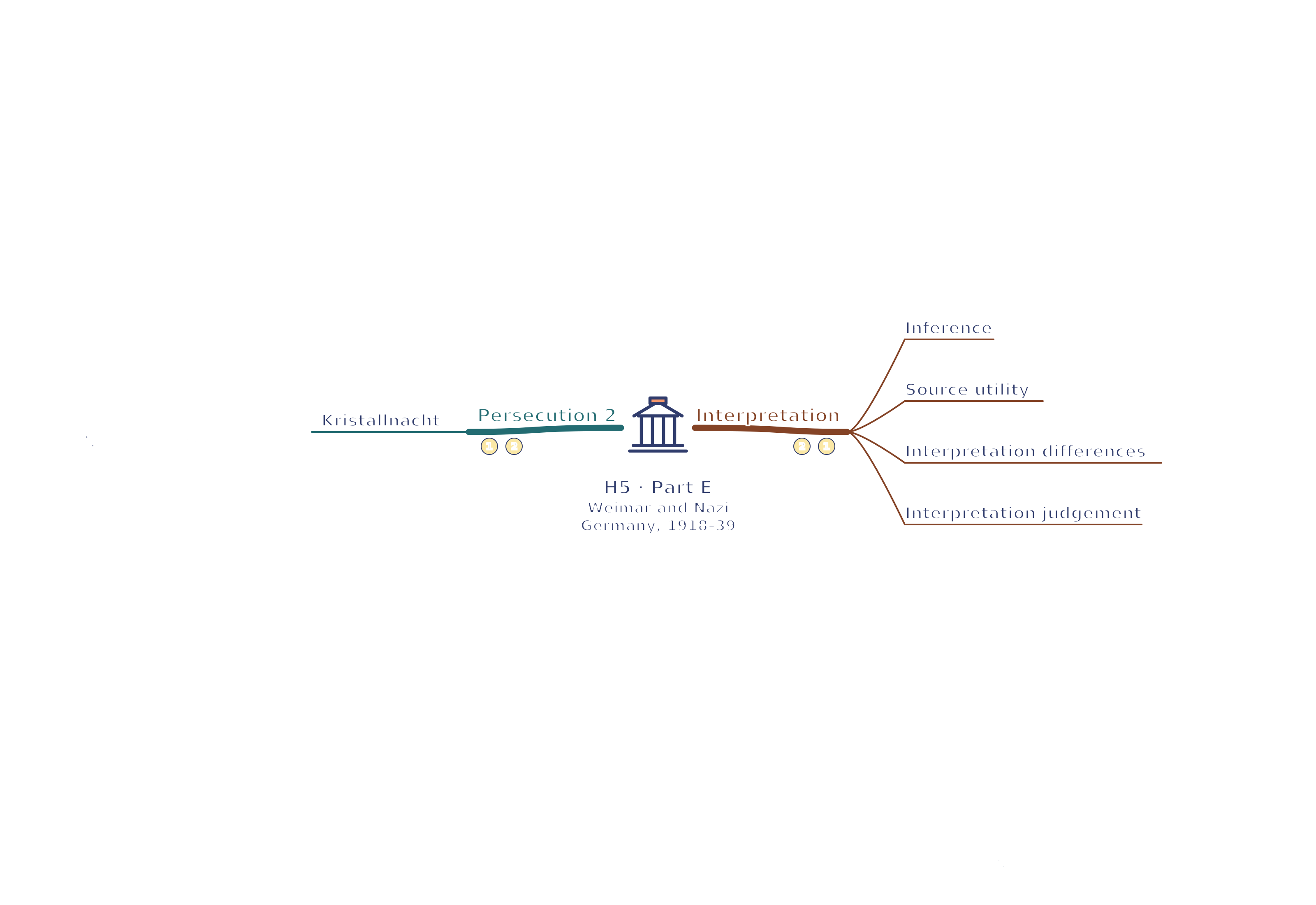
Kristallnacht — Synagogues were burned, Jewish homes and businesses attacked, people murdered and thousands of Jewish men sent to camps. The regime encouraged and organised violence, then imposed further penalties on victims. The episode escalated persecution beyond earlier legal and economic exclusion.
Sources, interpretations and judgement
Inference — An inference goes beyond repeating a source while remaining grounded in it. A photograph of a carefully arranged rally may support an inference about presentation and propaganda. Explain the detail supporting it; it cannot by itself establish every spectator's private attitude.
Source utility — Use content, provenance and contextual knowledge together. A Nazi poster is useful for investigating the message the regime wanted to spread, while limited for measuring actual public support. Purpose creates both value and limitations; identify them specifically.
Interpretation differences — One historian may emphasise economic crisis in Hitler's rise, another elite decisions. Identify the actual difference in claims and support it from the given extracts. Different evidence, focus and reasoning can explain disagreement; do not invent motives or biographies not supplied.
Interpretation judgement — Evaluate how well a claim accounts for the question using accurate knowledge and the other interpretation. Recognise strengths and limits, then justify agreement or disagreement. A historian writing later is not automatically more or less reliable than another; reasoning and evidence matter.
Test yourself
30 questions · Random sets of 10. These quick checks support revision; practise longer explanations and justified judgements too.
Mind map
Use the branches to recall the ideas and explain their connections. Check the revision notes for the full detail.
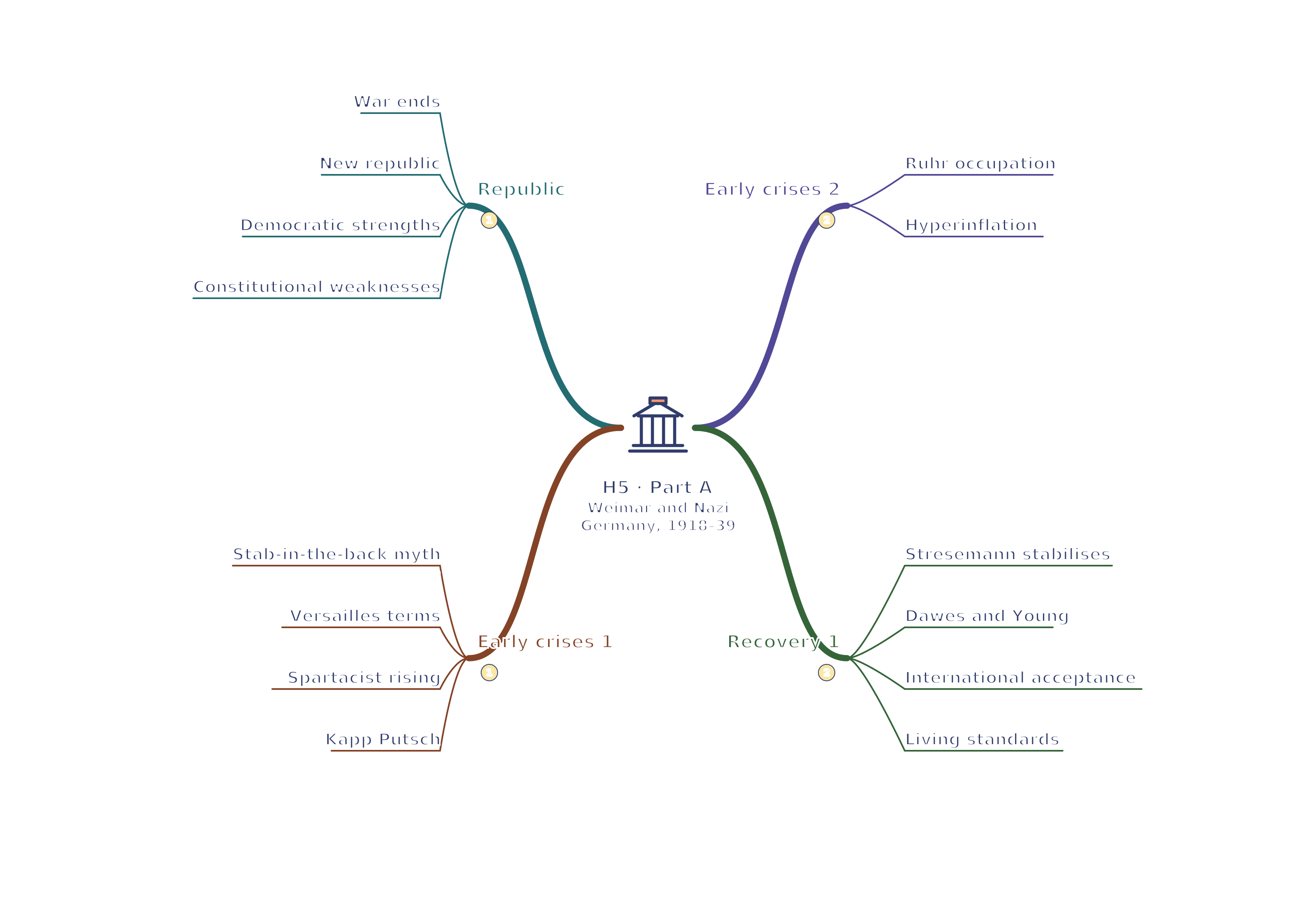
H5 · Republic / Early crises 1 / Early crises 2 / Recovery 1
View H5 · Republic / Early crises 1 / Early crises 2 / Recovery 1 mind mapOpen the full-size map to zoom. Download the PDF to print on A4 or enlarge to A3.
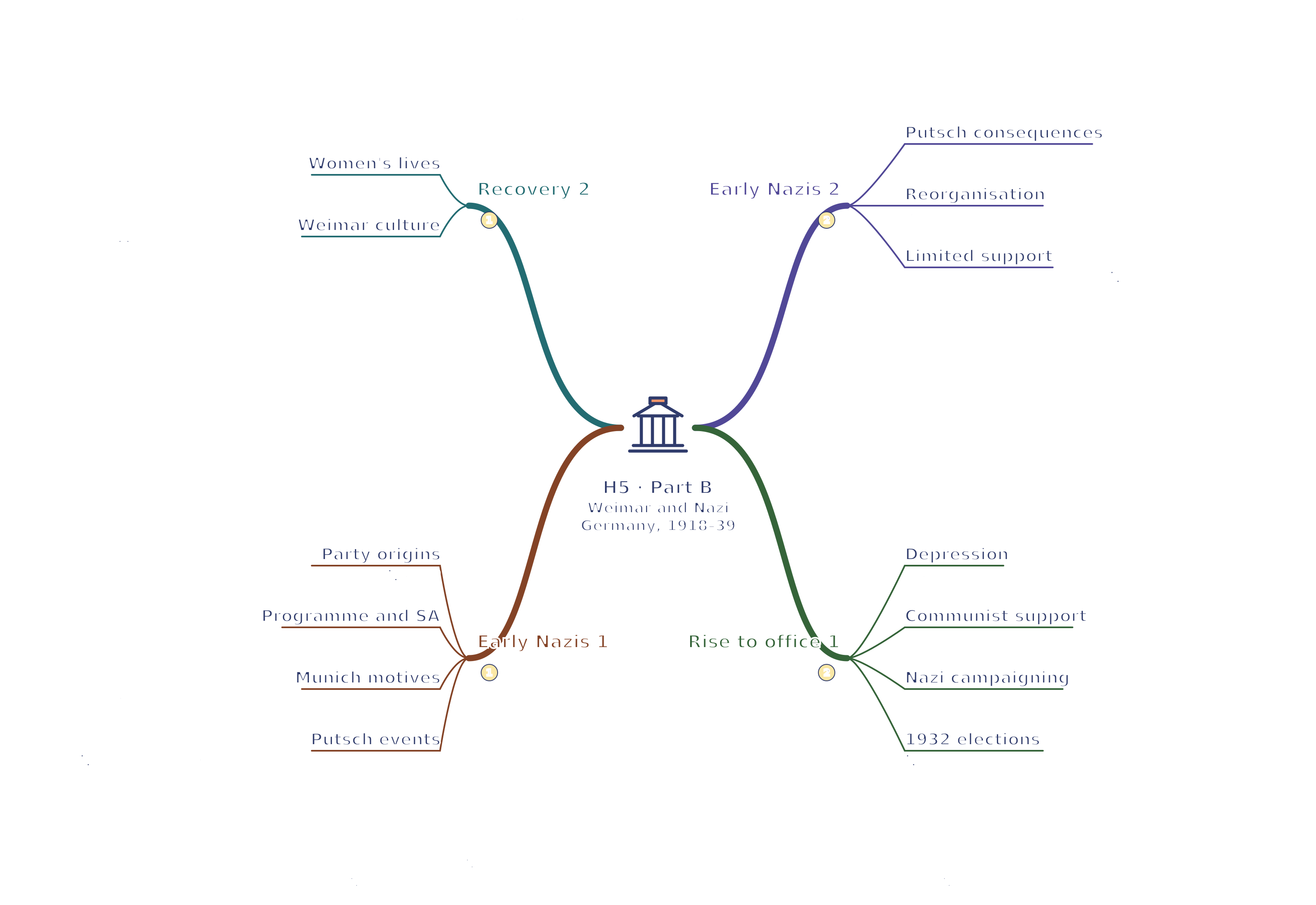
H5 · Recovery 2 / Early Nazis 1 / Early Nazis 2 / Rise to office 1
View H5 · Recovery 2 / Early Nazis 1 / Early Nazis 2 / Rise to office 1 mind mapOpen the full-size map to zoom. Download the PDF to print on A4 or enlarge to A3.
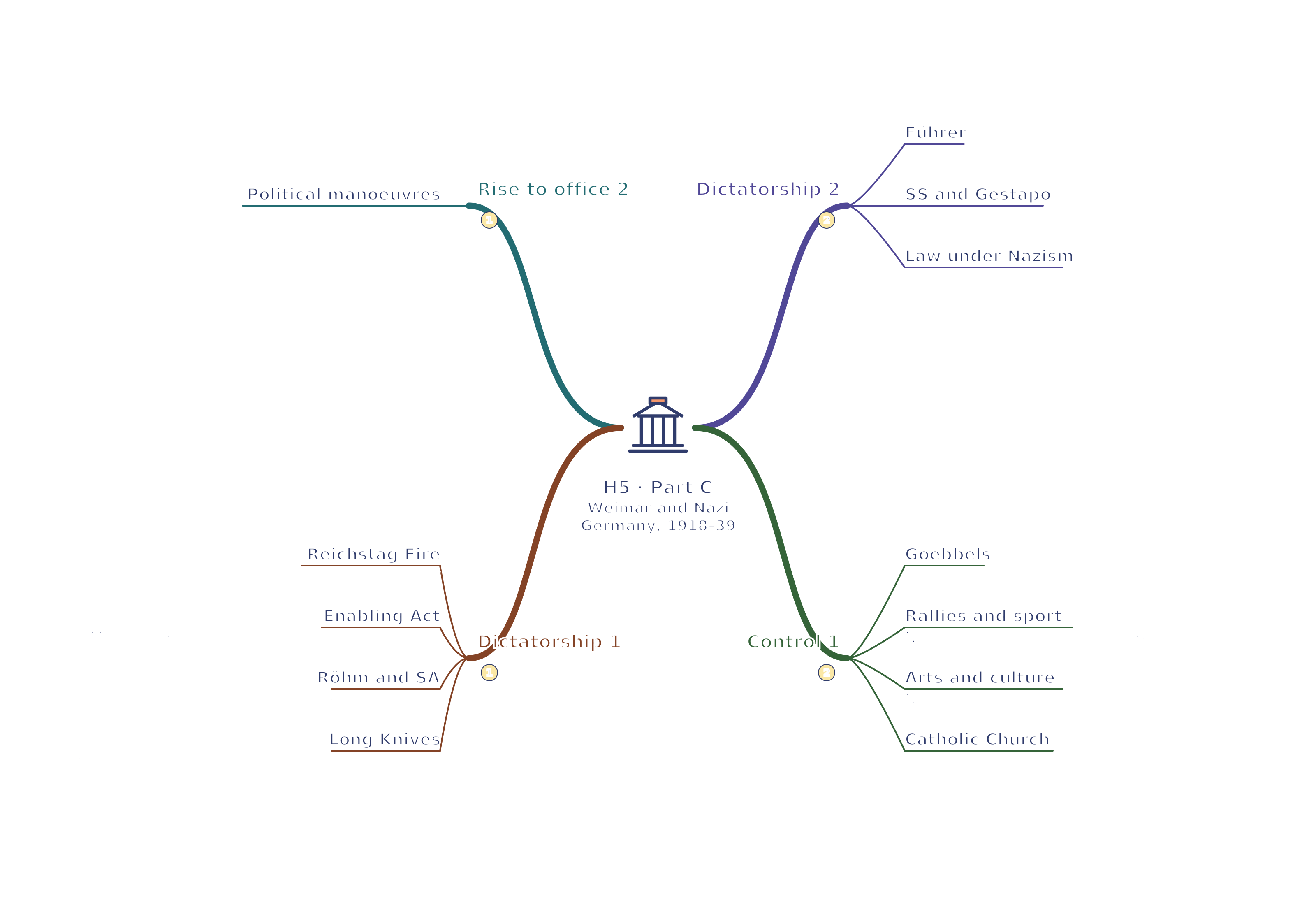
H5 · Rise to office 2 / Dictatorship 1 / Dictatorship 2 / Control 1
View H5 · Rise to office 2 / Dictatorship 1 / Dictatorship 2 / Control 1 mind mapOpen the full-size map to zoom. Download the PDF to print on A4 or enlarge to A3.
H5 · Control 2 / Life / work 1 / Life / work 2 / Persecution 1
View H5 · Control 2 / Life / work 1 / Life / work 2 / Persecution 1 mind mapOpen the full-size map to zoom. Download the PDF to print on A4 or enlarge to A3.
Jewish exclusion: 1933 boycott and restrictions attacked livelihoods and rights
Nuremberg Laws: 1935 citizenship and marriage rules institutionalised racism
Persecution 2
Kristallnacht: November 1938 violence escalated organised persecution
Interpretation
Inference: Draw a supported conclusion from a precise detail
Source utility: Evaluate evidence for an enquiry, not a label of bias
Interpretation differences: Historians can emphasise different evidence and questions
Interpretation judgement: Compare claims with evidence and qualify agreement
Connections
Republic → Early crises 1: Democratic institutions faced armed challenges and nationalist attacks from the start.
Early crises 2 → Recovery 1: Economic crisis prompted stabilisation but recovery retained foreign-loan dependence.
Part connections
H5 · Republic / Early crises 1 / Early crises 2 / Recovery 1: Republic → Early crises 1 — Democratic institutions faced armed challenges and nationalist attacks from the start.
H5 · Republic / Early crises 1 / Early crises 2 / Recovery 1: Early crises 2 → Recovery 1 — Economic crisis prompted stabilisation but recovery retained foreign-loan dependence.
H5 · Recovery 2 / Early Nazis 1 / Early Nazis 2 / Rise to office 1: Recovery 2 → Early Nazis 1 — Cultural and social change coexisted with extremist hostility to the republic.
H5 · Recovery 2 / Early Nazis 1 / Early Nazis 2 / Rise to office 1: Early Nazis 2 → Rise to office 1 — Organisation was more effective when Depression hardship widened Nazi appeal.
H5 · Rise to office 2 / Dictatorship 1 / Dictatorship 2 / Control 1: Rise to office 2 → Dictatorship 1 — Elite appointment opened a path to repression and legislative dictatorship.
H5 · Rise to office 2 / Dictatorship 1 / Dictatorship 2 / Control 1: Dictatorship 2 → Control 1 — Terror and censorship reinforced control over both conduct and information.
H5 · Control 2 / Life / work 1 / Life / work 2 / Persecution 1: Control 2 → Life / work 1 — Resistance and family pressures limited complete control of people’s conduct.
H5 · Control 2 / Life / work 1 / Life / work 2 / Persecution 1: Life / work 2 → Persecution 1 — Employment benefits and labour restrictions coexisted with racist exclusion.
H5 · Persecution 2 / Interpretation: Persecution 2 → Interpretation — Evidence about persecution needs contextual interpretation rather than acceptance of Nazi claims.
H5 · Persecution 2 / Interpretation: Interpretation → Persecution 2 — Comparing claims against specific policies supports a justified historical judgement.
 Mr Kidman's Classroom