Use precise historical evidence to explain causes, consequences and changes. The 30 quick questions support recall and application; practise the broader written tasks in your PLC too.
Revise the key ideas
Medieval causes and treatment
Four Humours — Medieval physicians inherited Hippocrates' idea that blood, phlegm, yellow bile and black bile should balance. Galen developed treatments using opposites. Bloodletting, purging and matching foods to hot, cold, wet or dry qualities followed this theory, rather than evidence about microbes.
Religion — Many people understood illness as punishment from God or a test of faith. Prayer, confession, pilgrimage and religious charity therefore seemed sensible responses. Religious and natural explanations could coexist: a patient could pray while also taking a herbal remedy.
Miasma — Miasma meant harmful or corrupted air, often associated with rotting waste and unpleasant smells. People burned herbs or carried sweet-smelling flowers to protect themselves. Removing waste sometimes helped health, although the explanation of infection was incorrect.
Galen's authority — Galen's works dominated university medicine. His argument that the body had purposeful design fitted Christian beliefs, while manuscript copying preserved his ideas. Respect for authority, limited dissection and few ways to test causes made change difficult; this was not a total absence of observation.
Physicians — Physicians trained through books and lectures, used pulse and urine examination, and prescribed diets or treatments based on humours. Their services were expensive. A urine chart could guide diagnosis within their theory but did not provide the modern chemical evidence of a laboratory test.
Other healers — Apothecaries mixed and sold medicines, usually learned through apprenticeship. Barber surgeons carried out practical procedures such as bleeding, tooth extraction and treating wounds. These roles differed from university-trained physicians, and people often relied on experienced local healers instead.
Care at home — Most sick people were cared for at home, commonly by women using knowledge passed through families. Rest, food and some plant remedies could relieve symptoms. Effective care did not mean people understood the cause of disease; remedies varied and some were harmful.
Hospitals — Many medieval hospitals were religious institutions providing shelter, food and spiritual care. Some cared for the elderly or travellers; contagious people could be excluded. They were not modern hospitals offering a wide range of cures, although nursing, rest and clean surroundings could aid recovery.
The Black Death, 1348–49
Plague arrival — The Black Death reached England in 1348 and killed a large share of the population in 1348–49. People could see rapid spread but had no knowledge of the plague bacterium. Modern explanations must be distinguished from the beliefs that shaped medieval action.
Plague explanations — Religious punishment, unusual planetary alignments and miasma were used to explain plague. Prayer and penance addressed God's anger; cleaning streets and burning fragrant substances addressed bad air. These actions reveal how explanations directed prevention even when they were mistaken.
Plague treatment — Treatments included bloodletting, purging and applying preparations to swellings. These did not cure bacterial plague and could weaken a patient. Some people fled affected places or avoided sufferers; reducing contact could help even without an accurate explanation of transmission.
Plague comparison — Local authorities could remove waste and restrict movement, but measures were inconsistent. Fear and the scale of mortality overwhelmed care. When comparing periods, distinguish the continued use of prayer and miasma from later changes in organised government prevention.
Renaissance explanations and communication
New observation — From c1500 to c1700, increased interest in observation and human anatomy challenged inherited ideas. Change was uneven: Four Humours, miasma and religious explanations persisted. Improved descriptions of the body did not immediately supply effective treatments or an explanation of infectious disease.
Printing — Printing made it easier to produce identical texts and detailed anatomical illustrations for larger audiences. It helped researchers compare and challenge findings. Printing also spread traditional ideas, so the technology enabled change rather than automatically proving every new claim correct.
Royal Society — Founded in 1660, the Royal Society promoted observation, experiment and communication between investigators. Publishing and discussing results made challenges to authority more possible. It did not instantly replace humoral medicine; its importance lay in methods and the exchange of evidence.
Sydenham — Thomas Sydenham closely observed patients and identified diseases through characteristic symptoms. He argued that diseases could be studied as distinct conditions. His careful diagnosis challenged reliance on ancient descriptions, although his explanations still included contemporary ideas rather than modern germ theory.
Renaissance training, care and case studies
Vesalius — Andreas Vesalius dissected human bodies and published detailed anatomy in 1543. He found errors arising from Galen's use of animals, such as assumptions about the human jaw. His book influenced English medical training, but changing anatomy knowledge was easier than replacing established disease theories.
Harvey — William Harvey used observation, dissection and measurement to argue in 1628 that the heart pumps blood around the body. The amount moved could not fit Galen's idea that blood was constantly made and used up. He could not see capillaries with the equipment available to him.
Harvey's impact — Harvey showed that experiment could overturn ancient explanations. Some doctors resisted him, and circulation did not immediately explain infections or make bleeding disappear. Separate a discovery's intellectual importance from its immediate practical effect on patients.
Care changes — The dissolution of monasteries removed many religious sources of care in the sixteenth century. Some hospitals were later refounded or supported through charity, and specialist institutions developed. Family care, apothecaries, herbal treatments, bleeding and purging remained important, showing substantial continuity.
Great Plague — During London's Great Plague, people still blamed foul air and God's judgement. Remedies, prayer and attempts to clean or perfume the air resembled earlier approaches. Without germ knowledge, many treatments failed; continuity in explanations helps explain continuity in treatment.
Plague regulation — In 1665 authorities shut infected households, marked doors, appointed watchmen and regulated burials and gatherings. Quarantine could restrict spread but trapping families together could expose healthy members. Compare this more organised action with medieval local efforts rather than claiming government did nothing earlier.
Germ theory and scientific medicine
Spontaneous generation — Before germ theory, some argued that microbes arose spontaneously from decaying matter. Miasma also remained influential. Better microscopes and controlled experiments allowed researchers to ask whether microbes caused decay rather than merely appearing after it.
Pasteur — Louis Pasteur's experiments showed that microbes from the environment cause decay and that sterilised material can remain free of them when contamination is prevented. His work provided the foundation for germ theory. Applying it to human illness required further evidence and faced resistance in Britain.
Koch — Robert Koch developed laboratory methods for culturing, staining and identifying bacteria. His work linked particular organisms with diseases such as tuberculosis in 1882 and cholera in 1883. This made diagnosis and targeted prevention more precise than a general belief in harmful air.
Science in Britain — British medicine adopted germ theory gradually as experiments, microscopes and practical results strengthened it. Pasteur, Koch and other researchers depended on equipment and communication, not simply individual genius. Doctors and officials could resist new ideas when they conflicted with training or appeared impractical.
Nursing, surgery and prevention
Nightingale — Florence Nightingale improved hospital organisation and cleanliness during the Crimean War and used statistical evidence to argue for reform. Her nursing school opened at St Thomas' in 1860. She initially accepted miasma, yet ventilation, clean bedding and hygiene could still improve care.
Anaesthetics — Ether was demonstrated as an anaesthetic in 1846; James Simpson introduced chloroform in 1847. Pain relief made more complex surgery possible. Dosing, deaths and resistance caused concern, while longer operations could increase infection before antiseptic methods were adopted.
Anaesthetic acceptance — Queen Victoria's use of chloroform during childbirth in 1853 helped acceptance. It did not remove every risk: anaesthetics could be difficult to control and required skill. Evaluate how endorsement, individual experiment and practical need worked together.
Lister — Joseph Lister applied germ theory to surgery, using carbolic acid on wounds, instruments and dressings, and later a spray. Antisepsis killed microbes and lowered infection. Irritation, complicated procedures and doubts about germs initially limited acceptance.
Asepsis — Aseptic surgery developed further in the late nineteenth and early twentieth centuries: sterilised instruments, clean operating rooms, gowns, masks and gloves helped keep microbes out. Antisepsis kills microbes already present; asepsis aims to prevent their introduction.
Vaccination — Vaccination offered prevention before full understanding of microbes. Britain funded vaccination in 1840 and made infant vaccination compulsory in 1853, with later enforcement. Fear of side effects and objections to compulsory action show that scientific benefit did not guarantee public consent.
Public health — The Public Health Act of 1875 required local authorities to address clean water, sewage disposal and other health hazards. Earlier action had often been permissive and uneven. Epidemics, evidence, pressure and wider political participation helped shift government away from laissez-faire attitudes.
Jenner and cholera case studies
Jenner's test — Edward Jenner observed that cowpox seemed to protect milkmaids against smallpox. In 1796 he tested this with James Phipps, later publishing his findings. The procedure would not meet modern research ethics; its historical significance was evidence for safer prevention than deliberate smallpox inoculation.
Jenner's limits — Jenner could not explain protection using microbes or immunity. Some opposed vaccination for religious, safety or professional reasons, and early supplies were variable. Repeated evidence, publicity and government support helped spread it; credit both individual initiative and conditions enabling adoption.
Snow's evidence — John Snow mapped cholera deaths and investigated households and water supplies around the Broad Street pump in Soho. He connected disease with contaminated drinking water rather than miasma. Exceptions, such as people with different water supplies, strengthened his argument.
Pump removal — The Broad Street pump handle was removed after Snow's investigation. The outbreak was already declining, so the action alone cannot establish his explanation. His wider evidence mattered, but lack of an identified organism limited immediate acceptance; germ theory later strengthened the waterborne account.
Modern causes and diagnosis
Genetics — Understanding DNA and inheritance helped explain conditions such as cystic fibrosis and inherited cancer risks. Genetic risk is not always destiny: several genes and environmental factors can interact. Modern explanations therefore extend beyond microbes without making germ theory obsolete.
Lifestyle — Studies linked smoking with lung cancer and identified effects of diet, alcohol and inactivity on health. Risk describes likelihood rather than certainty for an individual. Public health uses evidence from populations to recommend prevention and tackle environmental as well as personal causes.
Blood tests — Blood tests can detect infection, glucose levels or signs of organ problems and help monitor treatment. They provide evidence beyond symptoms and outward examination. Results still need interpretation in context; a test may have limits or require confirmation.
Scans and monitors — X-rays, CT and MRI scans provide different views of internal structures, while monitors track functions such as heart activity. CT uses X-rays and MRI uses magnetic fields. These improve diagnosis and planning but require trained staff, expensive equipment and suitable interpretation.
Modern care, treatment and prevention
NHS — The NHS began in 1948, widening access to medical services largely free at the point of use and funded through taxation. It brought together existing services rather than inventing hospitals. Increased demand, expense and unequal outcomes remained challenges; access and effectiveness are different questions.
Magic bullets — Paul Ehrlich pursued chemicals that would attack a pathogen with less harm to the patient. Salvarsan, developed with Sahachiro Hata in 1909, treated syphilis; later sulphonamides also treated infections. These chemical drugs differed from penicillin and were not risk-free cures for all disease.
High-tech treatment — Transplants, improved anaesthesia, intensive care, dialysis and keyhole surgery extended treatment possibilities. Antibiotics and asepsis made surgery safer, while imaging improved planning. Such developments depended on teams, investment and previous discoveries; costs and suitable donor organs could limit availability.
Mass prevention — Mass vaccination programmes prevent infectious diseases, while education and screening target other health risks. Governments can fund services, regulate harmful products and encourage behaviour change. Uptake, trust, poverty and access affect results, so information alone does not remove every health inequality.
Penicillin and lung cancer case studies
Fleming — Alexander Fleming observed in 1928 that mould stopped bacterial growth on a culture plate. He recognised penicillin's potential, but producing and stabilising sufficient amounts was difficult. Discovery should be distinguished from turning an observation into a usable medicine.
Florey and Chain — Howard Florey, Ernst Chain and their team developed purification and testing around 1939–41. Early patient treatment showed promise but shortages were severe. Their contribution turned Fleming's observation into practical therapy; effective development relied on teamwork and resources.
Wartime production — The Second World War increased demand and encouraged British and American government support and industrial production. By the later war years more patients could receive penicillin. War accelerated this development, but scientific work and manufacturing capacity were also essential.
Lung cancer diagnosis — In the twenty-first century, scans can reveal suspicious areas and biopsies establish the nature of a tumour. Staging assesses spread and helps choose treatment. Screening of suitable high-risk groups can detect disease earlier; no scan guarantees that every cancer will be found.
Lung cancer treatment — Surgery may remove a local tumour; radiotherapy damages cancer cells; chemotherapy, targeted drugs and immunotherapy treat suitable patients in different ways. Treatment depends on tumour type, stage and health. Earlier diagnosis can improve chances but does not guarantee a cure.
Government campaigns — Warnings, advertising restrictions, tobacco taxation, stop-smoking support and smoke-free legislation seek to reduce smoking and exposure to smoke. The 2007 smoke-free law in England protected many enclosed public and work spaces. Changes in smoking reflect several factors rather than one campaign alone.
Explaining change across time
Linked factors — Explain a development through interacting factors: Pasteur supplied a theory, instruments supported experiments, printing spread evidence and surgeons applied it. Government funding or regulation could then widen use. Merely listing factors does not explain why change occurred at a particular time.
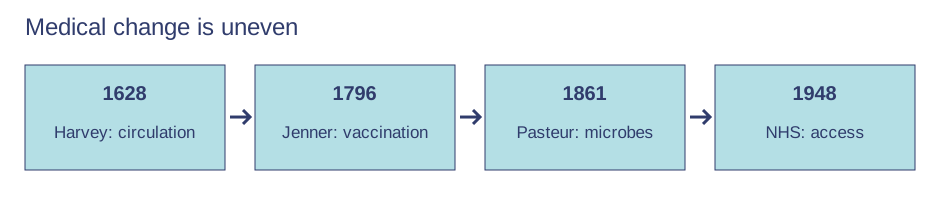
Uneven change — Harvey transformed understanding of circulation before many treatments changed; Jenner prevented disease before germ theory explained it. Compare the same aspect across periods and use precise evidence. A turning point is significant because it changes a process, not simply because it has a famous date.Selected overview. Explain the qualifications using the notes.
Historical judgement — For a judgement about the most important factor, compare its effect, reach and dependence on other factors. Explain a serious alternative and reach a conclusion answering the question. These quick quizzes support recall; extended explanation and evidence-based judgement require written practice.
Test yourself
30 questions · Random sets of 10. These quick checks support revision; practise longer explanations and justified judgements too.
Mind map
Use the branches to recall the ideas and explain their connections. Check the revision notes for the full detail.
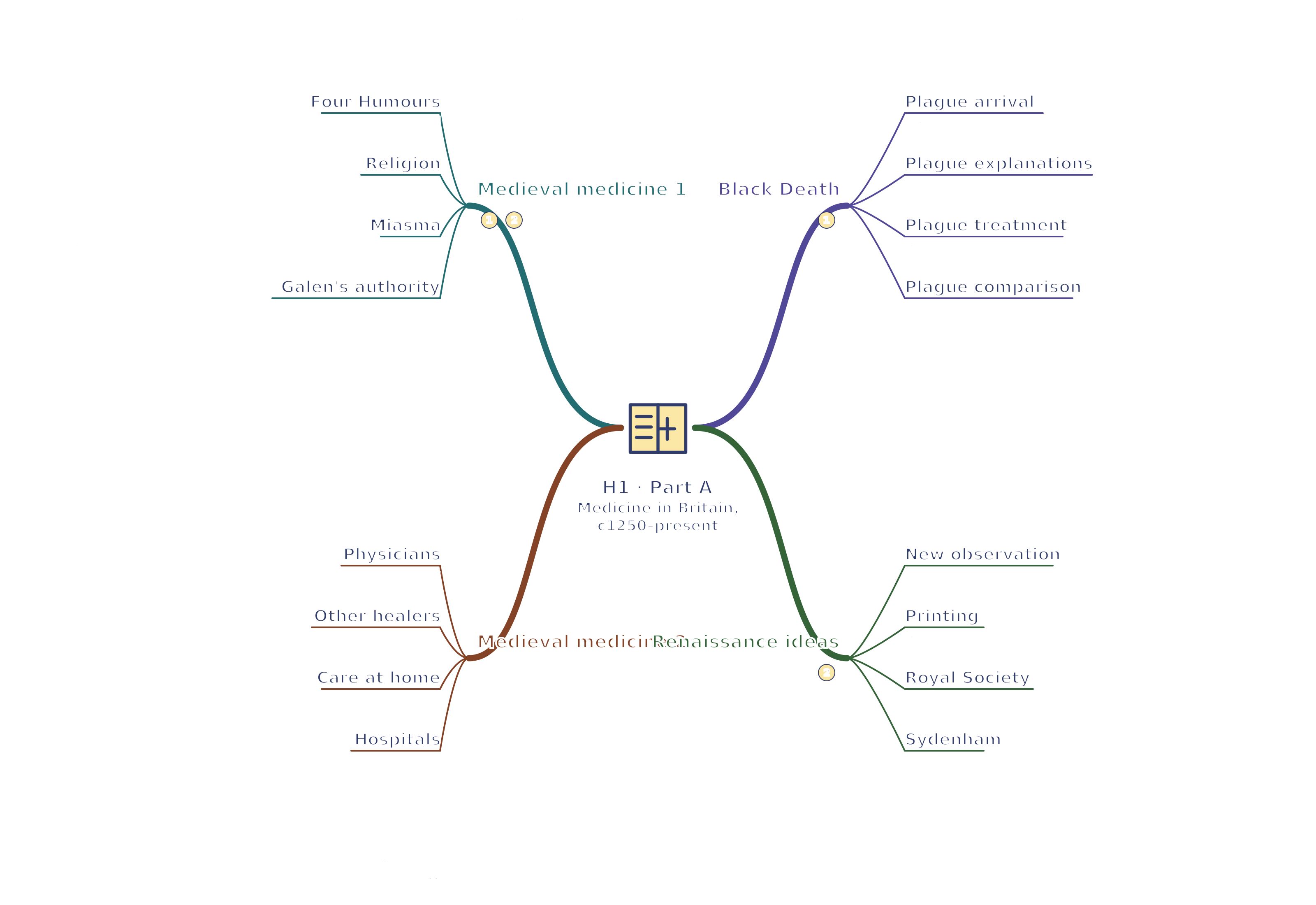
H1 · Medieval medicine 1 / Medieval medicine 2 / Black Death / Renaissance ideas
View H1 · Medieval medicine 1 / Medieval medicine 2 / Black Death / Renaissance ideas mind mapOpen the full-size map to zoom. Download the PDF to print on A4 or enlarge to A3.
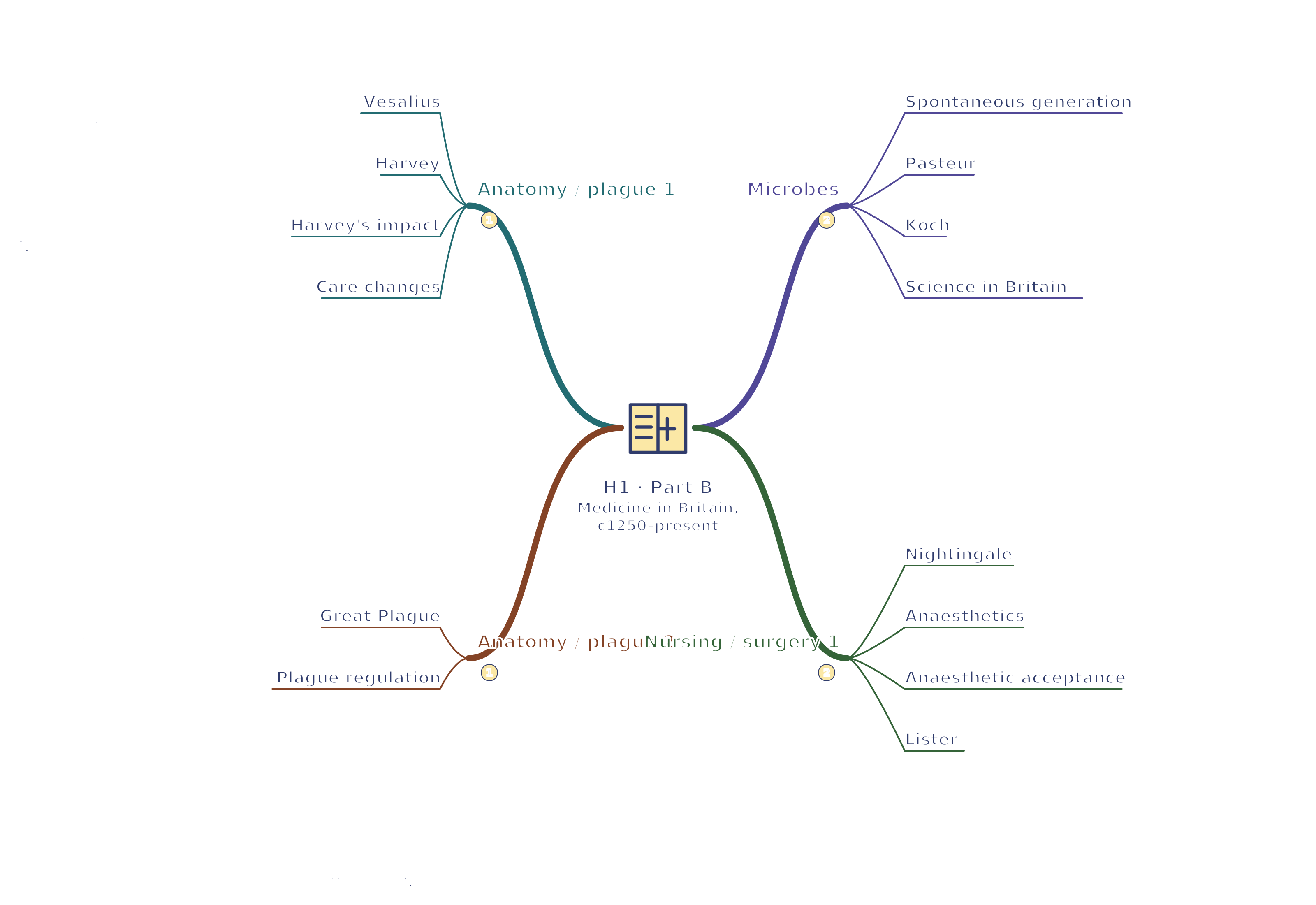
View H1 · Anatomy / plague 1 / Anatomy / plague 2 / Microbes / Nursing / surgery 1 mind mapOpen the full-size map to zoom. Download the PDF to print on A4 or enlarge to A3.
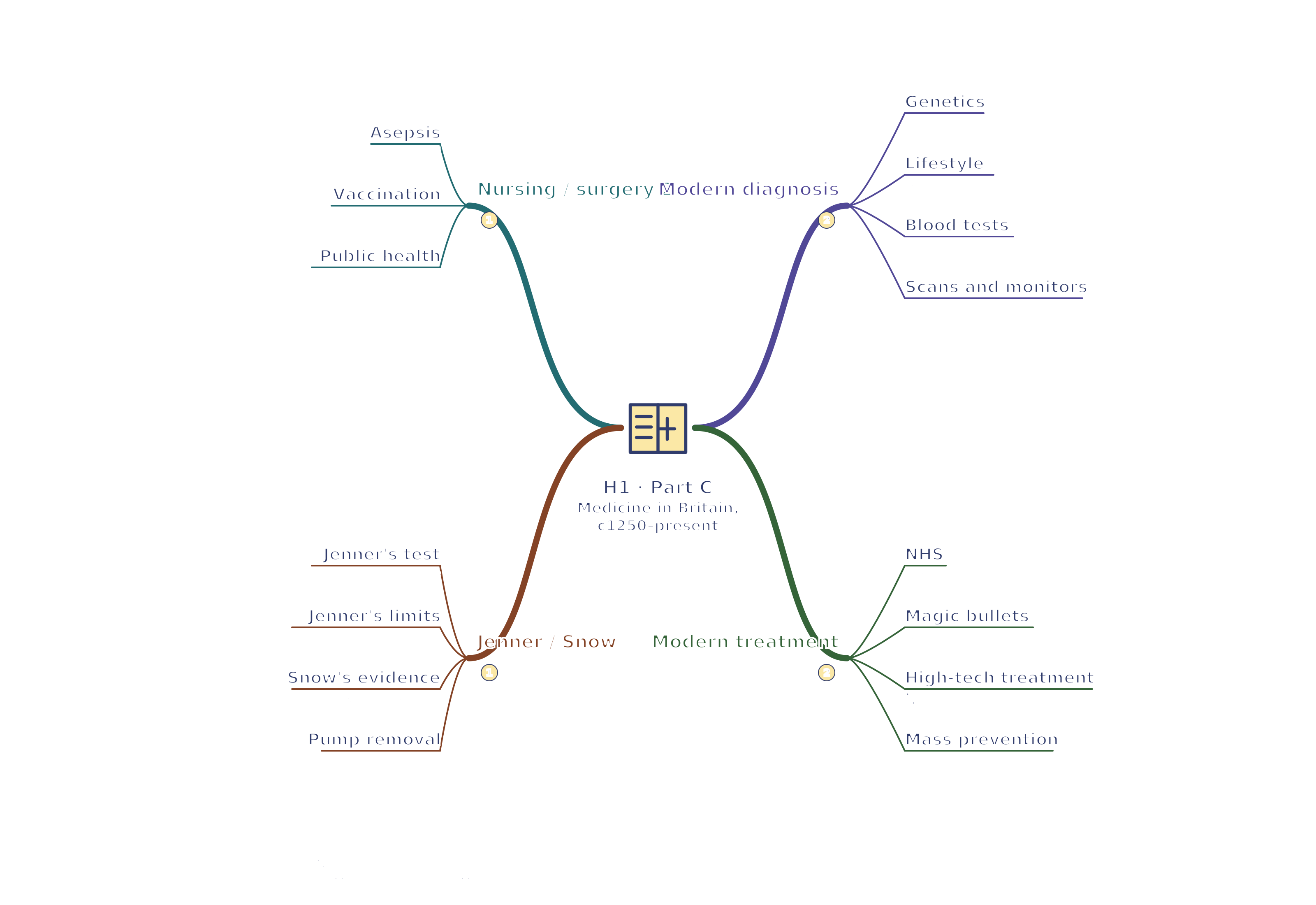
H1 · Nursing / surgery 2 / Jenner / Snow / Modern diagnosis / Modern treatment
View H1 · Nursing / surgery 2 / Jenner / Snow / Modern diagnosis / Modern treatment mind mapOpen the full-size map to zoom. Download the PDF to print on A4 or enlarge to A3.
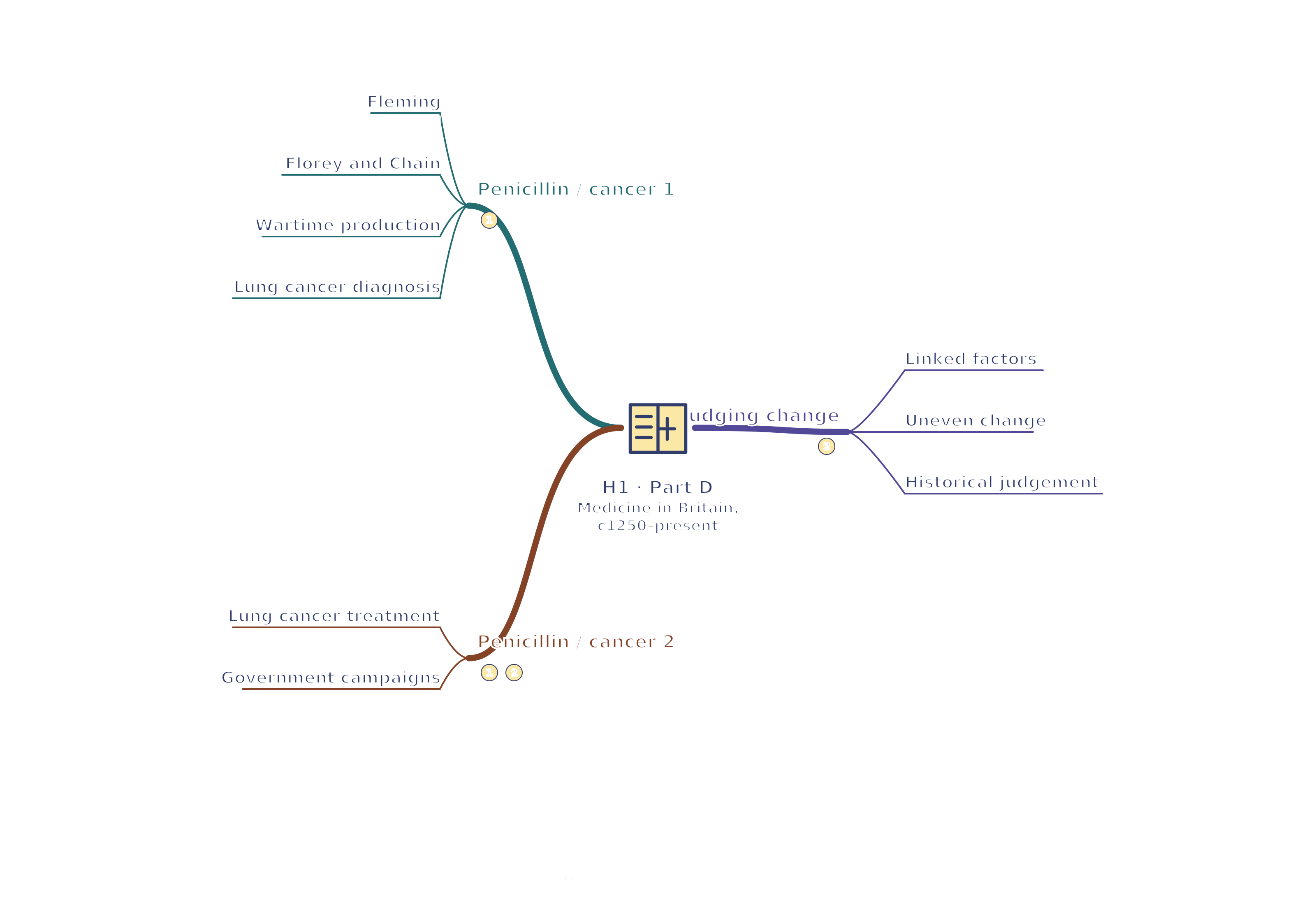
H1 · Penicillin / cancer 1 / Penicillin / cancer 2 / Judging change
View H1 · Penicillin / cancer 1 / Penicillin / cancer 2 / Judging change mind mapOpen the full-size map to zoom. Download the PDF to print on A4 or enlarge to A3.
High-tech treatment: New equipment enabled complex medicine and surgery
Mass prevention: Vaccination programmes and campaigns reduce risk
Penicillin / cancer 1
Fleming: 1928: mould inhibited bacteria; drug remained undeveloped
Florey and Chain: Research and testing made penicillin a treatment
Wartime production: Funding and industry enabled mass penicillin supply
Lung cancer diagnosis: Imaging and tissue tests identify cancers and stage
Penicillin / cancer 2
Lung cancer treatment: Surgery, radiotherapy and medicines suit different cases
Government campaigns: Tobacco regulation and support aim to prevent disease
Judging change
Linked factors: Individuals need institutions, technology and acceptance
Uneven change: Understanding, prevention and care changed at different speeds
Historical judgement: Use criteria and comparisons to defend importance
Connections
Medieval medicine 1 → Black Death: Humoral and religious beliefs shaped plague responses.
Renaissance ideas → Medieval medicine 1: Observation and shared experiments began to challenge inherited authority.
Part connections
H1 · Medieval medicine 1 / Medieval medicine 2 / Black Death / Renaissance ideas: Medieval medicine 1 → Black Death — Humoral and religious beliefs shaped plague responses.
H1 · Medieval medicine 1 / Medieval medicine 2 / Black Death / Renaissance ideas: Renaissance ideas → Medieval medicine 1 — Observation and shared experiments began to challenge inherited authority.
H1 · Anatomy / plague 1 / Anatomy / plague 2 / Microbes / Nursing / surgery 1: Microbes → Nursing / surgery 1 — Germ theory enabled antiseptic methods that made longer operations safer.
H1 · Nursing / surgery 2 / Jenner / Snow / Modern diagnosis / Modern treatment: Nursing / surgery 2 → Jenner / Snow — Vaccination and sanitation promoted prevention through different methods.
H1 · Nursing / surgery 2 / Jenner / Snow / Modern diagnosis / Modern treatment: Modern diagnosis → Modern treatment — Improved diagnosis helps select increasingly specialised treatment.
H1 · Penicillin / cancer 1 / Penicillin / cancer 2 / Judging change: Penicillin / cancer 1 → Penicillin / cancer 2 — Research, production and clinical technology turn knowledge into treatment.
H1 · Penicillin / cancer 1 / Penicillin / cancer 2 / Judging change: Penicillin / cancer 2 → Judging change — Modern care shows science working with government and wider access.
 Mr Kidman's Classroom