Use precise historical evidence to explain causes, consequences and changes. The 30 quick questions support recall and application; practise the broader written tasks in your PLC too.
Revise the key ideas
Henry's monarchy and England in 1509
Social order — In 1509 most people lived in the countryside. Nobles and gentry owned much land; tenant farmers and labourers worked it. Towns supported trade and crafts. Status, wealth and gender shaped opportunity, and the Church was central to worship, education and community life.
Royal government — Henry inherited a monarchy supported by the Royal Council, household and local officials such as justices of the peace. Parliament granted some taxation and passed statutes when summoned; it was not a modern elected government. The king depended on cooperation from elites to apply policy beyond court.
Renaissance prince — Henry became king in 1509 aged seventeen. Educated, athletic and interested in music, theology and tournaments, he sought glory and recognition as a European prince. His marriage to Catherine of Aragon strengthened dynastic connections. Court display projected authority but cost money.
Personal rule — Henry preferred hunting, tournaments and court life to routine administration, giving able ministers room to act. Yet their power depended on royal favour and he could reject advice or remove them. Distinguish ministerial influence from control over the monarch.
Strengths and aims — Henry aimed to secure the Tudor succession, win military honour and defend his authority. Youth, popularity and inherited resources were strengths. Expensive wars, impatience, uncertain succession and reliance on international cooperation exposed weaknesses, so apparent personal confidence did not guarantee policy success.
Wolsey's rise and domestic policies
Wolsey's rise — Thomas Wolsey's education, energy and ability to organise the 1513 French campaign helped him rise despite comparatively modest origins. He became Archbishop of York, cardinal and Lord Chancellor. Church income and royal office gave him enormous wealth, but his position relied on Henry.
Wolsey's authority — As cardinal and papal legate Wolsey exercised major religious influence, while the chancellorship gave him a leading role in administration and justice. His grandeur and patronage created supporters and enemies. Nobles could resent being directed by a minister who lacked their inherited rank.
Justice — Wolsey increased the use of Star Chamber to pursue misconduct and offer redress against powerful people. More cases and his desire for impartial justice increased his reputation, but delays, cost and administrative pressure limited results. Do not infer that all poor people received effective justice.
Enclosures — Wolsey investigated enclosures that displaced people or removed farmland. Some landowners were prosecuted and settlements challenged, but elite resistance and government need for support limited reform. The policy linked social concerns with royal justice without ending enclosure throughout England.
Finance — Wolsey used taxation based on assessments of income and property, the subsidy, to raise revenue more effectively than older fixed levies. Loans and other demands also funded war. Raising money successfully did not solve the underlying cost of Henry's ambitions.
Eltham Ordinances — The Eltham Ordinances reorganised the royal household, reduced numbers and sought to control spending. They also affected which courtiers could approach Henry, protecting Wolsey's influence. Financial and political purposes overlapped; reforms could produce resentment as well as savings.
Amicable Grant — The Amicable Grant sought funds for war without Parliament's approval. Taxpayers facing financial strain resisted, with serious unrest in East Anglia. Henry withdrew the demand. The episode damaged Wolsey and demonstrated practical limits on royal revenue-raising despite strong claims to authority.
Wolsey and foreign affairs
Foreign aims — Wolsey pursued Henry's honour, influence in Europe and security through diplomacy as well as war. England had fewer resources than France or the Habsburg Empire, so playing a mediating role could increase status. Agreements depended on other rulers' changing interests.
Early war — Henry's French campaign included the Battle of the Spurs and capture of Tournai and Thérouanne. While Henry was abroad, English forces defeated Scotland at Flodden. Victories enhanced reputation, yet continental war was expensive and territorial gains were limited or later surrendered.
Treaty of London — Wolsey negotiated a broad European peace agreement, presenting England as an influential mediator. It offered prestige and hoped to deter aggression. Rivalries between France and the Empire soon undermined lasting cooperation, so distinguish diplomatic acclaim from enduring peace.
Cloth of Gold — Henry and Francis I met at the Field of the Cloth of Gold in 1520, competing through lavish ceremony. The meeting displayed wealth and friendship but was costly and did not secure a reliable alliance. Henry also cultivated Charles V, illustrating flexible diplomacy.
1520s difficulties — War and the French defeat at Pavia in 1525 strengthened Charles V. Henry hoped to exploit victory but could not finance his ambitions after the Amicable Grant failed. Alliances shifted, and Charles' later influence over the Pope obstructed Henry's annulment.
Succession, annulment and Wolsey's fall
Catherine and succession — Catherine of Aragon bore Mary but no surviving son. Henry feared uncertainty over succession and wanted a legitimate male heir; attraction to Anne Boleyn reinforced his wish to end the marriage. A daughter existed, so the problem was not that Henry had no child at all.
Annulment arguments — Henry argued that marrying his brother Arthur's widow conflicted with biblical law. Catherine maintained that her first marriage had not been consummated, and a papal dispensation had authorised her marriage to Henry. An annulment declares a marriage invalid; it differs from ending a valid marriage by divorce.
Papal obstacles — Pope Clement VII faced pressure from Charles V, Catherine's nephew, especially after the Sack of Rome in 1527. Political vulnerability, Catherine's case and the previous dispensation made a decision difficult. Wolsey could not guarantee a solution simply through his church offices.
Blackfriars and fall — The London hearing led by Wolsey and Cardinal Campeggio did not grant an annulment; the case returned to Rome. Henry blamed Wolsey, while the Boleyn faction pressed against him. He lost office in 1529 and died in 1530 after being accused of treason, before trial.
Cromwell's rise and royal marriages
Cromwell's career — Thomas Cromwell had worked for Wolsey and gained parliamentary and legal experience. His usefulness, intelligence and ability to advance Henry's objectives brought him into the Royal Council and then leading office. Survival after Wolsey's fall shows political adaptability, not automatic inheritance of Wolsey's power.
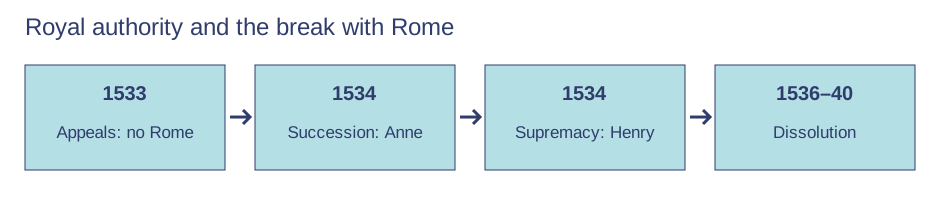
Annulment strategy — Cromwell helped use legal and parliamentary measures to assert independence from papal jurisdiction. Thomas Cranmer, Archbishop of Canterbury, declared Henry's marriage to Catherine invalid in 1533 after Henry married Anne Boleyn. Cromwell's authority grew because he delivered a route towards the king's aims.
Anne's fall — Anne Boleyn gave birth to Elizabeth in 1533 but no surviving son. By 1536 Henry was attracted to Jane Seymour and Anne faced enemies at court. Cromwell organised investigations leading to accusations of adultery and treason; historians debate the accusations and motives rather than accepting them as proven fact.
Jane Seymour — Henry married Jane Seymour in 1536. She bore Edward in 1537 and died shortly after childbirth. Her family gained influence, and she was associated with requests for mercy during rebellion. Her importance to Henry included producing the long-desired legitimate son, not controlling every royal policy.
Anne of Cleves — Cromwell supported marriage to Anne of Cleves to strengthen links with German Protestant powers when Catholic cooperation abroad threatened England. Henry disliked the match, and changing diplomacy reduced its perceived value. The marriage was annulled in 1540, undermining Cromwell's credibility.
Cromwell's government and fall
Parliament — Cromwell managed Parliament to pass measures on jurisdiction, succession and supremacy. Statutes widened the legal reach of royal policy and made opposition punishable. Parliament became an important instrument of the monarchy; this did not make Henry a constitutional monarch in the modern sense.
Administration — Government became more specialised under Cromwell, with a smaller Privy Council developing and financial courts such as the Court of Augmentations managing monastic income. Record-keeping and administration expanded. Historians debate the scale of a 'revolution in government', so do not claim he created all institutions from nothing.
Royal finance — Dissolution transferred property and income to the Crown, requiring collection and management. Land sales provided money and rewarded supporters but reduced future revenue from that land. Financial opportunity helped religious change, though it was not the only motive for the break with Rome.
Cromwell's fall — The failed marriage, concerns about religious policy and opponents including the Duke of Norfolk weakened Cromwell in 1540. Henry authorised his arrest and execution by attainder. As with Wolsey, great ministerial power offered no security once the king judged a minister unsuccessful or dangerous.
The break with Rome and religious opposition
Defender of Faith — Henry earned the title Defender of the Faith in 1521 for opposing Luther. His later break with Rome concerned authority, marriage and sovereignty; it did not mean he immediately accepted all Protestant beliefs. Many traditional doctrines remained important to him.
Legal break — The Act in Restraint of Appeals declared that England was an empire and barred appeals to Rome. It enabled the annulment to be settled within England. Legal independence supported dynastic policy and claimed sovereignty; several measures formed the break rather than one isolated decision.
Succession and supremacy — The Act of Succession recognised the succession through Anne and required an oath. The Act of Supremacy declared Henry supreme head of the Church of England. These dealt with related but distinct issues; neither simply gave ordinary people freedom to choose their religion.Selected overview. Explain the qualifications using the notes.
Enforcement — Cromwell used investigations, oaths and the Treasons Act to enforce the new order. Denying royal supremacy could be treated as treason. Compliance could reflect fear, loyalty or conviction, so outward obedience alone cannot prove enthusiastic support.
Elizabeth Barton — Elizabeth Barton, known as the Nun of Kent, criticised Henry's proposed marriage and warned against his policy. Her influence and supporters made her more than a private dissenter. She was executed in 1534 after condemnation, showing that religious criticism could be treated as a threat to royal rule.
Fisher and More — Bishop John Fisher defended papal authority; Thomas More refused the required oath in its prescribed form and resisted the royal religious settlement. Both were executed in 1535. Their standing made opposition significant, but repression reduced the ability of others to protest openly.
Cranmer and Cromwell — Cranmer and Cromwell promoted reforms including an English Bible and attacks on some traditional practices. The Great Bible was ordered for churches in 1538–39. Henry's Six Articles of 1539 reaffirmed key Catholic doctrines, showing reform and conservative limits within a church under royal control.
Dissolution and the Pilgrimage of Grace
Religious houses — Monasteries owned land, offered charity and hospitality, provided some education and care, and supported local economies. Provision varied between houses. Their dissolution affected tenants, servants and people receiving alms as well as monks and nuns.
Investigations — The Valor Ecclesiasticus assessed church wealth, while visitations reported misconduct in religious houses. Government used such findings to justify closure. These reports need evaluation because investigators served a policy agenda; accusations cannot automatically describe every monastery accurately.
Dissolution process — The 1536 act targeted smaller monasteries; later surrenders and the 1539 act extended dissolution. By 1540 monastic life had largely been dismantled in England. The Crown gained wealth and reduced independent religious authority; supporters also saw an opportunity for religious reform.
Winners and losers — Henry and purchasers benefited from property and revenue. Some religious personnel received pensions, but others lost livelihoods. Communities could lose charity, care and valued religious sites. Benefits and costs were distributed unevenly, so an overall judgement needs criteria and examples.
Rebellion causes — The Lincolnshire rising and Yorkshire Pilgrimage of Grace in 1536 opposed dissolution and religious change, alongside economic concerns and resentment of Cromwell. Many rebels professed loyalty to Henry while blaming his advisers. Do not reduce the movement to only religion or only poverty.
Aske and Norfolk — Robert Aske helped organise Yorkshire rebels, who took places including York and Pontefract. The Duke of Norfolk negotiated when the government's immediate military position was weak. Promises encouraged dispersal; renewed unrest in 1537 gave Henry grounds for harsh repression, including Aske's execution.
Rebellion significance — The uprising showed substantial resistance and initially forced negotiation. Divisions, loyalty to the king and dispersal weakened the rebels. Dissolution continued, demonstrating Henry's eventual control while reminding us that enforcement required strategy and was not effortless.
British depth-study reasoning
Explaining causes — For Wolsey's fall, link the failed annulment to Henry's loss of confidence, then explain how enemies could exploit it. Avoid a list of disconnected reasons. Use specific developments and compare immediate triggers with longer-term weaknesses in a minister's position.
Judging importance — In an argument about the break with Rome, weigh succession against sovereignty, finance and reforming influences. Explain how factors interacted and identify criteria for importance. Henry's wishes mattered, but international obstacles and ministers' legal strategies help explain why the chosen route became possible.
Test yourself
30 questions · Random sets of 10. These quick checks support revision; practise longer explanations and justified judgements too.
Mind map
Use the branches to recall the ideas and explain their connections. Check the revision notes for the full detail.
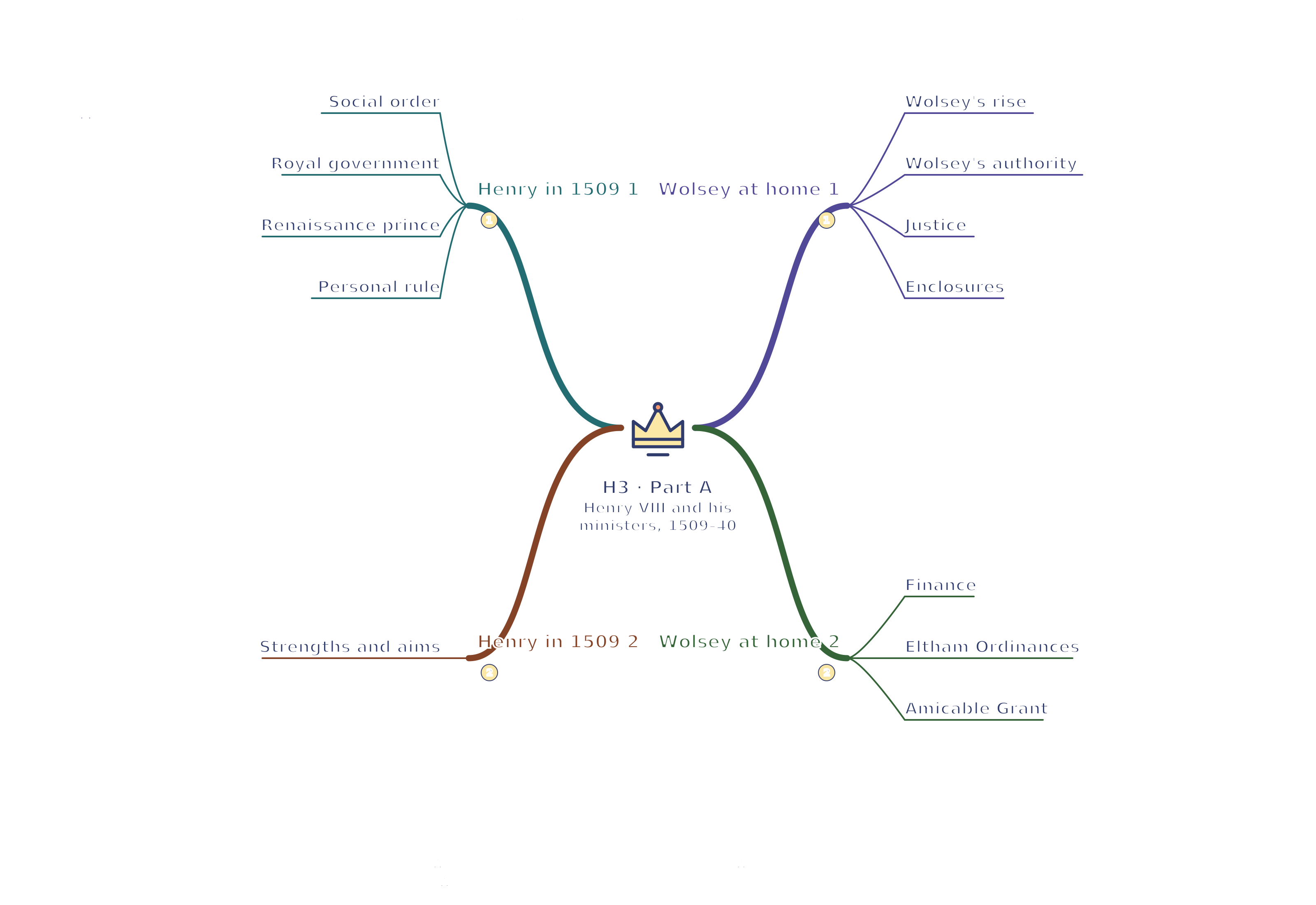
H3 · Henry in 1509 1 / Henry in 1509 2 / Wolsey at home 1 / Wolsey at home 2
View H3 · Henry in 1509 1 / Henry in 1509 2 / Wolsey at home 1 / Wolsey at home 2 mind mapOpen the full-size map to zoom. Download the PDF to print on A4 or enlarge to A3.
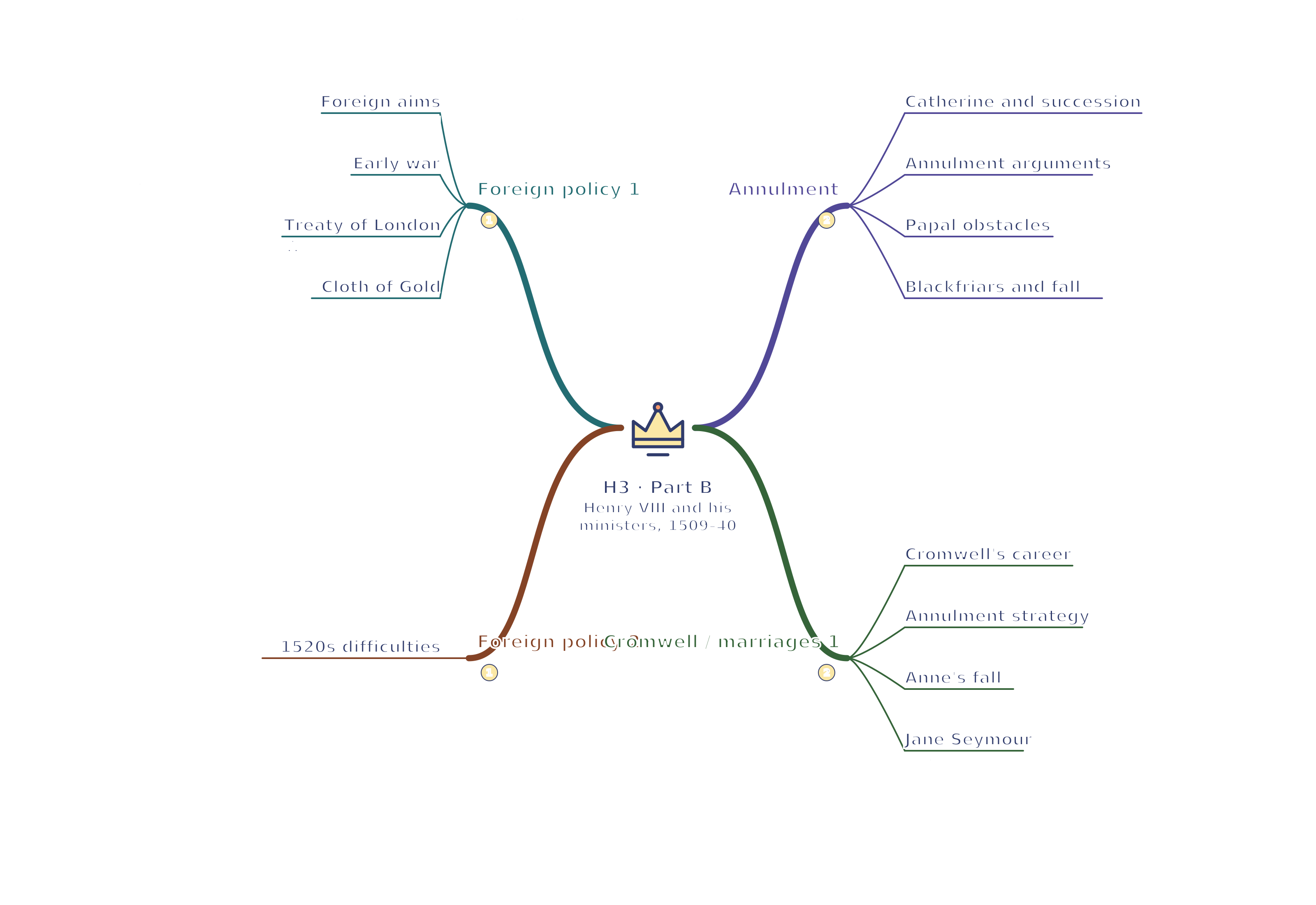
View H3 · Foreign policy 1 / Foreign policy 2 / Annulment / Cromwell / marriages 1 mind mapOpen the full-size map to zoom. Download the PDF to print on A4 or enlarge to A3.
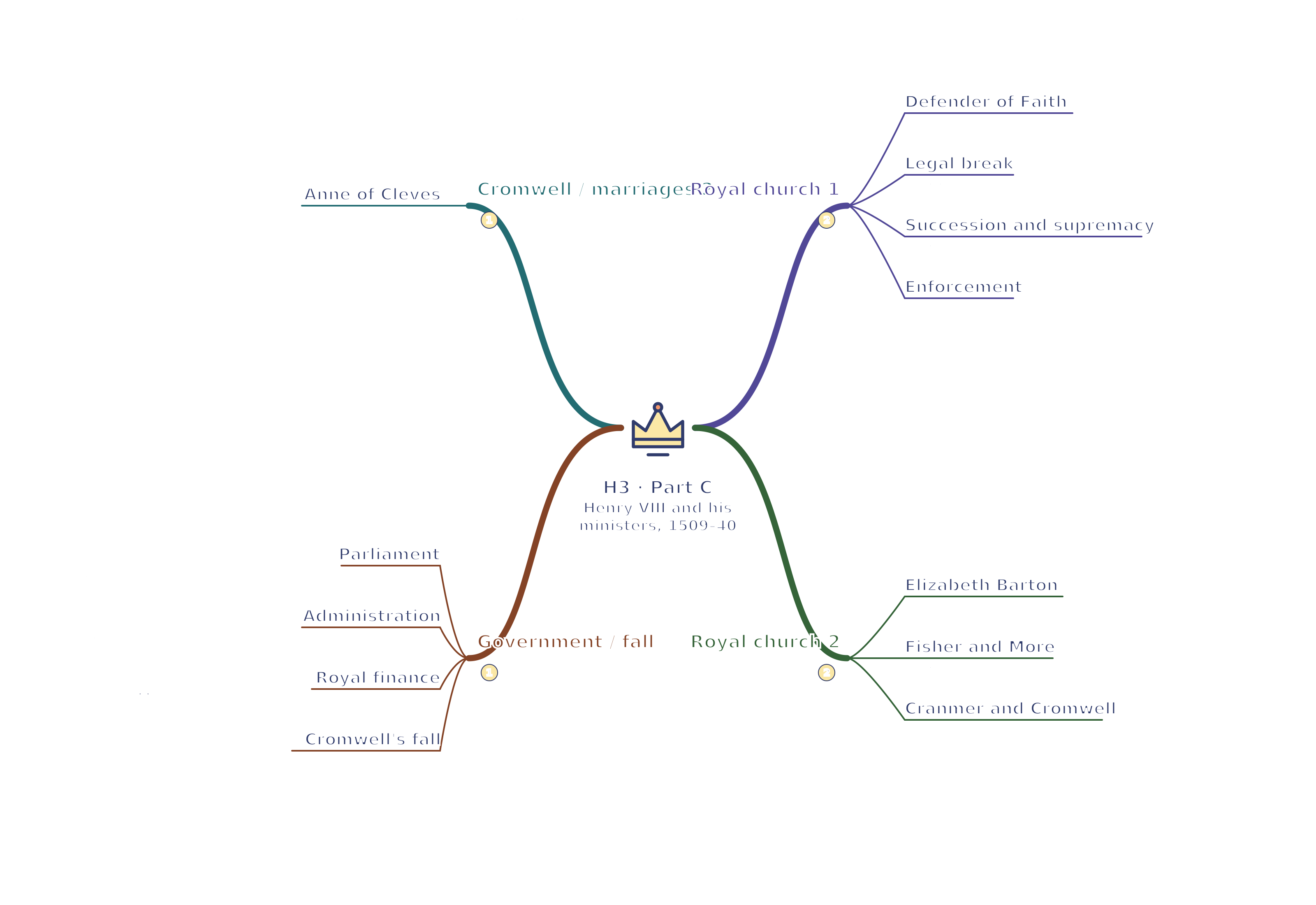
H3 · Cromwell / marriages 2 / Government / fall / Royal church 1 / Royal church 2
View H3 · Cromwell / marriages 2 / Government / fall / Royal church 1 / Royal church 2 mind mapOpen the full-size map to zoom. Download the PDF to print on A4 or enlarge to A3.
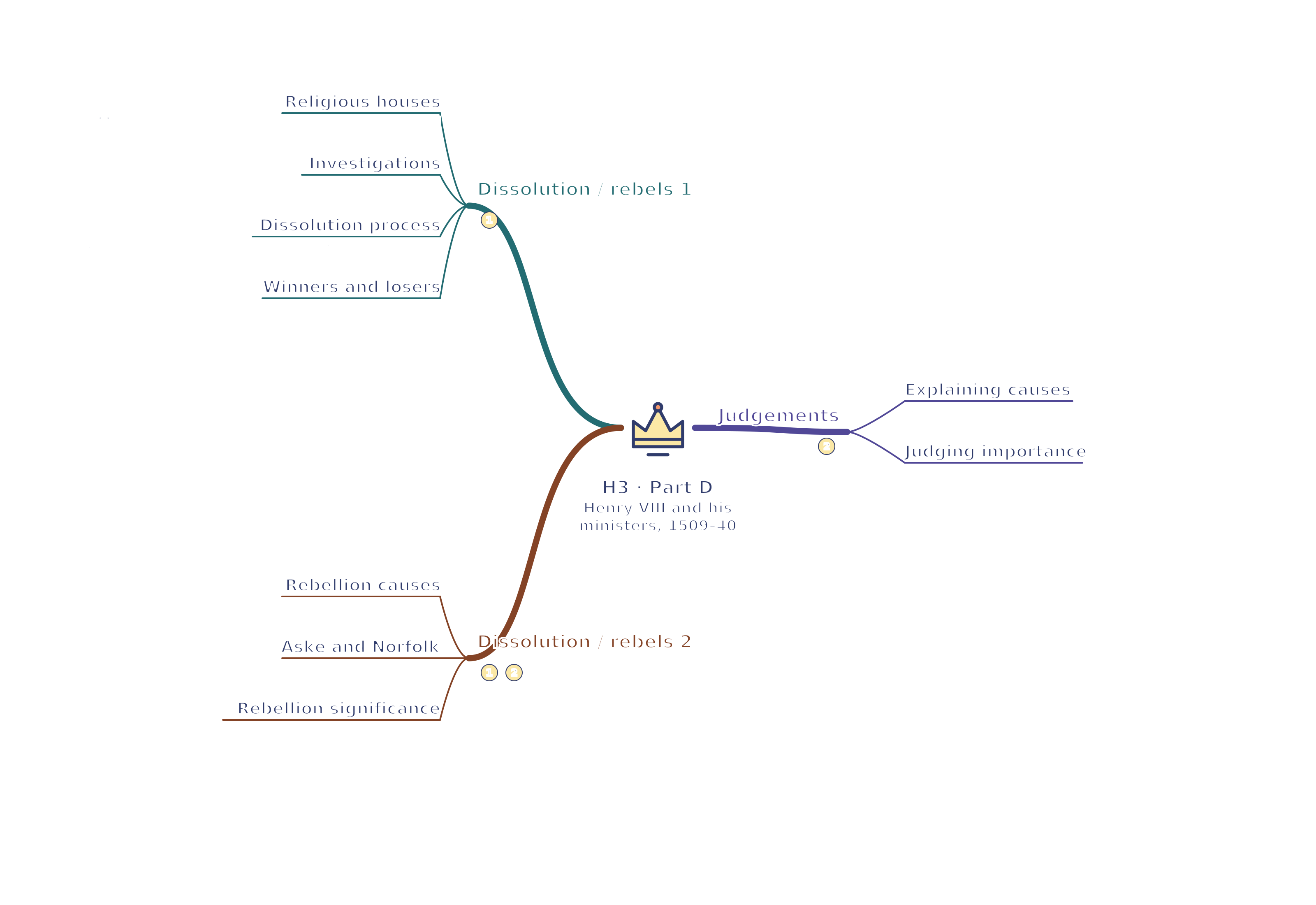
View H3 · Dissolution / rebels 1 / Dissolution / rebels 2 / Judgements mind mapOpen the full-size map to zoom. Download the PDF to print on A4 or enlarge to A3.
Social order: Mostly rural, hierarchical society depended on land
Royal government: King ruled through council, court and local elites
Renaissance prince: Education, display and martial ambition shaped Henry
Personal rule: Henry delegated work while retaining final authority
Henry in 1509 2
Strengths and aims: Dynasty, prestige and sovereignty guided choices
Wolsey at home 1
Wolsey's rise: Administrative skill and war organisation earned favour
Wolsey's authority: Church and government offices provoked resentment
Justice: Star Chamber widened access and challenged powerful men
Enclosures: 1517 enquiry challenged conversion of farmland to pasture
Wolsey at home 2
Finance: Subsidy assessed means more fairly but war remained costly
Eltham Ordinances: 1526 household reform cut costs and controlled access
Amicable Grant: 1525 non-parliamentary levy met resistance and was abandoned
Foreign policy 1
Foreign aims: Prestige, peace-making and alliances served royal interests
Early war: 1513 victories brought prestige but limited lasting gain
Treaty of London: 1518 collective peace raised Wolsey's diplomatic standing
Cloth of Gold: 1520 display improved contact, not lasting security
Foreign policy 2
1520s difficulties: Habsburg dominance reduced England's bargaining power
Annulment
Catherine and succession: A surviving daughter left Henry seeking a male heir
Annulment arguments: Henry questioned the validity of Catherine's first marriage
Papal obstacles: Clement VII faced Charles V and defended papal authority
Blackfriars and fall: 1529 proceedings failed; Henry withdrew royal favour
Cromwell / marriages 1
Cromwell's career: Legal and administrative experience built influence
Annulment strategy: Parliament and royal supremacy bypassed Rome
Anne's fall: Succession, royal preference and political enemies combined
Jane Seymour: 1537 male heir secured a central dynastic aim
Cromwell / marriages 2
Anne of Cleves: 1540 marriage sought alliance amid continental threats
Government / fall
Parliament: Statutes gave royal religious policy legal force
Administration: Smaller council and specialist courts handled growing business
Royal finance: Monastic wealth enlarged revenue and administrative demands
Cromwell's fall: Cleves failure and conservative enemies cost royal favour
Royal church 1
Defender of Faith: Henry defended Catholic teaching before rejecting papal power
Legal break: 1533 Appeals Act blocked reference of cases to Rome
Succession and supremacy: 1534 laws secured Anne's line and royal church headship
Enforcement: Oaths and treason law criminalised defiance
Royal church 2
Elizabeth Barton: Prophetic criticism became a political threat
Fisher and More: 1535 executions showed limits of tolerated conscience
Cranmer and Cromwell: English scripture advanced amid doctrinal limits
Dissolution / rebels 1
Religious houses: Monasteries provided worship, aid and local employment
Investigations: 1535 surveys and visits supplied financial and moral claims
Dissolution process: Smaller houses closed from 1536; larger ones followed
Winners and losers: Crown and purchasers gained; communities lost services
Dissolution / rebels 2
Rebellion causes: Religion, economic grievances and hostility to ministers overlapped
Aske and Norfolk: Rebel mobilisation met negotiation before repression
Rebellion significance: Large protest failed to reverse the royal programme
Judgements
Explaining causes: Show how a factor changed decisions or created pressure
Judging importance: Compare royal aims, ministerial actions and circumstances
Connections
Henry in 1509 1 → Wolsey at home 1: Delegated monarchy allowed Wolsey to build power through useful service.
Henry in 1509 2 → Wolsey at home 2: Royal ambitions required revenue but resistance exposed financial limits.
Part connections
H3 · Henry in 1509 1 / Henry in 1509 2 / Wolsey at home 1 / Wolsey at home 2: Henry in 1509 1 → Wolsey at home 1 — Delegated monarchy allowed Wolsey to build power through useful service.
H3 · Henry in 1509 1 / Henry in 1509 2 / Wolsey at home 1 / Wolsey at home 2: Henry in 1509 2 → Wolsey at home 2 — Royal ambitions required revenue but resistance exposed financial limits.
H3 · Foreign policy 1 / Foreign policy 2 / Annulment / Cromwell / marriages 1: Foreign policy 1 → Foreign policy 2 — Diplomatic prestige did not remove costs or Habsburg power.
H3 · Foreign policy 1 / Foreign policy 2 / Annulment / Cromwell / marriages 1: Annulment → Cromwell / marriages 1 — Failure of papal annulment opened a route for Cromwell and Cranmer.
H3 · Cromwell / marriages 2 / Government / fall / Royal church 1 / Royal church 2: Cromwell / marriages 2 → Government / fall — Failure of the Cleves marriage helped enemies destroy Cromwell’s influence.
H3 · Cromwell / marriages 2 / Government / fall / Royal church 1 / Royal church 2: Royal church 1 → Royal church 2 — Royal supremacy used law and repression while religious doctrine remained contested.
H3 · Dissolution / rebels 1 / Dissolution / rebels 2 / Judgements: Dissolution / rebels 1 → Dissolution / rebels 2 — Dissolution’s local losses helped cause protest but repression preserved royal policy.
H3 · Dissolution / rebels 1 / Dissolution / rebels 2 / Judgements: Dissolution / rebels 2 → Judgements — Explaining rebellion requires linked causes and a judgement about outcomes.
 Mr Kidman's Classroom