Use concepts, evidence and competing explanations to investigate society. The 30 quick questions support recall and application; practise the broader written tasks in your PLC too.
Revise the key ideas
Stratification and functionalist arguments
Stratification and inequality — Social stratification concerns patterned ranking and unequal access to rewards and power. Income is a flow of money, while wealth is accumulated assets minus liabilities. Status concerns esteem. Differences can persist across generations, but social positions do not determine every individual outcome or imply differences in human worth.
Davis and Moore — Their 1945 functionalist account proposed that important roles must be filled by capable people who undertake training and perform conscientiously. Higher rewards were said to encourage this allocation. Explain the steps connecting reward, preparation and performance; a list of well-paid occupations is not evidence that this mechanism is fair or necessary.
Functional importance — Essential care or cleaning can be poorly rewarded, while other highly paid activities are contested. Judging importance by pay makes the theory circular if pay is then justified by importance. Power, bargaining and ownership may explain rewards. Talent can also be restricted by unequal access to training.
Alternative views — Marxists see class rewards as exploitation; feminists question undervaluation of care and gendered barriers. Unequal rewards might motivate some people while wasting others' talents through exclusion. Compare what each perspective predicts and how opportunity, recruitment and performance could be measured.
Class and market position
Marx's class model — Marx located class in relation to the means of production: land, buildings, machinery and capital used to produce goods. The bourgeoisie own or control these; the proletariat depend on selling labour. Exploitation concerns appropriation of surplus value, not simply an employer being personally unkind or every worker having identical income.
Conflict and ideology — Marx argued that dominant ideas can present unequal arrangements as natural or fair, obscuring shared worker interests. Class struggle can challenge these relations. Evaluate the proposed link between ownership and power; governments, institutions and individuals do not always act as a perfectly united class bloc.
Weber's market situation — Weber agreed ownership matters but distinguished people by market chances, including valuable qualifications and skills. Professionals can obtain high earnings without owning major productive assets. Middle classes can expand rather than disappear. His account therefore challenges simple polarisation and an inevitable proletarian revolution.
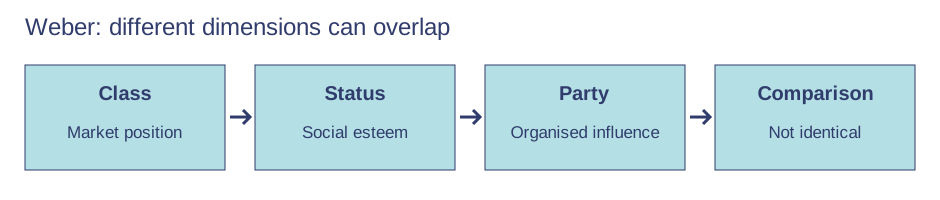
Class, status and party — A respected religious leader may have little wealth; a wealthy person may lack prestige; a pressure group may unite people across classes. Weber used party for organised pursuit of power beyond electoral parties. Social closure restricts outsiders' access to valued group membership, protecting advantages such as credentials or networks.Selected overview. Explain the qualifications using the notes.
Class divisions and mobility — Working, middle and upper class labels can refer to occupation, property, identity or culture. Intergenerational mobility compares parents and children; intragenerational mobility tracks a person's life. More professional jobs can create mobility without equal competition for them. A mobile individual does not prove the disappearance of structural class inequality.
Embourgeoisement debate — Embourgeoisement proposes that affluent workers become more middle class in outlook. The affluent-worker debate examined whether income changes beliefs, solidarity and lifestyle. Distinguish material consumption from political attitudes and class identification. Similar possessions do not necessarily imply equal power, wealth or opportunities.
Devine revisited — Affluent Workers Revisited (1992) used late-1980s interviews with Luton car workers and wives, revisiting the earlier affluent-worker setting. Devine found continuing concern about class injustice despite improved consumption, challenging predictions of privatised instrumentalism and uncritical acceptance of capitalism. A local qualitative sample cannot represent every worker or period.
Life chances and overlapping inequalities
Life chances — Life chances include access to education, employment, housing, health and security. They describe opportunities and risks, not an inevitable biography. Compare mechanisms such as money, networks and discrimination. Life expectancy is an average measure for a population; it is not a prediction of an individual's lifespan.
Class resources — Assets can fund housing and education, cushion unemployment and support unpaid training. Material deprivation restricts necessities; social exclusion limits participation in ordinary institutions and activities. Networks can open job opportunities. Income and wealth should be analysed separately because similar earnings can coexist with very different security.
Gender and sexuality — Caring responsibilities, occupational segregation, harassment and unequal recognition can affect opportunities. The glass ceiling is an invisible barrier to advancement. Sexuality-based discrimination can restrict safety and access even when formal inclusion exists. Patterns vary with class, ethnicity and institutions; laws and stated equality do not alone establish equal outcomes.
Race and ethnicity — Race categories are socially constructed; ethnicity concerns cultural identification and belonging. Racism can influence hiring, housing, policing and recognition of qualifications. Analyse institutional and interpersonal mechanisms without treating minority groups as uniform or interpreting unequal outcomes as biological differences.
Age and disability — Age stereotypes can restrict training or employment. Disability involves the interaction of impairments with barriers such as inaccessible transport or exclusionary hiring; support and adjustments can alter chances. Avoid assuming older or disabled people are uniformly dependent or lack skills and agency.
Religion and belief — Religious communities may provide support and connections, while discrimination or unsuitable institutional arrangements can restrict participation. People with no religion also have beliefs and rights. Evaluate the specific mechanism rather than assuming one faith always improves or worsens opportunities.
Intersecting inequalities — An older low-income disabled woman may face barriers unlike those experienced by a wealthy younger woman. Compare contexts and avoid assuming one hierarchy explains every outcome. The same resource may have different value across settings, so good explanations link social location to an actual process.
Poverty, deprivation and explanations
Absolute and relative poverty — Absolute poverty concerns insufficient resources for basic survival needs. Relative poverty concerns exclusion from customary living standards in a society. Thresholds depend on definition and household needs. A person may survive physically yet lack resources to participate, and a low-income measure is an indicator rather than a complete account of deprivation.
Townsend's relative deprivation — Poverty in the United Kingdom (1979) used a large household survey and a deprivation index covering diet, housing, clothing and participation. Townsend argued that income alone and official benefit thresholds missed important dimensions. An item absent by choice differs from one unaffordable; index design and historical norms affect interpretation.
Townsend's historical findings — Townsend's analysis of 1968–69 identified much more poverty through relative deprivation than through the contemporary state standard. These historical estimates demonstrate the consequences of measurement choices, not current UK prevalence. Evaluate selection of items, weighting, household needs and the line between preferences and constrained choices.
Culture of poverty — This account proposes that learned attitudes and practices can reproduce poverty across generations. Critics argue that insecurity and constrained opportunities may create the behaviours described, and that generalisation can blame people without explaining low wages or housing costs. Ask whether evidence shows causation, variation and realistic alternatives.
Murray's underclass — Losing Ground (1984) focused on the USA; Murray later applied arguments to Britain. He claimed welfare could discourage work and stable families and promote an underclass. These are contested causal claims, not facts about benefit recipients. Critics highlight weak evidence, structural unemployment and conventional aspirations among people in poverty.
Structural explanations — Low wages, insecure jobs, unemployment, caring costs, unequal assets and barriers to services can constrain income. Marxists emphasise capitalist inequality; feminists add gendered unpaid work and dependence. Compare these with cultural accounts using evidence about jobs and household circumstances rather than assuming poverty results from laziness.
Government responses — Governments can use income support, taxation, public services, training and employment measures to reduce hardship. Evaluate adequacy, take-up, cost, incentives and unintended effects. A policy can support some households while missing others. Distinguish its stated aim from evidence of changed material conditions and participation.
Globalisation — International production, trade and migration can shift job opportunities and bargaining power. Some groups gain employment or cheaper goods while others face displacement or insecure work. Global patterns affect UK life chances through specific mechanisms; avoid presenting globalisation as a uniformly beneficial or harmful force.
Poverty measurement — Compare before/after housing costs, household composition, prices and a defined period. Relative and absolute low-income indicators can move differently. Surveys may miss some people and assets. Do not treat a percentage below a threshold as a direct measure of every form of deprivation or as a moral judgement.
Power, authority and relationships
Power and legitimacy — Formal office provides authorised decision-making powers; informal influence can arise through networks, reputation, expertise or control of resources. Authority involves accepted legitimacy. A manager's office and a colleague's influence are different sources. Hidden agenda setting can matter even when no command or open conflict is visible.
Traditional authority — Weber's traditional type rests on established practice and inherited position. People obey because the arrangement is regarded as customary. It is an ideal type for comparison, not a claim that every hereditary institution lacks written rules or that every older practice is automatically legitimate to all participants.
Charismatic authority — Followers regard a leader as extraordinary and accept personal authority. It differs from popularity alone and can exist outside formal office. Authority may weaken when confidence declines or become organised into institutions. Analyse followers' recognition, not merely a leader's claim to be exceptional.
Rational-legal authority — Authority rests on accepted rules and procedures, as in a lawful official role. Occupants change while the office remains. The existence of rules does not ensure justice or equal treatment. Actual organisations can combine traditional, charismatic and rational-legal features, so types guide analysis rather than exhaust reality.
Perspectives on power — Pluralist accounts emphasise competition among groups and dispersed influence. Marxists stress class dominance, feminists patriarchal power, and functionalists coordinated collective goals. Compare access, outcomes and agenda setting in a specific institution. Voting rights alone do not demonstrate equal influence over all decisions.
Patriarchy and unequal relationships
Walby's six structures — Theorizing Patriarchy (1990) identified paid work, household production, culture, sexuality, male violence and the state as interacting structures. For example domestic care can constrain earnings, weakening bargaining at home. This is a framework for examining mechanisms, not a claim that every man personally controls every woman in an identical way.
Private and public patriarchy — Walby distinguished direct control through fathers or husbands from domination in public institutions, where women participate but face segregation and exploitation. Access to employment may increase without equal power. Evaluate historical change and differences within groups; public participation does not by itself prove gender equality.
Power across social positions — Resource ownership, citizenship, discrimination, caring responsibilities and institutional access can affect voice and control. Sexuality, disability, religion and age can change these relationships. Analyse a specific decision or barrier rather than ranking whole groups uniformly; agency and collective action can challenge unequal arrangements.
Evaluating stratification evidence — Occupational categories, income surveys and interviews illuminate different dimensions. Statistics show distributions; accounts reveal meanings. Evaluate definitions, sample and period, then connect evidence to the theory's mechanism. No one measure proves that society is wholly meritocratic, wholly closed or free from inequality.
Further stratification and political concepts
Historical systems — Slavery treats people as property and denies basic freedom. Feudalism involves historical relationships of landholding and obligations. Caste systems allocate inherited ranked membership with restrictions on mobility. Aristocracy concerns a privileged hereditary elite. These systems differ from a modern occupational classification and should not be treated as interchangeable.
Class locations and identity — White-collar work typically involves office or professional tasks; manual work involves physical labour, though skills and rewards vary. The petty bourgeoisie are small proprietors. Proletarianisation involves becoming dependent on wage labour. Lumpenproletariat is Marx's contested category outside stable productive class organisation. Subjective class is how people identify, which can differ from a researcher's categories.
Poverty processes — A cycle of deprivation links disadvantages across time or generations. Environmental poverty involves inadequate surrounding conditions and services. A poverty trap describes arrangements where increased earnings yield little net improvement after costs or lost support. Subjective poverty concerns perceived insufficiency; a state standard uses official criteria. Distinguish these from income thresholds and an asserted culture of dependency.
Benefits and work — Universal benefits apply to an eligible category without an income test; selective or means-tested benefits depend on specified need or resources. Social security and welfare benefits support income or security through public arrangements. Unemployment means lack of work while seeking or available for it under the measure used; underemployment means insufficient hours or use of skills. A wage is employment pay, not total household wealth.
Welfare labels — Terms such as welfare scrounger or benefit cheat can stigmatise recipients and conflate claiming support with wrongdoing. A claim about fraud needs evidence of deception, not merely low income or benefit receipt. Welfare reform changes rules or provision; the welfare state uses public institutions to support wellbeing. Evaluate incentives alongside jobs, care and costs.
Economic and political ideals — Capitalism organises production through private ownership and markets. Socialism favours collective or public control for social ends; communism proposes a classless society. New Right approaches often combine neoliberal market emphasis with neoconservative support for traditional authority. Privatisation transfers provision or ownership towards private organisations. These terms describe contested systems and arguments, not uniform national realities.
Government forms — A nation-state claims political authority over a territory and population. Monarchy places a monarch at its head; dictatorship concentrates control with limited accountability; oligarchy involves rule by a small group. Fascism is an authoritarian ultranationalist ideology. Liberal democratic values emphasise political rights, pluralism and accountable government; actual practice requires evidence.
Political participation — A political party seeks organised governmental power; pressure or interest groups pursue particular aims. MPs represent constituencies and a prime minister leads a government under the relevant system. First past the post awards a seat to the leading candidate; proportional representation seeks a closer relationship between votes and seats. Formal representation does not ensure equal informal influence.
Collective interests and change — Class alignment links political support with class position; dealignment weakens that link. Political socialisation teaches political meanings and practices. Trade unions organise worker interests; industrial disputes concern employment relations. Direct action seeks change outside ordinary representative procedures, and new social movements may organise around environment, identity or other cross-class issues.
Integration and difference — Assimilation expects newcomers to adopt dominant patterns; multiculturalism recognises continuing cultural diversity. An asylum seeker requests protection from persecution, distinct from every other migrant category. Ageism is unequal treatment based on age. Deference is acceptance of higher-status authority; these attitudes vary and should not be inferred simply from a person's background.
Test yourself
30 questions · Random sets of 10. These quick checks support revision; practise longer explanations and justified judgements too.
Mind map
Use the branches to recall the ideas and explain their connections. Check the revision notes for the full detail.
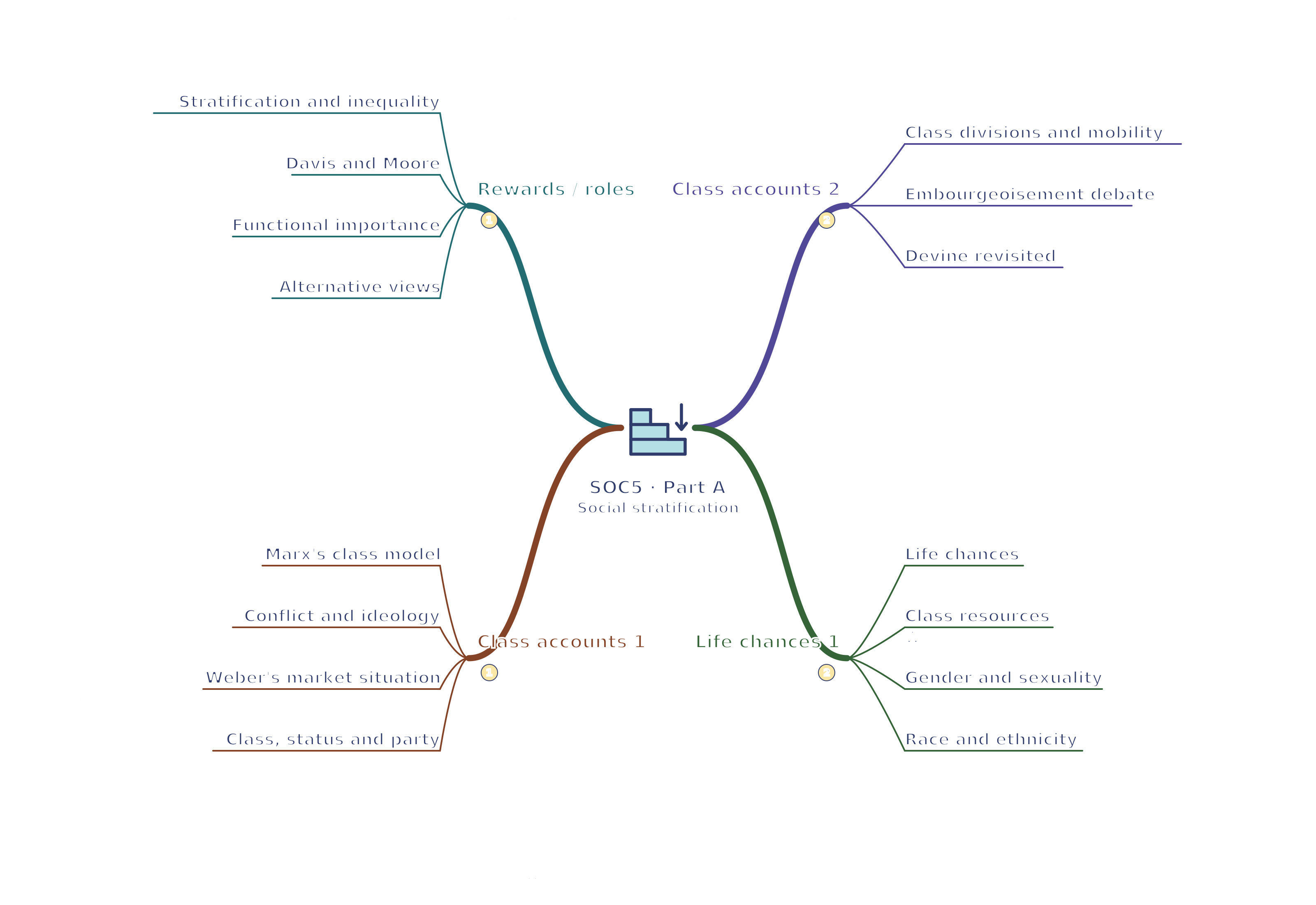
SOC5 · Rewards / roles / Class accounts 1 / Class accounts 2 / Life chances 1
View SOC5 · Rewards / roles / Class accounts 1 / Class accounts 2 / Life chances 1 mind mapOpen the full-size map to zoom. Download the PDF to print on A4 or enlarge to A3.
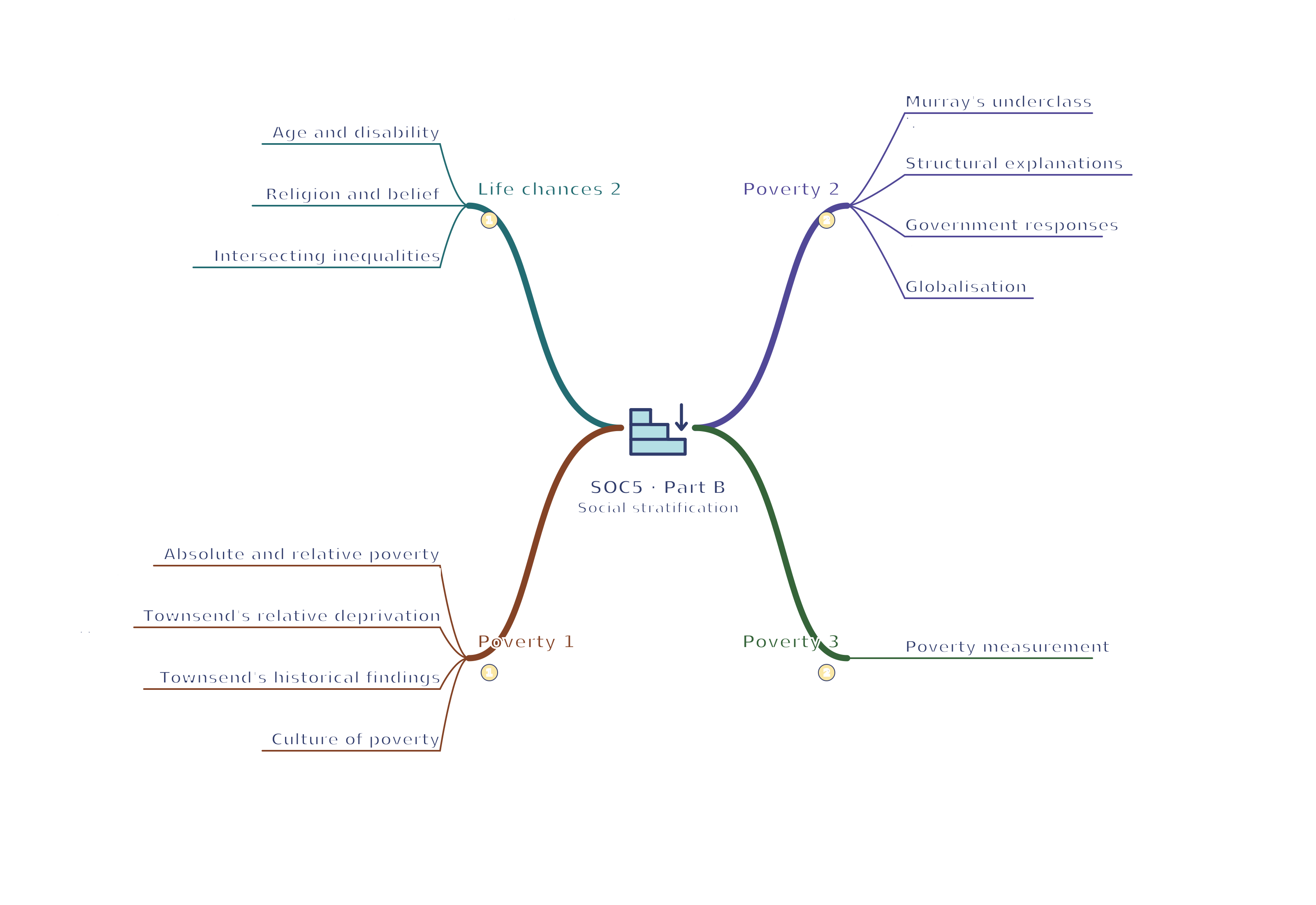
View SOC5 · Life chances 2 / Poverty 1 / Poverty 2 / Poverty 3 mind mapOpen the full-size map to zoom. Download the PDF to print on A4 or enlarge to A3.
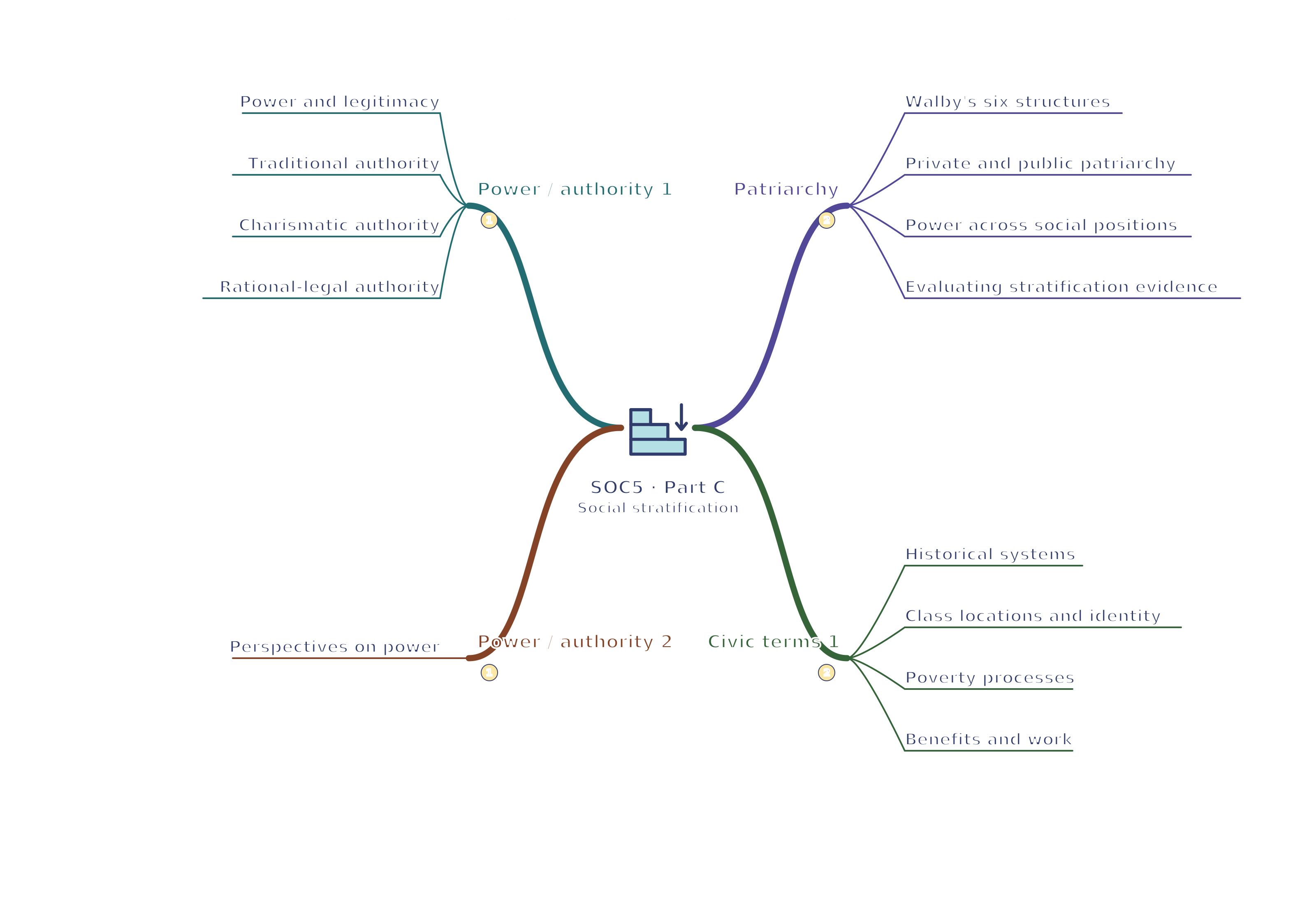
SOC5 · Power / authority 1 / Power / authority 2 / Patriarchy / Civic terms 1
View SOC5 · Power / authority 1 / Power / authority 2 / Patriarchy / Civic terms 1 mind mapOpen the full-size map to zoom. Download the PDF to print on A4 or enlarge to A3.
Stratification and inequality: Resources and prestige are distributed in structured layers
Davis and Moore: Unequal rewards were argued to recruit and motivate suitable role holders
Functional importance: High pay is not an independent measure of social necessity
Alternative views: Rewards may reflect unequal power rather than efficient allocation
Class accounts 1
Marx's class model: Ownership separates capitalists from wage workers
Conflict and ideology: Economic advantage can support political and cultural influence
Weber's market situation: Skills and assets affect economic opportunities within classes
Class, status and party: Economic position, esteem and organised influence may overlap
Class accounts 2
Class divisions and mobility: Occupational categories are indicators with limits
Embourgeoisement debate: Higher living standards need not erase working-class identities
Devine revisited: Affluence coexisted with resentment of inherited inequality
Life chances 1
Life chances: Social positions affect probabilities of valued outcomes
Class resources: Wealth, income and networks can compound advantage
Gender and sexuality: Expectations and discrimination can constrain choices and rewards
Race and ethnicity: Racialisation and unequal treatment affect opportunities
Life chances 2
Age and disability: Institutional design can create barriers or enable participation
Religion and belief: Belonging and discrimination can shape networks and participation
Intersecting inequalities: Categories combine in particular settings
Poverty 1
Absolute and relative poverty: Basic necessities differ from normal social participation
Townsend's relative deprivation: Measure resources against socially customary activities and conditions
Townsend's historical findings: Different definitions produced different estimates from the same society
Culture of poverty: Cultural explanations can confuse causes with responses to deprivation
Poverty 2
Murray's underclass: New Right claims emphasised incentives and dependence on welfare
Structural explanations: Employment, costs and discrimination can create poverty despite effort
Government responses: Benefits, services and employment policies affect resources and opportunities
Globalisation: Cross-border economic change can create work and insecurity
Poverty 3
Poverty measurement: Household income thresholds need context and comparable definitions
Power / authority 1
Power and legitimacy: Power can work through resources, force or agenda setting
Traditional authority: Custom and inherited arrangements legitimate obedience
Charismatic authority: Devotion to perceived exceptional qualities legitimates leadership
Rational-legal authority: Impersonal rules legitimate an office rather than an individual
Power / authority 2
Perspectives on power: Pluralism and conflict accounts differ over its distribution
Patriarchy
Walby's six structures: Gendered domination operates through interconnected institutions
Private and public patriarchy: Control can shift from household exclusion to unequal public participation
Power across social positions: Class, age, ethnicity and other inequalities interact with gender
Evaluating stratification evidence: Compare measures and explanations before making a judgement
Civic terms 1
Historical systems: Different systems organise labour, property and inherited status
Class locations and identity: Occupational labels and subjective class are different evidence
Poverty processes: Constraints can reproduce hardship without a fixed culture
Benefits and work: Eligibility and labour conditions affect security
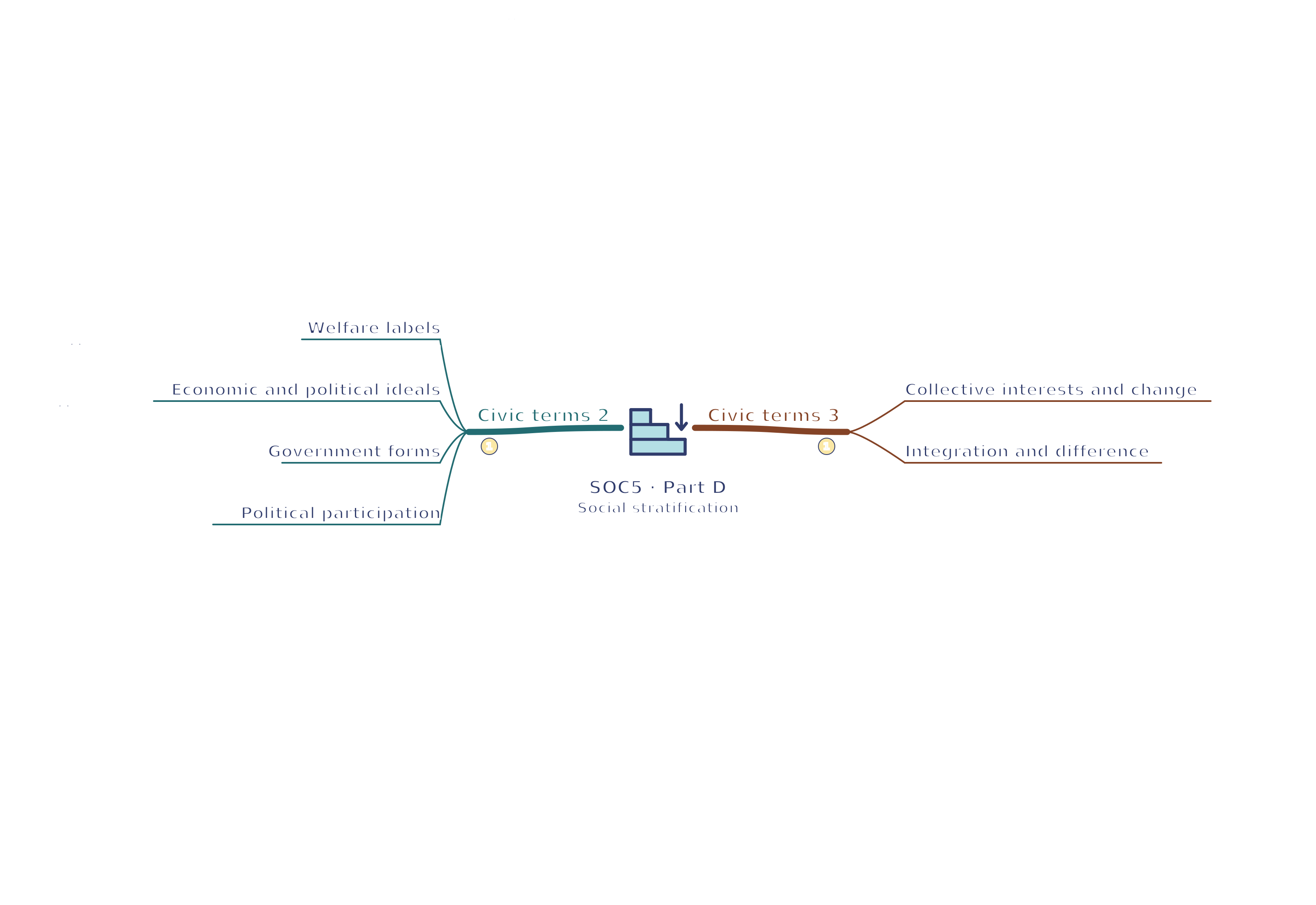
Civic terms 2
Welfare labels: Moral stereotypes do not measure resources or actual fraud
Economic and political ideals: Market and collective arguments contain distinct claims
Government forms: Power can be concentrated or distributed through different arrangements
Political participation: Representation and collective action offer different routes to influence
Civic terms 3
Collective interests and change: Political loyalties and mobilisation can shift
Integration and difference: Responses to diversity involve competing expectations
Connections
Rewards / roles → Class accounts 1: Reward-based allocation and class-power theories explain unequal resources differently.
Class accounts 2 → Life chances 1: Mobility and affluence do not remove all class-linked constraints on life chances.
Part connections
SOC5 · Rewards / roles / Class accounts 1 / Class accounts 2 / Life chances 1: Rewards / roles → Class accounts 1 — Reward-based allocation and class-power theories explain unequal resources differently.
SOC5 · Rewards / roles / Class accounts 1 / Class accounts 2 / Life chances 1: Class accounts 2 → Life chances 1 — Mobility and affluence do not remove all class-linked constraints on life chances.
SOC5 · Life chances 2 / Poverty 1 / Poverty 2 / Poverty 3: Life chances 2 → Poverty 1 — Institutional barriers and resources shape the deprivation researchers try to measure.
SOC5 · Life chances 2 / Poverty 1 / Poverty 2 / Poverty 3: Poverty 2 → Poverty 3 — Historical poverty evidence and policy evaluation require different indicators and causal explanations.
SOC5 · Power / authority 1 / Power / authority 2 / Patriarchy / Civic terms 1: Power / authority 1 → Power / authority 2 — Authority depends on legitimacy while its use can reproduce gendered power.
SOC5 · Power / authority 1 / Power / authority 2 / Patriarchy / Civic terms 1: Patriarchy → Civic terms 1 — Historical class vocabulary and welfare categories should describe processes without moral ranking.
SOC5 · Civic terms 2 / Civic terms 3: Civic terms 2 → Civic terms 3 — Political institutions and collective participation shape responses to economic change and diversity.
 Mr Kidman's Classroom