Use concepts, evidence and competing explanations to investigate society. The 30 quick questions support recall and application; practise the broader written tasks in your PLC too.
Revise the key ideas
Research design and evidence
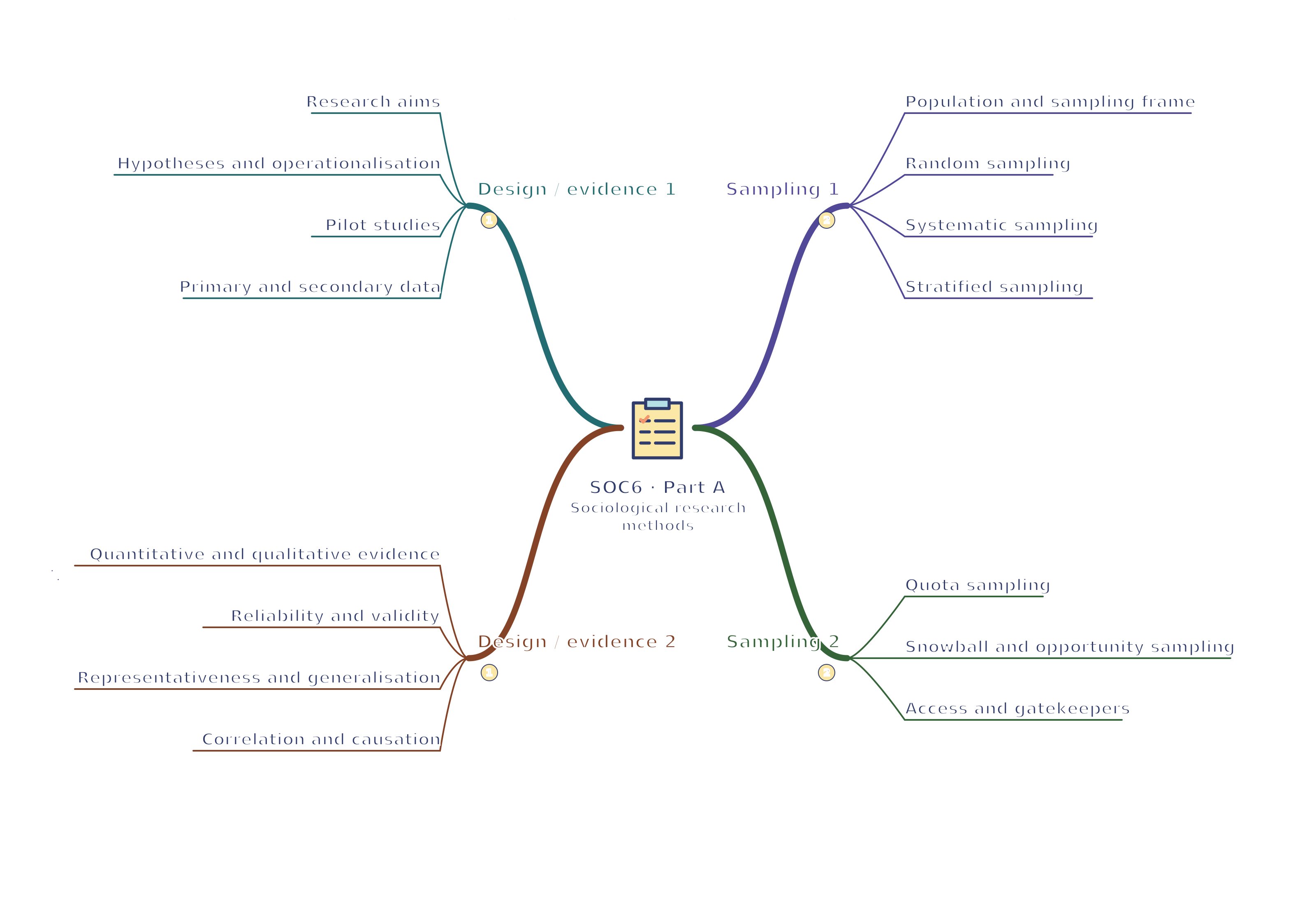
Research aims — An aim identifies what an investigation seeks to understand, such as how travel costs affect parental school choice. Specify population, context and feasible scope. A broad claim about all families cannot be answered by a few convenience interviews. Consider the access and safety constraints before choosing a method.
Hypotheses and operationalisation — A hypothesis proposes a relationship, for example higher travel costs being associated with fewer schools considered. Operationalisation defines how concepts will be observed, such as costs per week and number of applications. Indicators may imperfectly represent concepts; measuring attendance alone does not fully measure motivation.
Pilot studies — A pilot tests wording, timing, procedures and feasibility with a small group. Confusing questions or missing response categories can be revised. A successful pilot does not guarantee validity or a representative main sample; it helps identify particular design problems rather than proving a theory.
Primary and secondary data — Primary data are collected for the current investigation; secondary data already exist for another purpose. Either can be quantitative or qualitative. A researcher analysing earlier interview transcripts uses secondary qualitative evidence, while a new structured survey may generate primary quantitative evidence. Keep these two distinctions separate.
Quantitative and qualitative evidence — Quantitative data record amounts or categories numerically; qualitative data describe meanings and experiences. A questionnaire can produce both through closed and open questions. Neither automatically guarantees validity. Select the form for the aim, and explain what detail or comparison it can and cannot support.
Reliability and validity — Reliability concerns repeatability using comparable procedures; validity concerns how accurately evidence captures the intended social reality. Standard questions may be reliable yet poorly capture hidden power. Detailed accounts can improve understanding but depend on context. Assess these qualities independently rather than treating one as proof of the other.
Representativeness and generalisation — A representative sample reflects relevant population characteristics. Generalisation extends findings beyond the people studied. A large sample can still be biased if important groups are excluded. Qualitative work can illuminate a mechanism without claiming its frequency across the UK; scope should follow design and evidence.
Correlation and causation — A link between income and grades could involve housing, tutoring, health or selection. A causal explanation needs a plausible mechanism and attention to alternative factors. Reverse causation and third variables may matter. A survey measured once cannot alone prove which factor came first.
Sampling and access
Population and sampling frame — The population is the full group the research concerns. A sampling frame is a usable list of its members. A school register excludes absent outsiders and other schools; online lists may miss those without access. Evaluate coverage and currency before claiming the selected sample represents the target population.
Random sampling — In a simple random sample each member of an adequate frame has an equal chance of selection. Random does not mean asking whoever happens to be nearby. Non-response can still distort the realised sample. It needs an appropriate frame and may not yield enough members of small groups for comparison.
Systematic sampling — Select every nth member of an ordered frame after a randomly chosen start. It is manageable for a long list. If the list has a repeated pattern matching the interval, groups can be over- or underrepresented. Check the ordering and non-response rather than assuming the method guarantees fairness.
Stratified sampling — Divide the population into strata, such as school years, and randomly sample within each, often in population proportions. This helps ensure planned representation of groups. It requires accurate information and still faces non-response. It differs from setting targets then letting interviewers choose respondents without random selection.
Quota sampling — Researchers seek a set number in categories such as age groups, often choosing accessible respondents. It can be fast without a full frame, but interviewer choices and access times can bias results. Meeting quotas for age does not establish representativeness on income, attitudes or other characteristics.
Snowball and opportunity sampling — Snowball sampling uses contacts to recruit further participants, useful for hard-to-reach networks but likely to overrepresent connected people. Opportunity or convenience sampling uses accessible volunteers or locations and is quick but selective. Explain usefulness for the aim while limiting generalisation.
Access and gatekeepers — Schools, prison authorities, employers or family members can control entry. They may exclude critical voices or pressure participants. Formal access is not personal consent. Researchers need time, costs, language and safety planning, and should assess whose experiences remain inaccessible.
Questionnaires and surveys
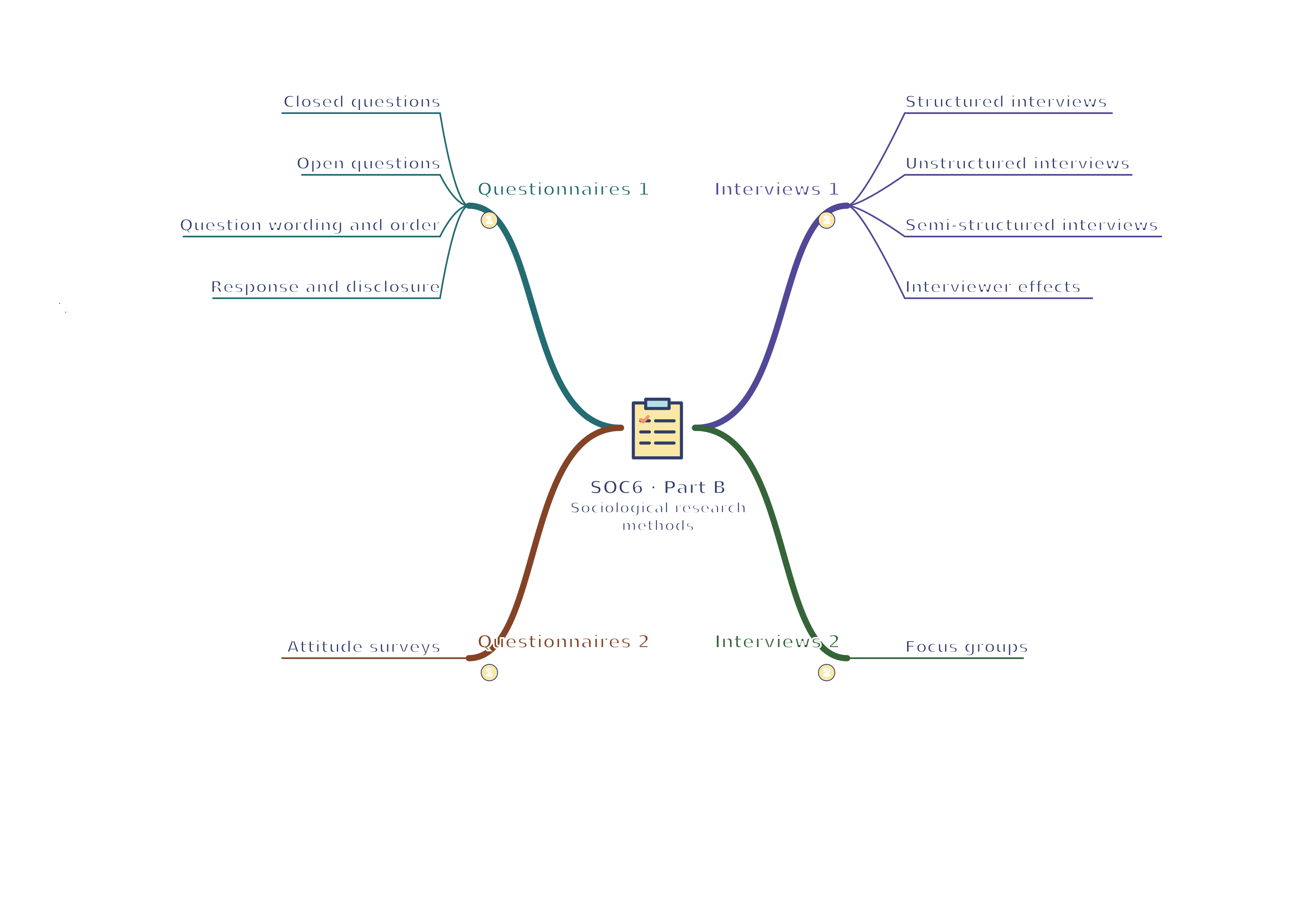
Closed questions — Closed questions offer fixed responses such as frequency categories. They are easier to code and compare, yet may omit a relevant answer or force a complex situation into one category. Make choices clear, non-overlapping and appropriate; a household division of labour may not fit a simple yes/no item.
Open questions — Open questions allow answers in respondents' words. They can reveal unexpected concerns but take time to answer and analyse. Differences in literacy and motivation affect detail. Coding interpretations can introduce researcher judgement; explain how themes are identified rather than treating coding as neutral by default.
Question wording and order — Avoid assuming an answer, asking two things at once or using undefined terms. Asking whether school is fair and enjoyable combines different judgements. Order can influence later answers. Neutral language, pilot testing and consistent instructions help but cannot remove every response bias.
Response and disclosure — Busy or distrustful people may not respond. Respondents may conceal stigmatised behaviour or give socially approved answers. Anonymity can help disclosure but not guarantee truth; completion without names is different from confidential identifiable records. Evaluate mode, access and trust for the specific topic.
Attitude surveys — Scales can compare agreement but interpretations differ and extreme options may be avoided. A claimed intention to share care may not match a time-use diary. Surveys can reach many people economically; follow-up interviews or other evidence can investigate why responses vary.
Interviews and group discussion
Structured interviews — Ask the same questions in the same order, usually with standard recording. This helps consistent comparison and can include people needing spoken questions. Interviewers cost time and may influence answers. Standardisation does not prevent misunderstood questions or pressure to please an authority figure.
Unstructured interviews — Researchers use broad prompts and follow respondents' accounts. Rapport can reveal experiences missed by closed items, as in Carlen's interviews. Interviews are time-consuming, difficult to repeat precisely and dependent on memory and disclosure. A detailed account is not automatically factually correct or representative.
Semi-structured interviews — A topic guide keeps key areas while allowing clarification and new issues. It can compare experiences without restricting every response. Interviewer decisions and unequal probing affect comparability. Explain why this balance fits the aim rather than calling the method universally best.
Interviewer effects — Age, gender, perceived authority and style can affect rapport and disclosure. A teacher interviewing their pupils may prompt approved answers. Consider independent recruitment, privacy and careful questioning. Researchers should reflect on their influence instead of assuming shared identity eliminates it.
Focus groups — A facilitated group discussion can show how participants negotiate norms. Dominant speakers, peer pressure and fear of later disclosure can silence people. It is unsuitable for some sensitive personal experiences; researchers cannot fully guarantee other participants maintain confidentiality outside the meeting.
Observation and case studies
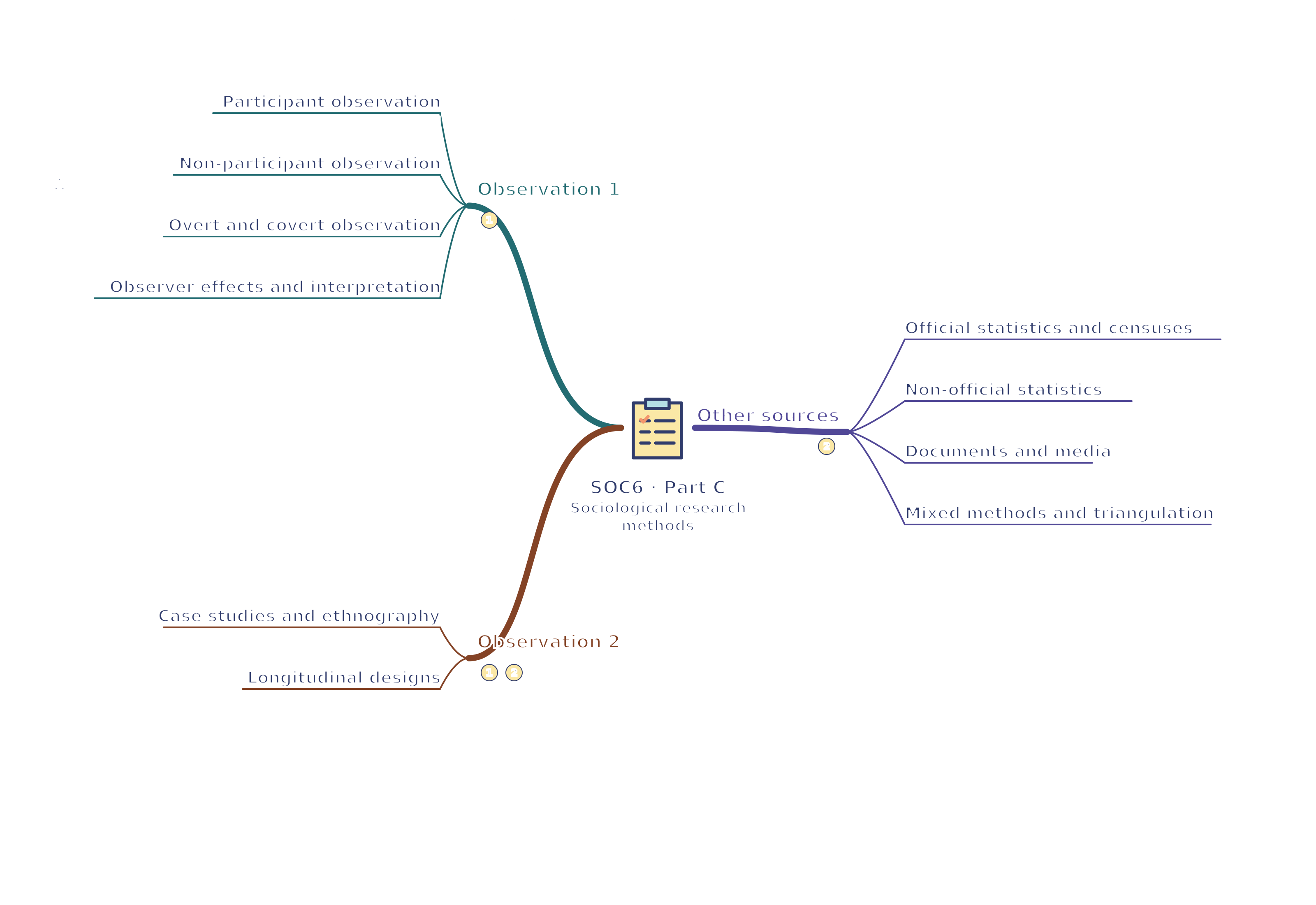
Participant observation — A researcher takes part while observing, potentially learning meanings that an outsider misses. Gaining acceptance can take time; involvement can make recording difficult and risk over-identification. Ball and Willis used observational approaches in schools. Evaluate researcher position, access and context, not just the method's label.
Non-participant observation — Observers remain outside the activity. Structured schedules can record frequencies, while unstructured notes explore context. Visible observation can change behaviour, and conduct without accounts may be misinterpreted. The method can reveal practices but not automatically private motives.
Overt and covert observation — Overt participants know about the study; covert participants do not. Either distinction is separate from participant/non-participant observation. Covert research can reduce reactivity but poses serious consent, deception and safety concerns. Lack of awareness does not guarantee natural behaviour or ethically acceptable evidence.
Observer effects and interpretation — People may alter conduct when observed. Researchers choose what to notice and how to describe it. Clear notes, reflexivity and comparison with other evidence help identify limits. Going native means losing critical distance through identification with the group; avoid equating rapport with inevitable loss of judgement.
Case studies and ethnography — A case study closely examines a person, group or institution using one or more methods. Ethnography explores meanings and practices in context, often through sustained observation. A rich school account may identify mechanisms for further investigation but cannot establish their prevalence in every school.
Longitudinal designs — Longitudinal research follows people or settings over time, while a cross-sectional study records a period. Repeated evidence can examine transitions and sequence; participants may drop out unevenly and costs grow. Comparing cohorts is not automatically following the same people, so state the actual design.
Secondary sources and mixed methods
Official statistics and censuses — Official statistics and censuses can compare large populations and trends. Definitions, exclusions, missing responses and changed collection practices affect interpretation. They were usually collected for purposes other than the research question. Examine the measure rather than treating official status as either proof of truth or proof of manipulation.
Non-official statistics — Charities, businesses and researchers produce useful datasets with differing coverage and aims. Assess how data were collected, sample, funding, definitions and missing cases. Non-official does not mean false; official and non-official sources should both be evaluated for the specific enquiry.
Documents and media — Letters, diaries, websites, reports and media items are secondary evidence. Consider audience, purpose, survival and selection. Content analysis systematically codes features such as who is portrayed as an offender. A coding scheme can make comparison transparent but researcher categories and media selection affect validity.
Mixed methods and triangulation — A survey might identify patterns in school choice and interviews explore constraints behind them. Triangulation compares methods or sources to check findings. Agreement can strengthen confidence, while disagreement needs explanation. Combining methods adds time and does not remove shared sampling bias or incompatible definitions.
Ethics and safeguarding
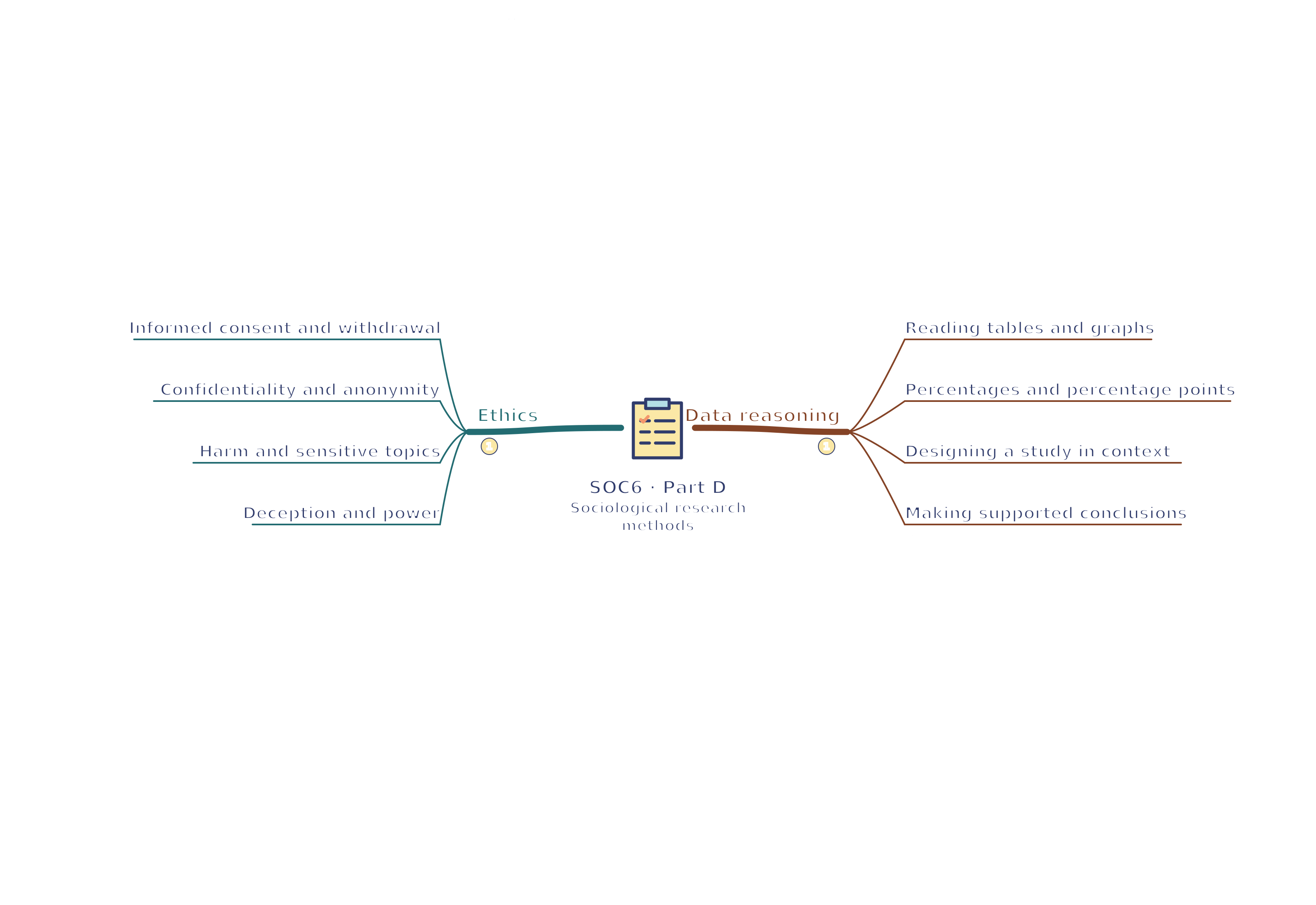
Informed consent and withdrawal — Explain purpose, activities, risks and data use in accessible language; participation should be voluntary with a clear way to stop. Children and vulnerable participants require appropriate protections and permissions as well as attention to their own willingness. A gatekeeper's agreement cannot substitute for every person's informed choice.
Confidentiality and anonymity — Confidentiality means restricting access to information; anonymity means identity is not known or cannot be linked to records. Secure storage, limited collection and careful publication reduce risks. Explain limits where safeguarding requires action; never promise absolute secrecy that cannot be kept.
Harm and sensitive topics — Questions about victimisation, family conflict or discrimination may cause distress or expose people to consequences. Avoid unnecessary detail, coercion and unsafe recruitment. Follow the centre's safeguarding arrangements and use appropriate support routes. A classroom research task must not encourage students to investigate peers' abuse or criminal conduct.
Deception and power — Deception prevents a fully informed choice and can damage trust. Consider whether the aim can be achieved less intrusively. Financial incentives, institutional authority and dependency may make participation feel compulsory. Weigh consent, harm, access and value together rather than treating ethics as a final formality after design.
Data interpretation and application
Reading tables and graphs — Identify what a figure actually measures, denominators and missing categories. A truncated axis can exaggerate visual differences. A pie chart describes composition at a time, not a trend by itself. Quote a relevant comparison and then qualify what the data cannot establish.
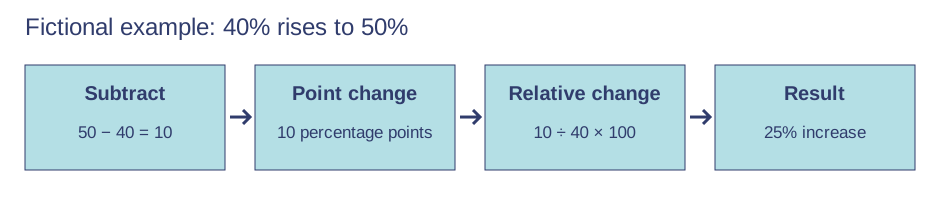
Percentages and percentage points — In a fictional survey, agreement rising from 40% to 50% is a 10-percentage-point increase and a 25% relative increase: (50 − 40) ÷ 40 × 100. A share needs its group total. Comparisons of raw counts can mislead when population sizes differ; state the calculation and denominator.Selected overview. Explain the qualifications using the notes.
Designing a study in context — For school choice, combine a suitable parent sample with neutral questions on travel costs and follow-up interviews. For household labour, use diaries and private accounts. For crime reporting, protect anonymity and assess recall. For poverty, define resources and deprivation. Explain feasibility, ethical protection and limitations in each setting, without claiming to have collected personal results.
Making supported conclusions — State a pattern supported by the data, infer only what the design allows and consider alternative explanations. Compare evidence and method limits before generalising. An evaluation should identify a specific source of bias or missing dimension and its consequence, rather than saying the research is unreliable without reasons.
Test yourself
30 questions · Random sets of 10. These quick checks support revision; practise longer explanations and justified judgements too.
Mind map
Use the branches to recall the ideas and explain their connections. Check the revision notes for the full detail.
View SOC6 · Design / evidence 1 / Design / evidence 2 / Sampling 1 / Sampling 2 mind mapOpen the full-size map to zoom. Download the PDF to print on A4 or enlarge to A3.
View SOC6 · Questionnaires 1 / Questionnaires 2 / Interviews 1 / Interviews 2 mind mapOpen the full-size map to zoom. Download the PDF to print on A4 or enlarge to A3.
 Mr Kidman's Classroom