Use concepts, evidence and competing explanations to investigate society. The 30 quick questions support recall and application; practise the broader written tasks in your PLC too.
Revise the key ideas
Family functions and perspectives
Family and household — Family refers to relationships recognised as kinship or family ties, often involving care and obligations. A household consists of people living at an address and sharing arrangements; it may contain unrelated people or one person. Family members can live separately. Definitions influence what researchers count.
Family functions — Families may organise sexual relationships, reproduction, economic support and children's learning. These functions also involve other institutions and do not require everyone to have children. Ask who does the work and who benefits; listing functions alone conceals different experiences and unequal responsibilities.
Parsons — Parsons's 1959 account of the American family emphasised children's early socialisation and stabilisation of adult personalities through emotional support. In his functionalist explanation, specialised nuclear families fit industrial society. It is a theory of a historical context, not proof that all families provide support or that other forms cannot do so.
Instrumental and expressive roles — The instrumental role concerned income and external responsibilities; the expressive role concerned emotional care and nurturing. Parsons associated these with husbands and wives in a conventional model. Feminists challenge this as a justification for unequal gender expectations; role specialisation need not follow sex or imply fair rewards.
Comparing functions — Functionalists stress support and socialisation. Marxists emphasise reproduction of labour and capitalist consumption; feminists examine unpaid work and gender power. Use a shared example, such as childcare, to show the differing mechanisms. An institution can offer affection while reproducing inequality, so the explanations are not simple opposites on every point.
Family forms and diversity
Nuclear and extended families — A nuclear family usually comprises parents and dependent children. Extended families include wider kin such as grandparents, aunts and cousins, living together or maintaining close support across homes. Kinship concerns recognised relations and obligations; physical distance does not necessarily mean the absence of support.
Lone-parent and reconstituted families — A lone-parent family has one parent living with dependent children. A reconstituted or blended family forms when a partnership brings children from previous relationships, sometimes with further children. These forms arise through varied histories; neither structure alone establishes parenting quality or disadvantage.
Same-sex and other arrangements — Same-sex couples can form families with or without children. Cohabitation means partners living together without being married; an empty-nest family has children who have left home. Single-person households and communes are further living arrangements. A commune shares aspects of domestic life; some kibbutzim historically combined communal production and childrearing in Israel.
Marriage forms — Monogamy is marriage to one spouse at a time; serial monogamy involves successive marriages. Polygamy involves multiple spouses: polygyny multiple wives and polyandry multiple husbands. Bigamy means entering another marriage while an existing one remains legally valid where this is prohibited. Describe forms sociologically without assuming one global legal system.
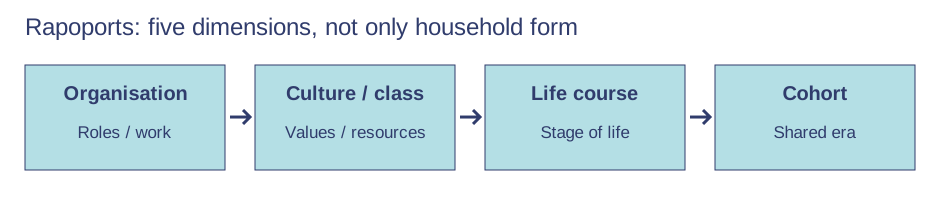
Rapoports' diversity — The Rapoports' 1982 account identified five dimensions of diversity. Organisation concerns divisions of work; culture concerns beliefs; class concerns resources; life course concerns stage of family life; cohort concerns shared historical experience. Two nuclear families can differ on all five, so diversity means more than counting household structures.Selected overview. Explain the qualifications using the notes.
Comparing settings — Pre-industrial households often combined productive work and kin obligations, but forms varied. Industrial employment and urban migration changed residence and economic roles. Contemporary technology and migration can maintain transnational kinship networks. Global comparisons require a named setting rather than treating non-UK societies as a single traditional category.
Conjugal roles and domestic work
Joint and segregated roles — Conjugal roles are expectations within a marriage or partnership. Joint or integrated roles involve shared tasks and leisure; segregated roles involve a clearer division and separate activities. Sharing some tasks does not prove equal workload or power. Measure time, responsibility and decision making as well as whether a partner ever helps.
Domestic division of labour — Domestic work includes cleaning, cooking, care and organising household life. A dual-career couple can still divide unpaid work unequally. The double shift refers to paid employment plus substantial domestic labour; emotional support can add further responsibilities. Comparing tasks without their frequency or duration can underestimate inequality.
Money and decisions — One partner may manage daily budgeting with little discretionary money while another controls major spending. Investigate access to accounts, decisions about purchases and whose needs take priority. Equal earnings can alter bargaining but do not automatically remove cultural expectations, caring burdens or threats within a relationship.
Childrearing and leisure — Childrearing includes practical care, discipline and emotional involvement. Leisure may be shared or separate, but the ability to take leisure depends on who remains responsible for children or dependent relatives. A survey question asking only about hours of leisure may miss interrupted time and planning responsibilities.
Oakley's conventional family — Oakley's 1982 feminist critique examined the ideal of a legally married heterosexual nuclear couple choosing parenthood. She questioned its cultural power and pressures to conform. The work predates later changes in recognition of same-sex relationships; use it to analyse stereotypes and gendered expectations, not as a complete description of current families.
Changing relationships and responsibilities
Willmott and Young — Their 1973 Greater London survey described movement towards a home-centred, more symmetrical nuclear family. Similar contributions and shared decisions did not mean interchangeable roles. They linked some working-class home focus to unrewarding employment. Feminists question whether reported helping demonstrates equal labour, and a regional historical survey cannot settle every contemporary case.
Stratified diffusion — Willmott and Young suggested that practices higher in the class structure could diffuse downwards. Their Stage 4 managing-director family was work-centred, with domestic responsibility concentrated on the wife. Do not confuse this prediction with evidence that every family necessarily becomes more equal over time.
Historical change — Factories moved much productive work outside the home; schools and welfare services took on parts of education and care. Families retained emotional and practical obligations. Changes in women's employment, contraception and life expectancy can alter relationships, but class resources and local services influence the extent of change.
Childhood and adolescence — Childhood and adolescence are shaped by schooling, work rules and cultural expectations as well as biological development. Teenagers and adults can disagree about independence, discipline and media use. Avoid treating conflict as universal: relationships vary with resources, caring roles and the meanings attached to appropriate behaviour.
Parenting quality — Warmth, safety, consistency, time and resources can affect children's experiences across family forms. Poverty, working hours and inadequate services can constrain carers. Research should measure interactions and support rather than assuming married parents are effective or lone parents ineffective merely from household type.
Care and dependency — Families may provide personal care, money, companionship and coordination with services. Disabled and older people also provide care and expertise; dependence is not necessarily one-way. Caring can create strain where support is inadequate. Evaluate gendered burdens and service access without equating impairment with inability to act.
Arranged marriage — In an arranged marriage relatives may help identify a partner while the people marrying retain a choice. Forced marriage lacks free consent. Sociological analysis considers meanings, negotiation, community expectations and variation within groups. Do not assume every arranged marriage is forced or every freely chosen partnership is free of pressure.
Criticisms and competing explanations
Zaretsky — Zaretsky's 1976 Marxist account argued that family privacy appears separate from capitalism but supports it through unpaid domestic work and consumption. Emotional refuge can soften alienation without solving its structural causes. Critics argue this can understate real affection, diversity and people's capacity to challenge unequal relationships.
Delphy and Leonard — Their 1992 feminist account treated the household as a labour relationship in which men can appropriate women's work. Paid employment may coexist with unequal domestic responsibilities. This differs from a claim that capitalists are the only beneficiaries. Evaluate variation in partnerships, gender and resources rather than assuming every household has identical exploitation.
Isolation and idealisation — A privatised nuclear household may lack nearby kin and depend on a small number of carers. Idealising the family can conceal conflict, neglect or abuse and discourage help-seeking. Wider networks may provide support or exert pressure. Family form alone does not establish safety, cohesion or personal fulfilment.
Loss of functions — Education, health services and paid care can replace parts of domestic provision. Functionalists may see useful specialisation; others worry about weaker kin contact or impersonal support. Evaluate what is transferred, who can access it and what remains, rather than assuming every external service destroys family relationships.
Marital strain and dysfunction — An empty-shell marriage remains legally intact despite little affection or shared life. Dysfunctional relationships fail to provide support or create harm. Different perspectives locate causes in role change, economic strain or patriarchal power. A stable legal marriage is therefore not necessarily a successful relationship, and leaving can improve safety.
Divorce patterns and explanations
Divorce trends — Divorce became more common during much of the later twentieth century, then patterns changed with marriage rates, age and law. Counts, rates and the proportion of marriages ending are different measures. Fewer divorces may reflect fewer marriages rather than happier partnerships. Compare jurisdiction and dates before making a trend claim.
Divorce law and access — Changes to law and procedure can make divorce more accessible, alter grounds and affect when applications are completed. The Divorce Reform Act 1969 was an important historical change in England and Wales; its implementation followed later. Explain interaction with attitudes, income and expectations rather than attributing all marital breakdown to one Act.
Secularisation and attitudes — Secularisation means declining influence of religion in social life. Greater acceptance of divorce and cohabitation can reduce barriers to leaving relationships. Expectations of emotional satisfaction may also rise. These are possible mechanisms, not evidence that religion has disappeared or that all groups share identical values.
Women's opportunities — Education, paid work and access to resources can make it more feasible to leave an unsatisfactory marriage. Unequal pay and caring responsibilities can still restrict choices. The explanation concerns changing bargaining and options; it does not mean women's employment inevitably causes divorce or that financial independence is universal.
Consequences for adults and kin — Divorce may reduce conflict or harm, while creating housing costs, income changes and reorganised caring. Wider kin may provide support or experience divided loyalties. Effects depend on resources, relationships and arrangements; avoid assuming all adults experience either liberation or crisis in the same way.
Consequences for children and family forms — Separation can create lone-parent and later reconstituted families. Children's experiences depend on conflict, resources, stable care and relationships with carers, not only legal status. Staying together in a harmful relationship can also have costs. Compare evidence about processes rather than treating divorce as a single inevitable outcome.
Family data and enquiry — Censuses compare forms but may miss kin support across households. Time-use diaries add detail about labour; interviews explore meanings but involve access and disclosure. Questions about conflict need privacy and voluntary participation. Combine appropriate sources and do not infer private power from one household category.
Family statistics in context
Dated divorce evidence — ONS's September 2026 release reports 105,002 divorces in England and Wales in 2025, including opposite- and same-sex couples. The opposite-sex divorce rate was 8.4 per 1,000 opposite-sex married people, compared with 14.2 in 1993. This shows why long-run growth since 1945 must not become a claim of continuous annual increase. Counts and population-based rates answer different questions. ONS statistical release.
Changing procedures — The ONS release explains that new divorce procedures introduced in April 2022 changed applications and minimum timing; court disruption and backlogs also affect when final orders appear. Data on legal dissolution do not directly measure when relationships broke down or people's reasons. These figures concern England and Wales, not all UK jurisdictions. ONS statistical release.
Further family and social concepts
Household authority terms — A matriarch is a woman with authority in a family or group; a matriarchal family centres female authority. Patriarchal arrangements centre male domination. Egalitarian means based on equality. These terms describe relationships, not merely which sex has more members, and reported equality should be checked against work and decisions.
Work and changing identities — Work–life balance concerns how employment and personal responsibilities fit together. The new man describes a changing ideal of men sharing care and emotional roles. A crisis of masculinity refers to uncertainty about established male identities as roles change. These are interpretations of expectations, not experiences shared by every man.
Kin, networks and place — A social network connects people through relationships and exchange. Intergenerational ties link generations; a step-parent is a parent's partner who is not the child's biological parent. Rural describes countryside settings and urban towns or cities. Isolation is limited contact or support; rural residence does not automatically mean isolation.
Migration and belonging — Migration is movement between places; immigration is movement into a country and emigration movement out. An immigrant is a person moving into a destination. Ethnic groups share forms of cultural identification; ethnic minorities have a smaller position within a given population. Diversity concerns variation, not a single uniform migrant or minority experience.
Test yourself
30 questions · Random sets of 10. These quick checks support revision; practise longer explanations and justified judgements too.
Mind map
Use the branches to recall the ideas and explain their connections. Check the revision notes for the full detail.
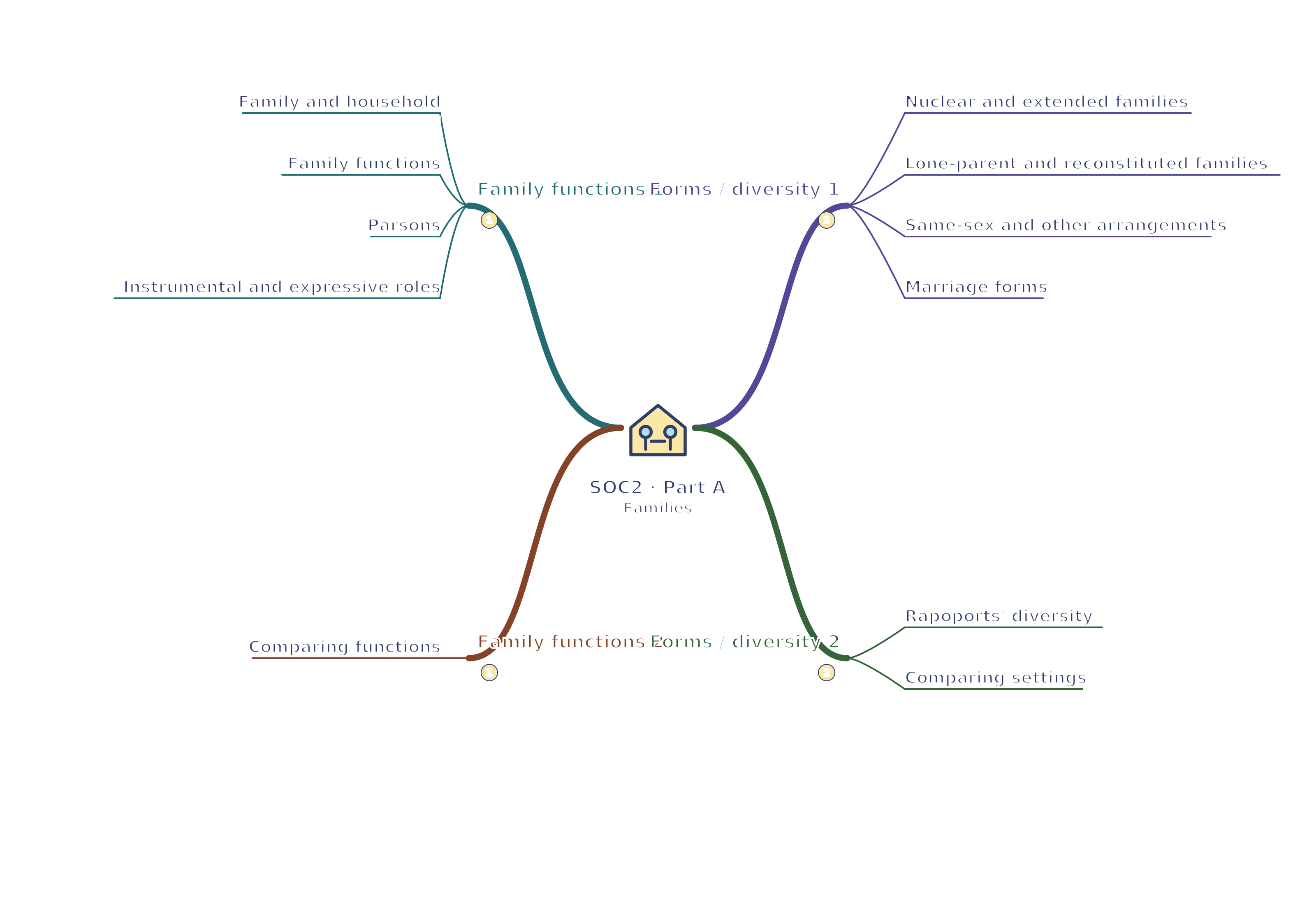
SOC2 · Family functions 1 / Family functions 2 / Forms / diversity 1 / Forms / diversity 2
View SOC2 · Family functions 1 / Family functions 2 / Forms / diversity 1 / Forms / diversity 2 mind mapOpen the full-size map to zoom. Download the PDF to print on A4 or enlarge to A3.
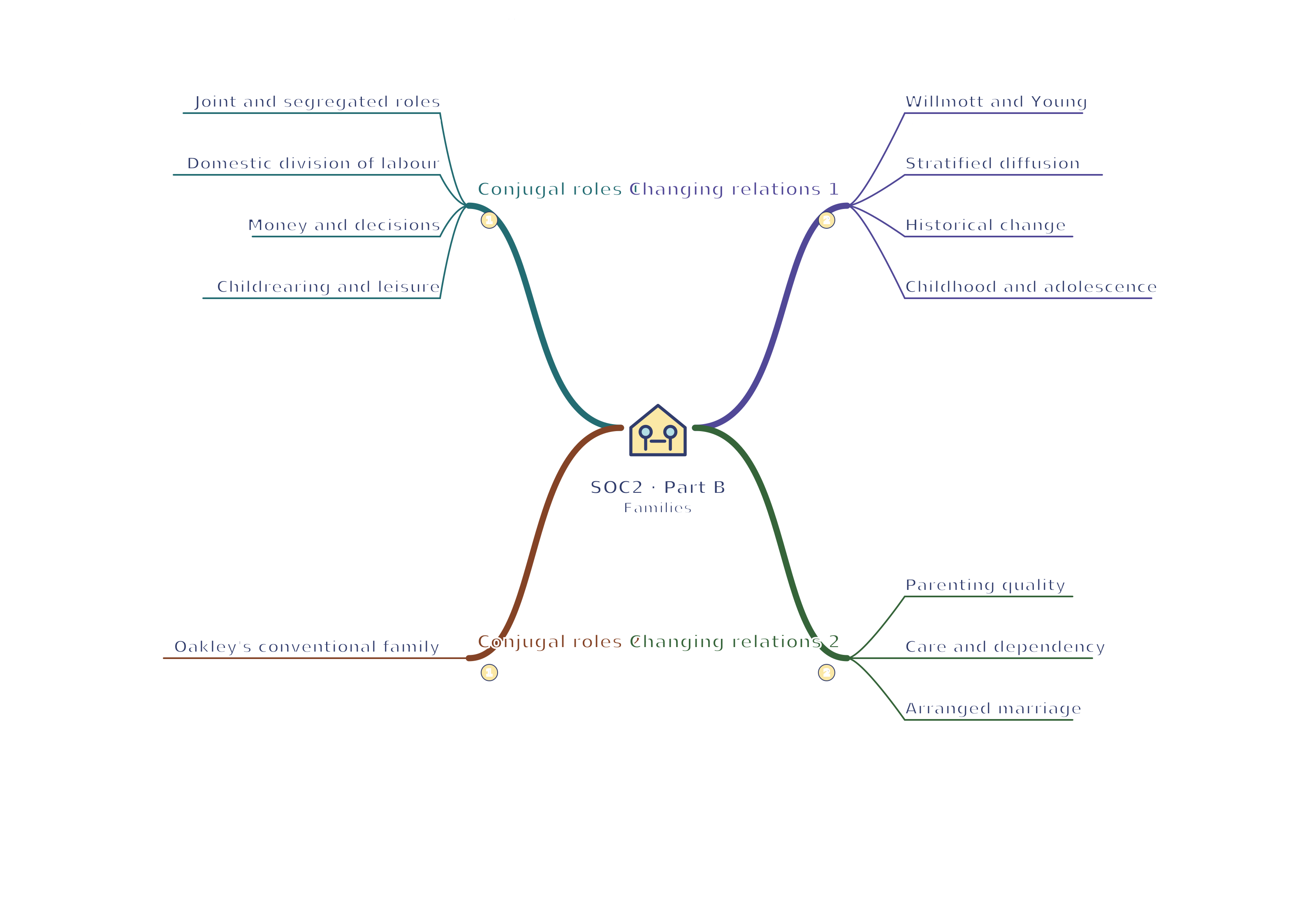
View SOC2 · Conjugal roles 1 / Conjugal roles 2 / Changing relations 1 / Changing relations 2 mind mapOpen the full-size map to zoom. Download the PDF to print on A4 or enlarge to A3.
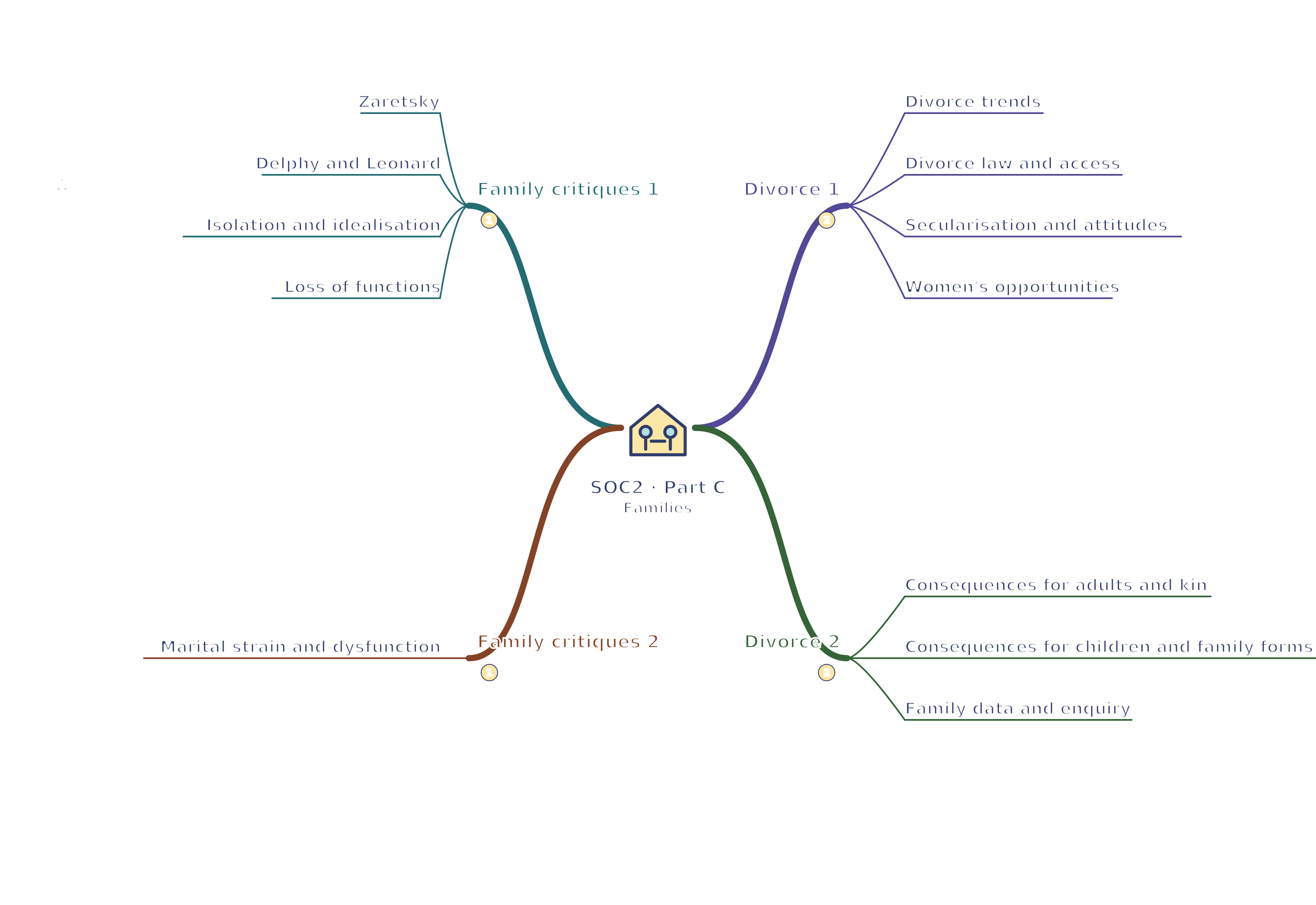
SOC2 · Family critiques 1 / Family critiques 2 / Divorce 1 / Divorce 2
View SOC2 · Family critiques 1 / Family critiques 2 / Divorce 1 / Divorce 2 mind mapOpen the full-size map to zoom. Download the PDF to print on A4 or enlarge to A3.
Family and household: Kinship or caring ties differ from shared residence
Family functions: Care, reproduction, resources and learning can be organised together
Parsons: Primary socialisation and adult emotional support were central functions
Instrumental and expressive roles: Parsons linked differentiated roles to family stability
Family functions 2
Comparing functions: A stabilising institution may also reproduce inequality
Forms / diversity 1
Nuclear and extended families: Two-generation arrangements differ from wider kin networks
Lone-parent and reconstituted families: A family can have one resident parent or combine earlier relationships
Same-sex and other arrangements: Partnership and care do not fit one conventional form
Marriage forms: Partner arrangements vary across societies and time
Forms / diversity 2
Rapoports' diversity: Organisation, culture, class, life course and cohort matter
Comparing settings: Industrialisation does not produce one universal family path
Conjugal roles 1
Joint and segregated roles: Shared activities differ from separate domestic spheres
Domestic division of labour: Paid work and unpaid care need separate measurement
Money and decisions: Control of resources is not identical to managing bills
Childrearing and leisure: Responsibility for care can restrict independent time
Conjugal roles 2
Oakley's conventional family: A powerful stereotype can obscure diverse arrangements
Changing relations 1
Willmott and Young: Symmetry meant comparable contributions rather than identical roles
Stratified diffusion: Patterns at the top were proposed to spread downwards
Historical change: Employment and institutions redistribute some family functions
Childhood and adolescence: Expectations about dependence and independence are socially organised
Changing relations 2
Parenting quality: Processes and resources matter more than a structure label
Care and dependency: Disability and ageing can create reciprocal support needs
Arranged marriage: Family involvement must be distinguished from lack of consent
Family critiques 1
Zaretsky: A private refuge can cushion capitalism while helping reproduce it
Delphy and Leonard: Women's domestic work can directly benefit men
Isolation and idealisation: A family ideal can conceal weak support or harm
Loss of functions: External provision can reduce burdens or weaken some ties
Family critiques 2
Marital strain and dysfunction: Conflicting interests can make relationships unsupportive
Divorce 1
Divorce trends: Long-run growth after 1945 is not uninterrupted annual increase
Divorce law and access: Legal change can alter routes and timing without being the sole cause
Secularisation and attitudes: Reduced stigma can make exit more socially acceptable
Women's opportunities: Income and employment can reduce economic dependence
Divorce 2
Consequences for adults and kin: Separation can bring relief and new practical pressures
Consequences for children and family forms: Transitions depend on support and continuing relationships
Family data and enquiry: Household categories and reports have important limits
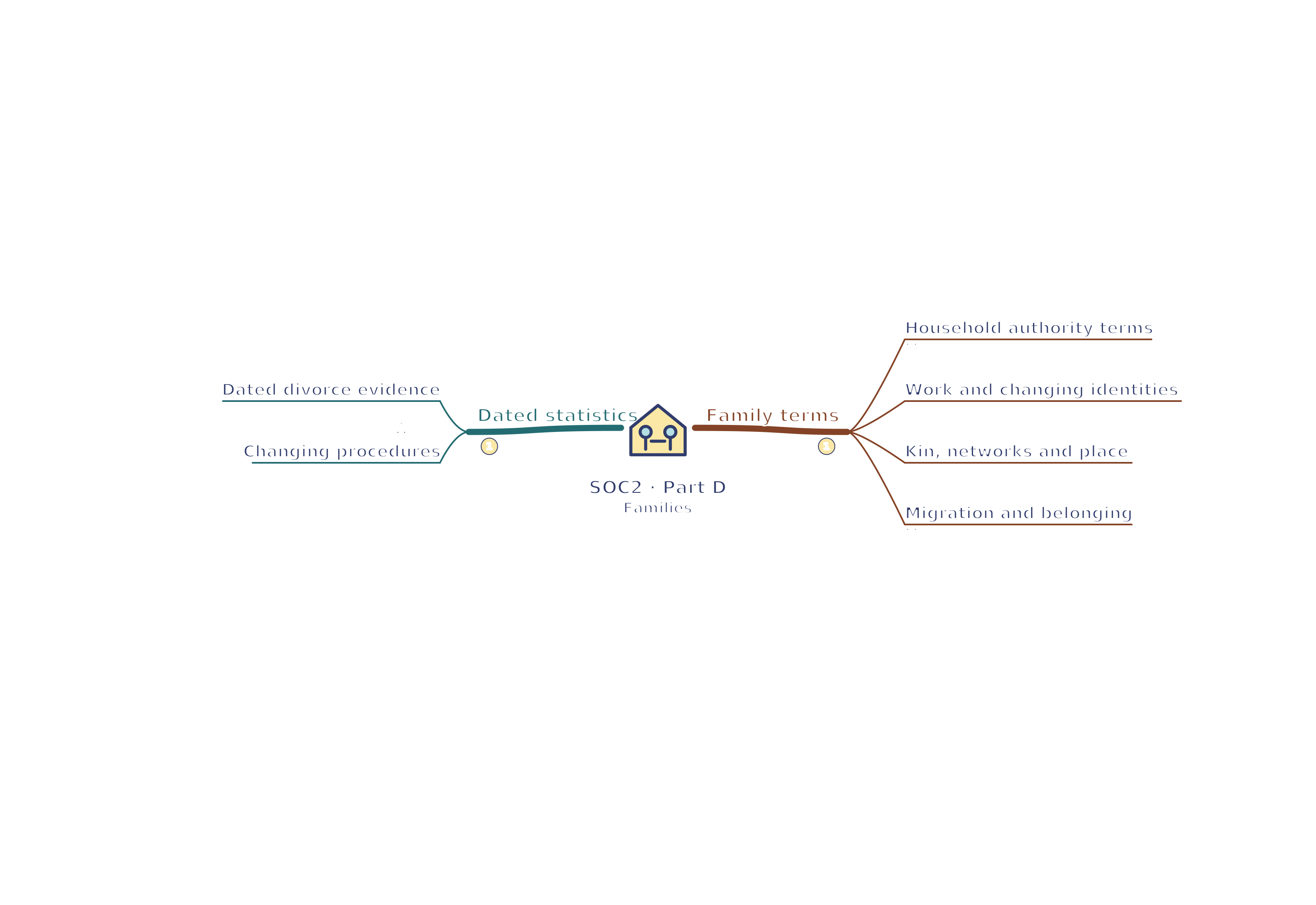
Dated statistics
Dated divorce evidence: 2025 opposite-sex rate below the 1993 peak in England and Wales
Changing procedures: 2022 changes and processing delays can affect annual totals
Family terms
Household authority terms: Matriarchy and patriarchy concern power rather than simple headcounts
Work and changing identities: Balancing paid work and personal obligations can be contested
Kin, networks and place: Contacts and location affect support without deciding it automatically
Migration and belonging: Movement differs from group identity and its interpretation
Connections
Family functions 1 → Family functions 2: Gendered role specialisation changes how the same family function distributes work.
Forms / diversity 1 → Forms / diversity 2: Family diversity concerns organisation and context as well as household form.
Part connections
SOC2 · Family functions 1 / Family functions 2 / Forms / diversity 1 / Forms / diversity 2: Family functions 1 → Family functions 2 — Gendered role specialisation changes how the same family function distributes work.
SOC2 · Family functions 1 / Family functions 2 / Forms / diversity 1 / Forms / diversity 2: Forms / diversity 1 → Forms / diversity 2 — Family diversity concerns organisation and context as well as household form.
SOC2 · Conjugal roles 1 / Conjugal roles 2 / Changing relations 1 / Changing relations 2: Conjugal roles 1 → Conjugal roles 2 — Tasks, resources and cultural ideals interact in conjugal power relationships.
SOC2 · Conjugal roles 1 / Conjugal roles 2 / Changing relations 1 / Changing relations 2: Changing relations 1 → Changing relations 2 — Changing work and caring needs alter relationships without one universal outcome.
SOC2 · Family critiques 1 / Family critiques 2 / Divorce 1 / Divorce 2: Family critiques 1 → Family critiques 2 — Family ideals and transferred functions need evaluation of actual support and harm.
SOC2 · Family critiques 1 / Family critiques 2 / Divorce 1 / Divorce 2: Divorce 1 → Divorce 2 — Resources and continuing relationships mediate the consequences of marital change.
SOC2 · Dated statistics / Family terms: Dated statistics → Family terms — Family categories and personal experiences require dated, context-sensitive interpretation.
 Mr Kidman's Classroom