Use concepts, evidence and competing explanations to investigate society. The 30 quick questions support recall and application; practise the broader written tasks in your PLC too.
Revise the key ideas
Roles, institutions and provision
Education and schooling — Education includes acquiring knowledge, skills and values. Formal education is organised through institutions and a curriculum; informal learning occurs in families, peers and daily life. A school's ethos concerns its shared expectations and priorities. Evaluate whose knowledge is valued and whether access to provision is equal.
Economy and mobility — Education develops skills and allocates credentials that may influence employment and social mobility. Mobility means movement between social positions, within a lifetime or across generations. Labour-market demand, discrimination and family resources also matter; a qualification is neither a guarantee of work nor proof that all starting conditions are equal.
Durkheim — Durkheim's account in Moral Education emphasised common norms, values and disciplined cooperation with people beyond family and friends. Teaching history can build membership of a wider society. Critics ask whose version of history and whose values are taught, and whether enforced agreement suppresses diversity or reproduces inequality.
Parsons — Parsons's 1961 account argued that schools introduce achievement and rules applying to everyone, unlike family treatment based on a child's particular relationship. His functionalist model regards role allocation as meritocratic. Critics argue that equal rules can coexist with unequal resources, labels and inherited advantage, so apparently achieved status needs examination.
Meritocracy — In a meritocracy, rewards are allocated according to achievement rather than birth. A common exam may appear universalistic, but preparation can vary through tutoring, housing and institutional expectations. Distinguish a school's stated principle from evidence that it operates fairly. Marxist and feminist critiques examine whose chances are constrained.
State and independent schools — State-funded and fee-paying independent schools differ in funding and access. Primary and secondary describe educational stages. Comprehensive schools admit a broad ability range; grammar schools select academically. The eleven-plus is associated with selection in some areas. Types and admission arrangements vary across the UK, so do not generalise an English policy to every nation.
Academies and free schools — In England, academies are state-funded schools outside local-authority maintenance; free schools are a type of academy established as new provision. These differ from fee-paying schools. Investigate admissions, curriculum, resources and local access rather than assuming a governance label automatically improves outcomes for every pupil.
Alternatives and later education — Home education provides learning outside ordinary school attendance. De-schooling questions dependence on formal schooling and advocates wider learning networks; it is an argument, not simply another school type. Further education follows compulsory school stages, while higher education usually includes degree-level study. Compare access, interaction and recognition of learning.
Education and capitalism
Bowles and Gintis — In their 1976 study of American capitalism, Bowles and Gintis argued that school organisation prepares workers for hierarchical employment. Teacher authority, fragmented tasks and rewards for compliance mirror workplace relations. Their Marxist argument rejects a simple meritocracy, linking schooling to reproduction of class advantage.
Hidden curriculum — The formal curriculum specifies taught subjects; the hidden curriculum conveys expectations through routines, rewards and relationships. Punctuality, competition and obedience can be learned without a lesson about them. This supports correspondence arguments, but pupils interpret and sometimes resist these messages rather than absorbing them automatically.
Evaluating correspondence — Schools may encourage creativity and criticism as well as compliance. Workers and pupils differ, and institutional reforms can alter relationships. Functionalists interpret skills as useful coordination; feminists add gendered preparation. Compare these explanations with actual practices, not a claim that every classroom is identical to every workplace.
Class and educational achievement
Material deprivation — Poor housing, limited internet, transport costs, food insecurity and crowded study space can constrain learning. Caring or paid work may reduce time. Explain a mechanism linking circumstances and outcomes without assuming every low-income pupil underachieves or that family effort can overcome all resource constraints.
Cultural capital — Cultural capital refers to knowledge, styles and dispositions recognised by institutions. Familiarity with admissions processes or valued language can help families secure opportunities. This differs from claiming disadvantaged communities lack culture. Schools' judgements about which culture counts are part of the explanation.
Cultural deprivation debates — Some accounts explain differences through supposedly inadequate language, attitudes or socialisation. Critics argue they stereotype groups and treat dominant culture as the standard. Compare evidence, resources and school practices before attributing attainment to parental values. Variation within a class or ethnic group challenges blanket explanations.
Halsey, Heath and Ridge — Origins and Destinations (1980) examined more than 8,000 men born from 1913 to 1952, grouped by fathers' occupations. Service-class sons had substantially greater chances of staying in education and reaching university than working-class sons. The scale supports comparison, but exclusion of women and historical cohorts limit present-day generalisation.
Halsey's class categories — Service class included professionals, managers and administrators; intermediate included clerical, sales and some self-employed work; working class included manual occupations. These were research categories, not moral rankings or complete descriptions of identity. Operational definitions determine which comparisons a dataset can support.
Parental choice and competition — Ball, Bowe and Gewirtz's 1994 study of fifteen schools examined market reforms, league tables and parental choice. Better-resourced parents may use information, networks and mobility more effectively; schools face incentives over their intakes. Formal choice therefore does not necessarily equal practical choice for every family.
Marketisation evaluation — League tables may encourage improvement and accountability but can also promote selection, narrow priorities or focus on pupils most likely to raise scores. Examine who gains access and how progress is measured. A rising published score does not alone prove that every group benefited equally.
Gender, ethnicity and overlapping inequalities
Gender patterns — Gender socialisation, role models, peer cultures, expectations and changes in employment can affect participation and attainment. A gendered curriculum steers groups towards different subjects. Overall averages can hide class and ethnic differences; do not treat every girl or boy as having the same experience or interpret attainment as natural ability.
Ethnicity and racism — Language support, migration history, resources, discrimination and institutional expectations can influence experience. An ethnocentric curriculum privileges one cultural viewpoint and can marginalise others. Ethnicity concerns cultural identification; race categories are socially constructed and used in unequal treatment, not a biological explanation for attainment.
Overlapping influences — A pattern for all boys can differ from a pattern for low-income boys in a particular area. Analyse group definitions, cohort and context. Use multiple explanations and avoid attributing a statistical difference to one factor when the dataset cannot separate influences.
Education reform and inclusion — Reforms can change curriculum, funding, admissions or access. Inclusion seeks participation and support; exclusion removes pupils from a setting and can affect later chances. Evaluate who benefits, what support exists and unintended consequences. A policy's title or intention is not proof of its impact.
Processes within schools
Setting and streaming — Setting groups pupils by assessed attainment in a particular subject; streaming places pupils in general attainment groups across subjects. Mixed-ability teaching groups a wider attainment range together. Allocation criteria, resources and movement between groups affect fairness. Grouping can influence opportunities as well as reflect prior attainment.
Labelling by teachers — Teachers may interpret dress, speech or conduct through stereotypes and label pupils as able or troublesome. Labels can change attention, tasks and disciplinary responses. Interactionist analysis traces these processes; a label's existence does not establish that a pupil necessarily accepts it or that material resources cease to matter.
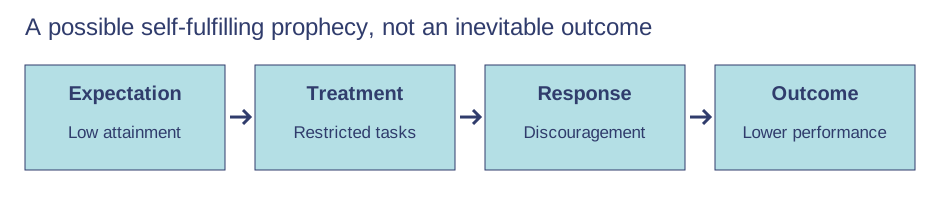
Self-fulfilling prophecy — A low expectation can lead to less challenging work, discouragement and reduced performance, apparently confirming the initial label. State each step in the mechanism. Pupils may reject expectations or gain support elsewhere, so the process is a possibility rather than an inevitable law about every classroom.Selected overview. Explain the qualifications using the notes.
Ball's Beachside study — Ball's 1981 account used three years of participant observation in a south-coast comprehensive school, comparing banded and mixed-ability cohorts. It highlighted selection, teacher expectations and socialisation. Rich process evidence is valuable, but one school cannot establish identical effects everywhere and researcher presence may affect behaviour.
Willis's counter-school culture — Learning to Labour (1977) examined working-class boys in a Midlands school using observation, discussions, interviews and diaries. The lads rejected school authority and valued manual masculinity. Their resistance helped direct them towards manual work. Unlike simple correspondence, this involves agency and unintended reproduction; a small male sample limits generalisation.
Peer groups and sanctions — A pro-school group may value study; a counter-school group may reward disruption and ridicule academic effort. Neither identity is fixed or necessarily shared by everyone in a class. Peers can influence gendered subject choices and discipline. Distinguish group meanings from a teacher's label about the group.
Comparing processes — An interactionist explanation traces labelling; a Marxist explanation links institutional hierarchy to class reproduction; a feminist explanation examines gendered power; a functionalist explanation stresses socialisation and allocation. Compare mechanisms and evidence using the same school situation, recognising that more than one process may operate.
Evidence and educational arguments
Measuring achievement — Exam grades measure attainment; continuation measures participation; progress compares change from a starting point. A school with high grades may have a selective intake. Check cohort, measure and exclusions before ranking effectiveness. Correlation between income and grades does not isolate the cause.
School research ethics — School permission is not a substitute for voluntary participation by pupils and appropriate carer arrangements. Avoid public disclosure of grades, labels or sensitive experiences. Anonymous questionnaires may reduce pressure, but access barriers and non-response can distort patterns. Evaluate methods for the specific educational question.
Further education and measurement concepts
Historical school selection — The post-1944 tripartite model in England and Wales comprised grammar, technical and secondary modern schools, with academic selection associated with the eleven-plus. Technical provision was limited, so actual arrangements often differed from the model. Comprehensive reforms challenged this division; do not imply the tripartite system describes every present UK school.
Special and specialist provision — A special school provides for specified additional educational needs. A specialist school emphasises a curriculum area; this does not mean a special school. Inclusion concerns participation with appropriate support. Evaluate how provision meets needs and whether access promotes opportunity without treating disabled pupils as a uniform group.
Curriculum and qualifications — A national curriculum sets specified content within a jurisdiction. Public examinations award recognised results; SATs commonly names national curriculum assessment tests in England. Vocationalism emphasises work-related learning. Ofsted inspects education and other services in England; its judgements are different evidence from examination scores and do not describe every UK jurisdiction.
Intelligence measures — Intelligence quotient refers to a standardised test score intended to measure certain cognitive abilities. Test design, preparation, language and conditions affect interpretation. Scores do not capture every skill or prove innate group hierarchies. Institutional use of measures can influence labels, access and expectations.
Citizen participation — Citizenship involves membership, rights and responsibilities in a political community. Institutional racism occurs where organisations' practices produce racial disadvantage, including without explicit hostility from every staff member. Compare the actual process and outcome; a stated inclusive policy does not alone establish equal treatment.
Test yourself
30 questions · Random sets of 10. These quick checks support revision; practise longer explanations and justified judgements too.
Mind map
Use the branches to recall the ideas and explain their connections. Check the revision notes for the full detail.
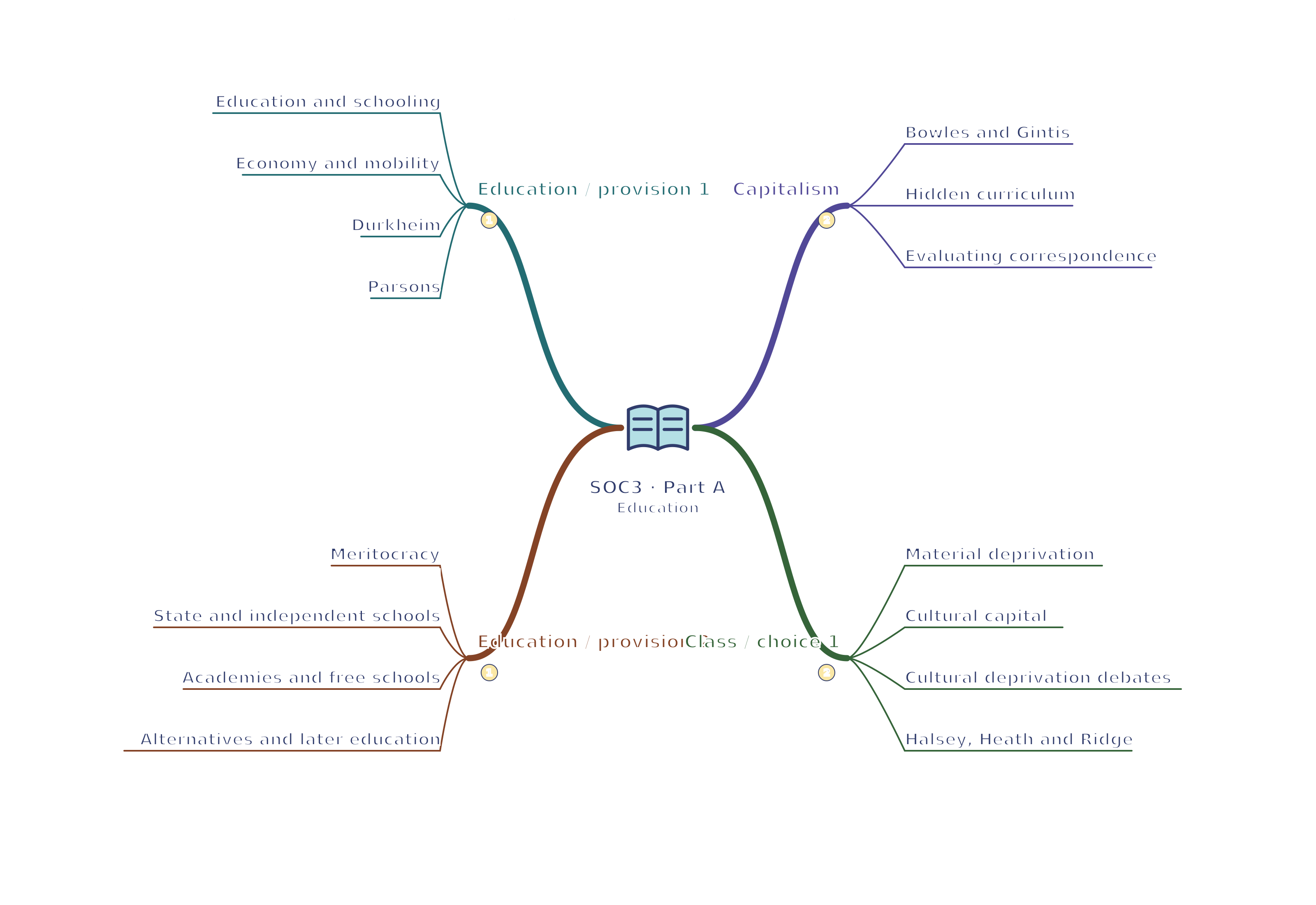
View SOC3 · Education / provision 1 / Education / provision 2 / Capitalism / Class / choice 1 mind mapOpen the full-size map to zoom. Download the PDF to print on A4 or enlarge to A3.
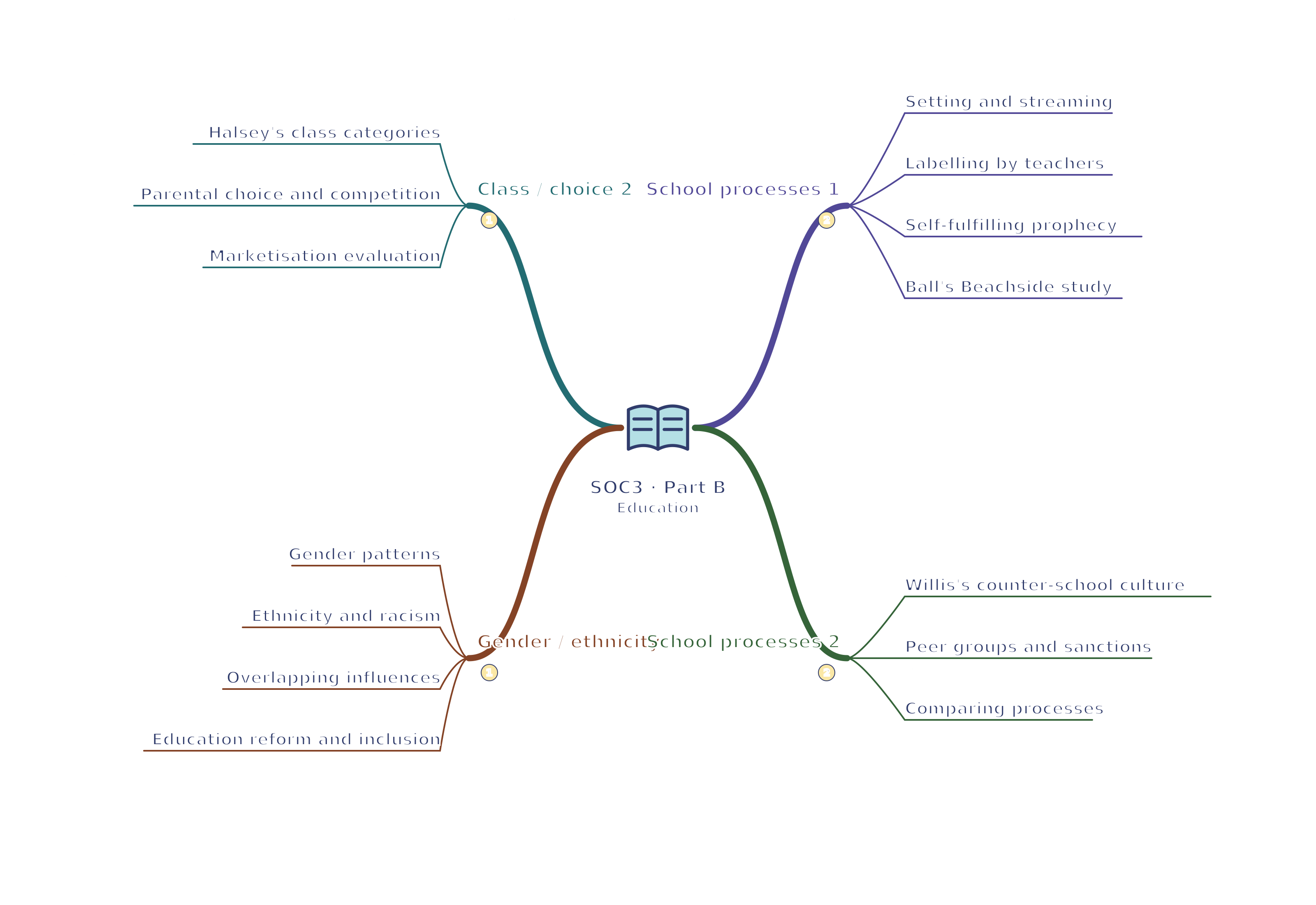
SOC3 · Class / choice 2 / Gender / ethnicity / School processes 1 / School processes 2
View SOC3 · Class / choice 2 / Gender / ethnicity / School processes 1 / School processes 2 mind mapOpen the full-size map to zoom. Download the PDF to print on A4 or enlarge to A3.
Education and schooling: Learning extends beyond organised formal lessons
Economy and mobility: Qualifications can affect work but do not guarantee equal opportunity
Durkheim: Education can create cohesion and cooperation beyond kinship
Parsons: Schools bridge particular family treatment and universal standards
Education / provision 2
Meritocracy: Reward based on ability and effort is a contested claim
State and independent schools: Funding and selection can create different experiences
Academies and free schools: Governance differs within state-funded provision
Alternatives and later education: Home education and de-schooling ask different questions
Capitalism
Bowles and Gintis: Correspondence links school relationships with workplace hierarchy
Hidden curriculum: Everyday arrangements can teach messages beyond subject content
Evaluating correspondence: A similarity needs evidence of a causal mechanism
Class / choice 1
Material deprivation: Income affects access to study resources and time
Cultural capital: Institutionally valued knowledge can produce advantage
Cultural deprivation debates: Deficit explanations can overlook unequal institutional treatment
Halsey, Heath and Ridge: Historical male cohort data revealed unequal continuation rates
Class / choice 2
Halsey's class categories: Service, intermediate and working classes were operational groupings
Parental choice and competition: Unequal resources can make nominal choice unequal
Marketisation evaluation: Performance measures can alter behaviour as well as inform parents
Gender / ethnicity
Gender patterns: Subject choices and attainment require separate explanation
Ethnicity and racism: Group differences are not evidence of innate ability
Overlapping influences: Class, gender and ethnicity interact rather than simply add up
Education reform and inclusion: Policies need assessment of aims, implementation and outcomes
School processes 1
Setting and streaming: Grouping by subject differs from grouping across subjects
Labelling by teachers: Expectations can influence interaction and access
Self-fulfilling prophecy: Expectations can help produce the outcome they anticipate
Ball's Beachside study: Grouping and expectations were examined through a changing school
School processes 2
Willis's counter-school culture: Resistance can reproduce disadvantage without passive obedience
Peer groups and sanctions: Student cultures can reward conformity or resistance
Comparing processes: Detailed interactions and wider inequalities can be linked
Evidence
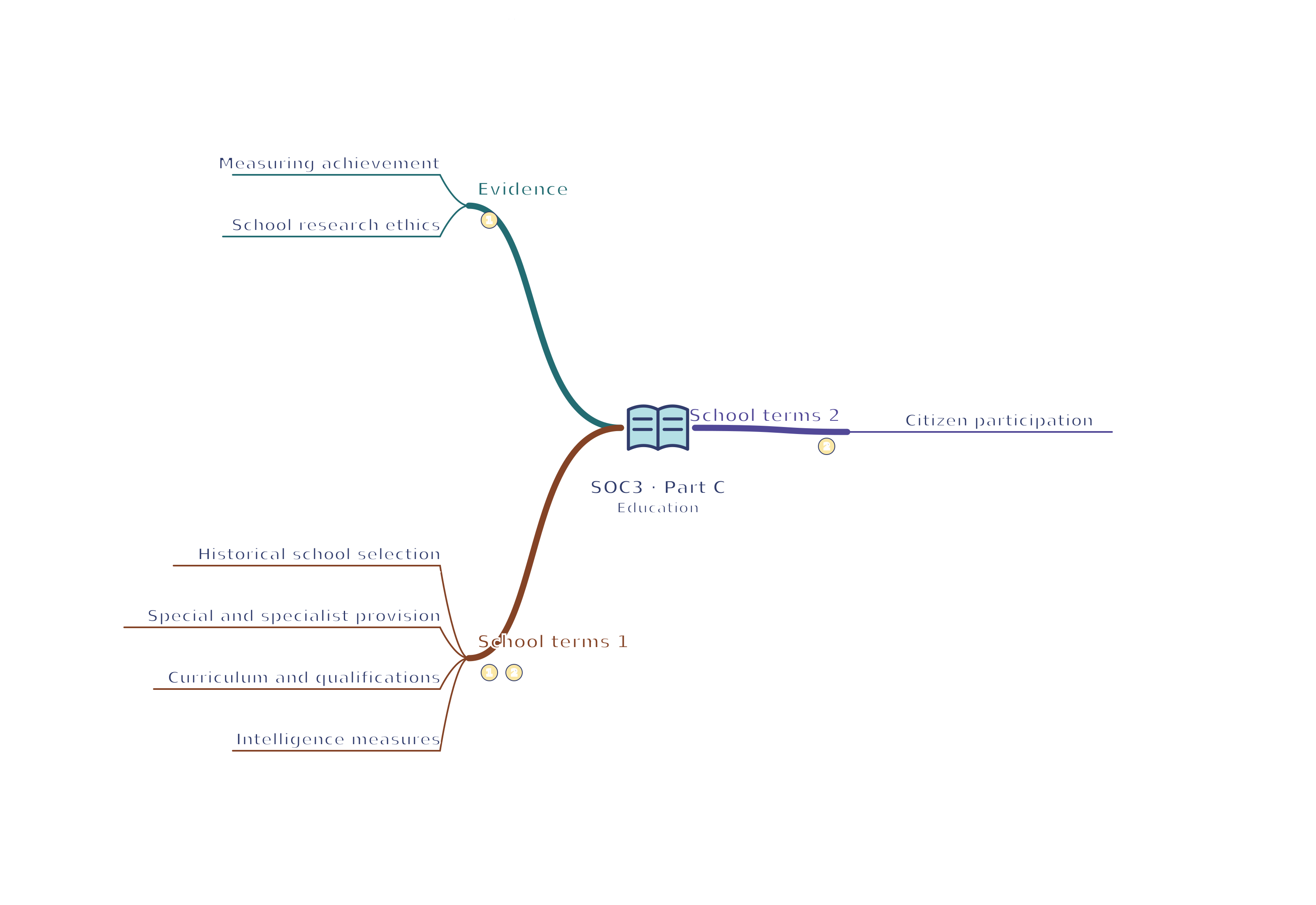
Measuring achievement: Attainment, participation and progress are different indicators
School research ethics: Children and institutional power require care
School terms 1
Historical school selection: The tripartite system proposed different secondary routes
Special and specialist provision: Additional-needs provision differs from subject specialism
Curriculum and qualifications: Examinations, vocational learning and inspection measure different things
Intelligence measures: An IQ score reflects a test measure rather than an unmediated natural ranking
School terms 2
Citizen participation: Citizenship and institutional racism concern rights and organisation
Connections
Education / provision 1 → Education / provision 2: Education may allocate opportunities while access to provision remains unequal.
Capitalism → Class / choice 1: Correspondence arguments link school organisation with resources and class reproduction.
Part connections
SOC3 · Education / provision 1 / Education / provision 2 / Capitalism / Class / choice 1: Education / provision 1 → Education / provision 2 — Education may allocate opportunities while access to provision remains unequal.
SOC3 · Education / provision 1 / Education / provision 2 / Capitalism / Class / choice 1: Capitalism → Class / choice 1 — Correspondence arguments link school organisation with resources and class reproduction.
SOC3 · Class / choice 2 / Gender / ethnicity / School processes 1 / School processes 2: Class / choice 2 → Gender / ethnicity — Choice and competition interact with gendered and ethnic inequalities.
SOC3 · Class / choice 2 / Gender / ethnicity / School processes 1 / School processes 2: School processes 1 → School processes 2 — School grouping and labels can interact with pupil responses and peer cultures.
SOC3 · Evidence / School terms 1 / School terms 2: Evidence → School terms 1 — Interpreting achievement requires attention to provision, policy and measurement.
SOC3 · Evidence / School terms 1 / School terms 2: School terms 1 → School terms 2 — Institutional categories and testing can affect both opportunities and recorded outcomes.
 Mr Kidman's Classroom