Read the notes, recall their sources and practise explaining contrasting views. The 30 quick questions support revision; also practise extended explanations and justified evaluations.
Revise the key ideas
Worship and meditation
Buddhist temples and shrines provide a focus for devotion, learning and community. A Buddha rupa is an image of the Buddha that can remind practitioners of awakening and its qualities; it is not necessarily treated as a creator god. Viharas house monastic communities; gompas provide settings for meditation and learning, especially in Tibetan traditions. Lay and ordained people support each other.
A home shrine makes daily practice possible; a temple can provide shared ceremonies, teaching and support. A Buddha image can recall calm, wisdom and the possibility of awakening.
A vihara supports monastic residence and practice; a gompa is especially associated with Tibetan meditation and learning. Features can include images, texts, offering bowls and places for sitting, but buildings vary.
Offerings may include flowers, candles and incense. Flowers suggest impermanence, light can represent wisdom, and incense can focus devotion and recall ethical qualities spreading through a community. Interpretations vary. Bowing can express respect and reduce pride. These actions are meaningful when linked with intentions and practice, not merely performed to purchase good fortune.
Flowers fade, making impermanence visible; a light can represent wisdom overcoming ignorance. Offerings can cultivate generosity and a focused intention.
Bowing expresses respect and can challenge pride. Its meaning differs from worship of an all-powerful creator who is expected to grant every wish.
Puja is devotional practice at home or in a temple and may include offerings, bowing, chanting and taking refuge in Buddha, Dhamma and Sangha. Chanting can express commitment and aid concentration. Mantras are repeated sounds or phrases; malas are strings of beads used to support repetition and attention. Traditions differ in the forms and importance of devotion.
Home puja can help establish a daily routine; temple puja can connect an individual with a wider community. Both can bring beliefs into repeated practical attention.
Chanting recalls teachings and can steady attention. Mantra repetition and mala beads may support concentration, but their use and importance differ among Buddhist traditions.
Samatha meditation develops calm and concentration, often through mindfulness of breathing. The practitioner notices wandering attention and returns to the chosen focus without feeding distraction. Tranquillity can prepare the mind for insight and support emotional discipline. Meditation requires practice; it is not simply suppressing every thought or escaping all responsibility.
In mindfulness of breathing, a practitioner attends to sensations of the breath and notices distraction before returning attention. Regular practice can weaken habitual reactivity.
Samatha aims at tranquillity and concentration. A calm mind can make insight easier, but calm by itself should not be confused with complete liberation.
Vipassana develops insight into experience, including impermanence and the absence of a fixed self. Zazen is seated meditation in Zen, emphasising attentive awareness; practice differs between Zen schools and may include just sitting or working with koans. Calm and insight can support each other, but their aims are distinguishable. Do not assume every Buddhist meditates in the same way.
Vipassana observes experience to understand qualities such as impermanence, dukkha and anatta. A changing feeling can be observed without treating it as a permanent identity.
In zazen, posture and attentive seated practice are important; Zen schools differ over methods such as just sitting or working with koans. Compare the purpose as well as the visible posture.
Visualisation of Buddhas and Bodhisattvas, especially in Tibetan traditions, can develop qualities such as compassion and wisdom. The practitioner uses an image and associated practice to transform attitudes, not merely fantasise about possessions. An example is visualising Avalokiteshvara, associated with compassion. The practice can be combined with mantra and guided instruction.
Visualising a compassionate Bodhisattva can help practitioners attend to qualities they seek to develop in their own conduct. It is intended to affect how they respond to others.
Images, mantras and guidance can form a coordinated practice in Tibetan traditions. Do not assume that every Buddhist uses visualisation or understands an image in exactly the same way.
Death and festivals
Theravada death rituals may include monks chanting, reflection on impermanence and gifts whose merit is dedicated to the deceased. Bodies may be cremated, though customs vary by community. The funeral supports mourners and reminds participants that life changes. Merit dedication does not imply a permanent soul is purchased a guaranteed destination.
Theravada funeral chanting can recall the Buddha's teaching and offer support to mourners. Giving to the monastic community and dedicating merit connects death rituals with generosity.
Reflection on the body's impermanence can encourage ethical urgency: life cannot be held forever, so actions now matter. Ritual customs vary with local culture and family circumstances.
In Japan, Buddhist funerals may involve priests, chanting, incense, cremation and memorial observances; Pure Land communities may recite the Buddha's name. Tibetan rituals can include readings guiding awareness through the bardo, the intermediate state, and in some places sky burial. Customs depend on tradition and circumstances; sky burial is not universal. Compare meanings as well as outward differences.
Japanese Buddhist memorial observances can sustain remembrance after the funeral. In some communities, recitation of Amitabha's name reflects Pure Land faith.
Tibetan readings about the bardo can be understood as guidance through an intermediate state. Sky burial in some settings reflects local conditions and the giving of the body; it is not compulsory for all Tibetan Buddhists.
Comparison should link ritual with beliefs and support for survivors. A shared use of chanting does not mean identical understandings of death and rebirth.
Wesak (Vesak) commemorates the Buddha's birth, enlightenment and death in many traditions, often with lights, offerings, chanting and generosity. Dates and emphases differ. Celebrating in Britain can strengthen community identity and make teachings visible through charity and reflection. The festival's value lies in remembering and applying the Buddha's example rather than decoration alone.
At Wesak, giving, observing precepts and hearing teachings can apply the Buddha's example. Lights and decorations matter religiously when connected with enlightenment and commitment.
British Buddhist communities may hold shared celebrations, open events or charitable activities. These can express belonging while allowing communities from different traditions to retain their own customs.
Parinirvana Day remembers the Buddha's death and final passing beyond rebirth, especially in Mahayana traditions. Reflection on impermanence, readings, meditation and remembrance of deceased loved ones may form part of it. Retreats offer concentrated time for study and practice away from everyday distractions. These can renew commitment while connecting insight with life after the retreat.
Parinirvana Day encourages reflection on the Buddha's final passing and the impermanence of life. Remembering deceased relatives can combine mourning with attention to teaching.
A retreat provides sustained time for meditation and study; a layperson can return to work and family with greater patience. Retreat does not require a claim that ordinary responsibilities have no value.
Ethics and compassion
Kamma (karma) refers to intentional actions of body, speech and mind and their consequences. It is not a creator god judging or the claim that every misfortune is deserved. Rebirth expresses continuity between lives without an unchanging soul. Intentions matter, so compassionate action and honest speech support a more wholesome pattern; suffering should still prompt care.
Wholesome intention can shape actions that reduce suffering, while greed or hatred can strengthen harmful habits. Kamma is not a divine system of rewards allocated by a creator.
Rebirth describes continuity through causes and conditions. Helping someone suffering is consistent with Buddhist compassion even when practitioners also believe actions have consequences.
Karuna is compassion, the wish to relieve suffering; metta is loving kindness, goodwill towards all beings. Metta meditation may extend good wishes from oneself to friends, strangers and difficult people. Dhammapada 5 teaches that hatred is overcome through non-hatred. These attitudes encourage practical help, restraint and patient responses rather than sentimental feelings alone.
Karuna focuses on relieving suffering, while metta extends goodwill. One can motivate practical aid and the other can reduce hostility even towards difficult people.
In metta practice, goodwill may be extended beyond friends to strangers and enemies. Dhammapada 5 supports overcoming hatred without hatred, providing a source for refusing retaliation.
The Five Precepts train Buddhists to avoid killing, taking what is not given, sexual misconduct, false speech and intoxicants that cloud awareness. They are commitments for ethical development rather than commands from a creator deity. Intention and consequences matter. Some Buddhists choose vegetarianism from the first precept, but diets vary, including within Theravada and Mahayana communities.
The first precept concerns taking life; the second taking what is not given; the third sexual misconduct. They can encourage care for animals, respect for property and relationships free from coercion.
The fourth concerns false speech and the fifth intoxicants that cause heedlessness. Honest communication and clear awareness help avoid further harm.
Precepts are training commitments rather than orders from a creator. Application requires attention to intention and consequences; Buddhists may disagree about difficult situations without abandoning the commitment to reduce harm.
The Six Perfections in Mahayana are generosity, morality, patience, energy, meditation and wisdom. They support the Bodhisattva's compassionate work. Generosity can involve time and attention as well as money; patience resists anger; energy sustains effort. Wisdom prevents attachment to an independent self and helps compassion operate intelligently rather than harmfully.
The Six Perfections are generosity, morality, patience, energy, meditation and wisdom. In Mahayana, they support the Bodhisattva's development for the benefit of beings.
Generosity loosens attachment; morality restrains harm; patience resists anger. Energy sustains practice; meditation steadies the mind; wisdom understands reality without clinging.
For example, helping a difficult neighbour can involve generosity and patience, while continued training develops energy. The perfections work together rather than being six unrelated ceremonial tasks.
Buddhist practice joins ethics, meditation and wisdom. For example, truthful speech reduces harm, meditation notices anger, and insight into causes supports a wiser response. Theravada, Mahayana, Zen and Pure Land communities can emphasise different practices within a diverse Britain. In answers, explain the effect of a belief or source on behaviour and recognise differences without labelling one tradition superior.
To explain practice, connect the action with its belief: offering flowers recalls impermanence, which can reduce clinging and encourage valuing present opportunities.
A comparison can identify a shared goal of overcoming suffering and a difference in method, such as concentrated breathing and devotional recitation. Avoid assuming that only one method can have value.
Test yourself
30 questions · Random sets of 10. These quick checks support revision; practise longer explanations and justified judgements too.
Mind map
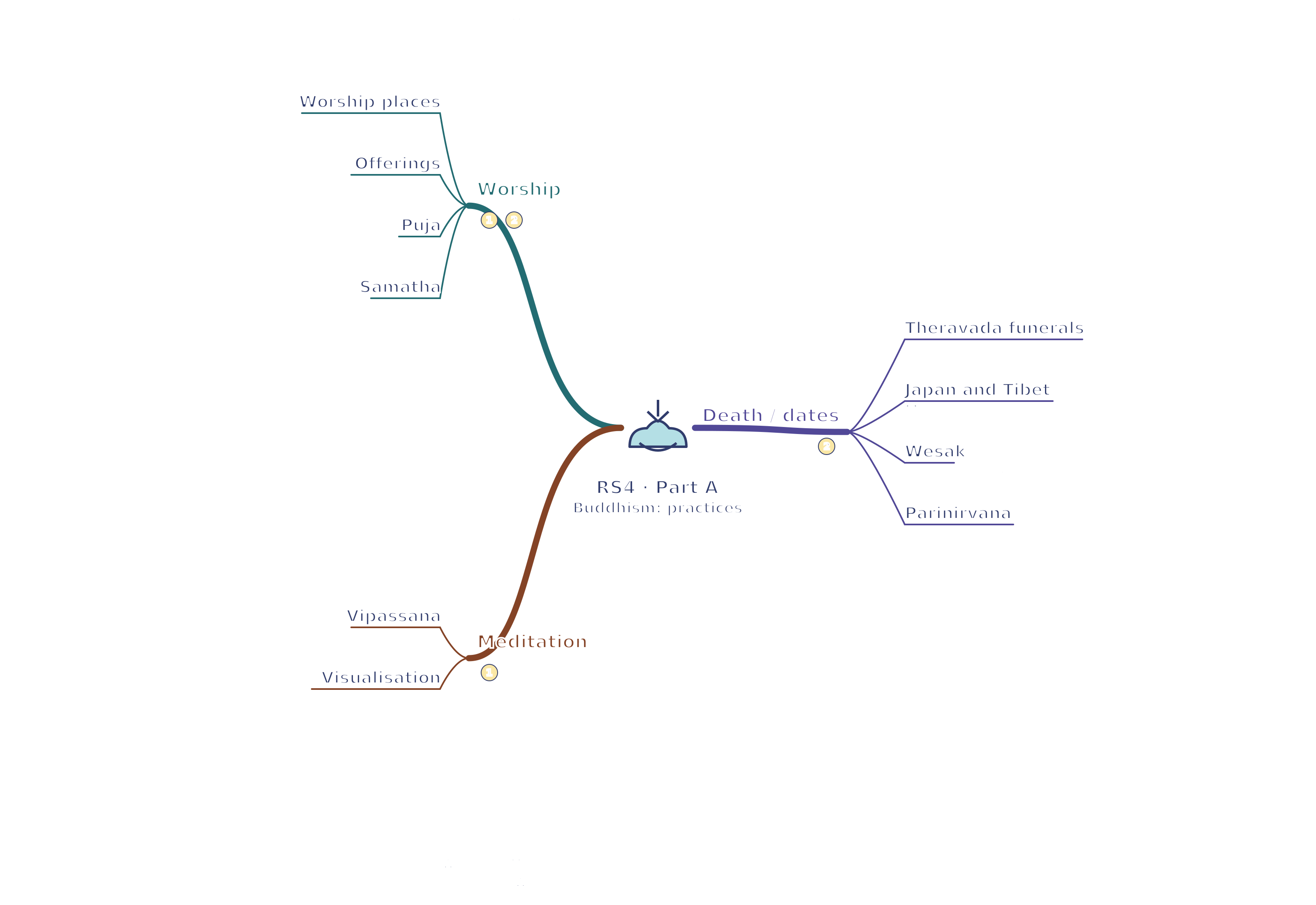
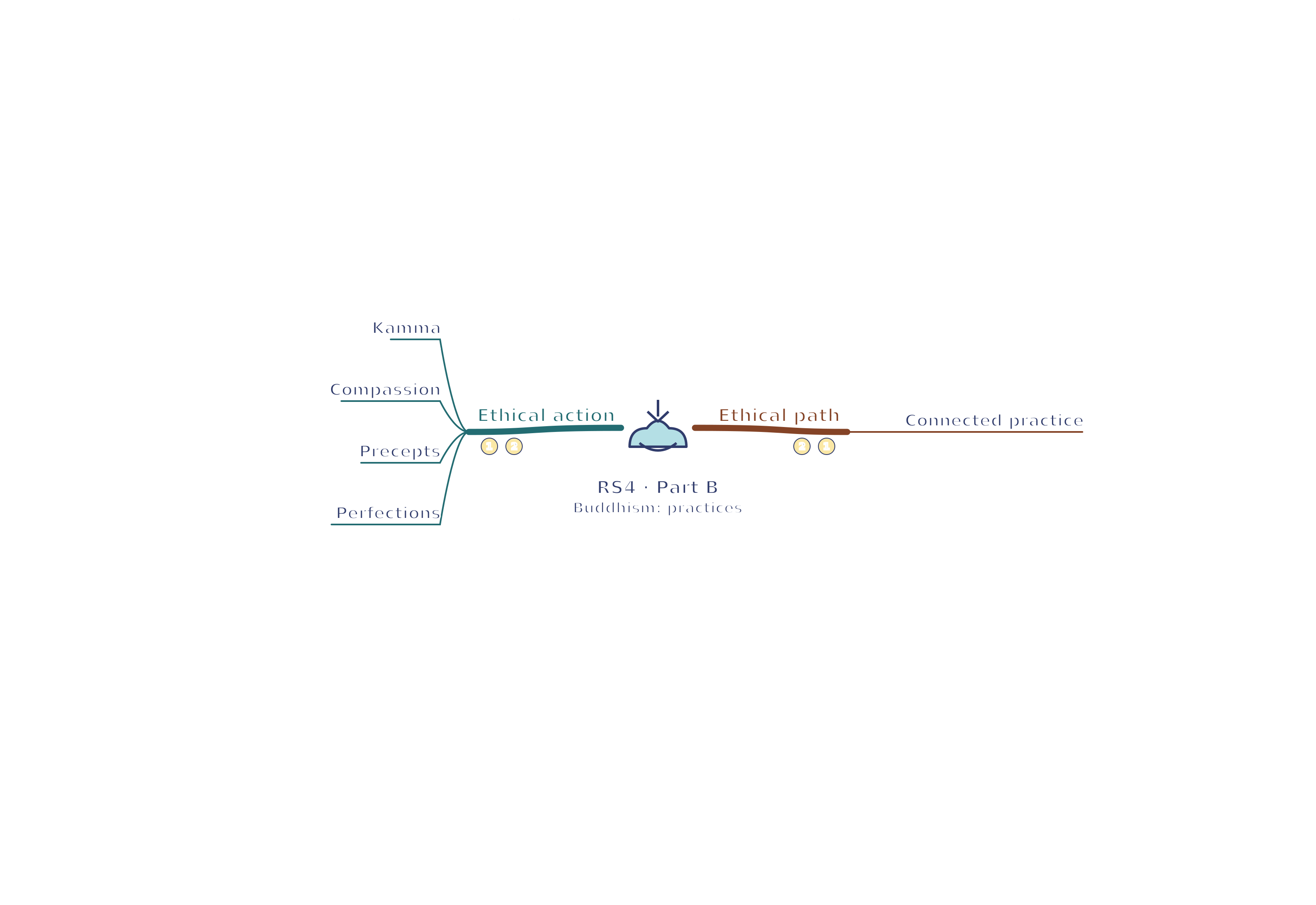
Use the branches to recall the ideas and explain their connections. Check the revision notes for the full detail.
RS4 · Part A
View RS4 · Part A mind mapOpen the full-size map to zoom. Download the PDF to print on A4 or enlarge to A3.
 Mr Kidman's Classroom