Read the notes, recall their sources and practise explaining contrasting views. The 30 quick questions support revision; also practise extended explanations and justified evaluations.
Revise the key ideas
Dhamma and existence
Dhamma (Dharma) includes the Buddha's teaching and the truth about how reality works. Buddhists seek to test and practise the teaching, not merely recite it. The Buddha is understood as an awakened teacher, not a creator god. Following the Dhamma can involve ethical choices, meditation and wisdom. Different Buddhist traditions share foundations while interpreting and practising them differently.
Taking refuge in Buddha, Dhamma and Sangha expresses trust in the awakened teacher, the teaching and the community of practice. Refuge is a commitment to a path rather than a demand that a creator rescue someone.
Theravada and Mahayana share important teachings about suffering and liberation but differ in texts and emphases. Buddhism includes a variety of communities in Britain, including Zen and Pure Land traditions.
Dependent arising means events and experiences depend on causes and conditions rather than existing independently. Craving and ignorance help sustain suffering, so changing conditions can change experience. A seed needs water, warmth and soil; likewise a reaction of anger depends on thoughts and circumstances. The teaching supports responsibility without claiming that every event is someone's fault.
Dependent arising means events and experiences occur through conditions. A habit of anger may depend on a trigger, interpretation and repeated reactions; changing a condition can alter the response.
It is more than the statement that everything happens by chance. Understanding conditions makes ethical practice and meditation meaningful because harmful patterns can be changed.
Anicca is impermanence: physical things, feelings and situations change. Recognising this can reduce attachment and encourage appreciation without trying to possess experiences permanently. It does not mean nothing matters; actions still have effects. Accepting change can help someone face ageing or loss while continuing to care for others.
Anicca applies to physical things, feelings and relationships: what arises through conditions changes when those conditions change. Even an enjoyable mood cannot be held permanently.
Remembering impermanence can reduce clinging and encourage care for others while there is an opportunity. It does not require indifference to loved ones.
Anatta means there is no permanent, independent self or soul behind changing experience. People exist conventionally, but personality is a process rather than an unchanging essence. This differs from the Christian belief in an enduring soul. Rebirth is therefore understood as causal continuity, not an identical eternal soul travelling unchanged between bodies.
Anatta challenges the idea of an unchanging owner behind the body and mind. The changing aggregates help explain why personal identity cannot be reduced to a permanent independent essence.
Moral responsibility remains meaningful because actions influence later experience. No fixed self does not mean that pain is unreal or that harming someone has no consequence.
Dukkha includes obvious pain, dissatisfaction caused by change and the deeper insecurity of conditioned existence. Pleasure can be real but cannot supply lasting fulfilment because it changes. Recognising dukkha aims to diagnose and overcome suffering, not encourage hopelessness. Compassion responds to suffering in others rather than blaming them for it.
Dukkha includes pain such as illness, disappointment when pleasure ends, and the insecurity of relying on changing things. Distinguishing these forms explains why suffering is wider than physical injury.
Diagnosis of suffering is paired with a path to its ending. Buddhism should therefore not be described simply as a belief that life is miserable and nothing can improve it.
Personality and destiny
The Five Aggregates analyse experience as form (body), sensation (pleasant, unpleasant or neutral feeling), perception (recognition), mental formations (intentions and habits), and consciousness (awareness). In Theravada teaching, these changing components explain personality without a permanent self. Sensation and perception are distinct: how something feels is not the same as recognising what it is.
Form is the physical body; sensation is the pleasant, unpleasant or neutral tone of an experience; perception recognises and identifies it. These are distinct aspects of experience rather than three names for a soul.
Mental formations include intentions, habits and other mental activities; consciousness concerns awareness of an object. All five aggregates change, supporting the teaching of anatta.
For example, tasting tea involves a body, a pleasant or unpleasant feeling, recognition of the flavour, a wish for more, and awareness of tasting. No single aggregate is an unchanging self.
Sunyata means emptiness of independent inherent existence, a major Mahayana teaching linked to dependent arising. It does not mean the world is simply nothing. Buddha-nature expresses the potential for awakening, though traditions interpret it differently; it is not straightforwardly an eternal personal soul. Such beliefs can support respect for others and confidence that transformation is possible.
Sunyata explains that things lack independent inherent existence because they depend on conditions and relationships. It is compatible with ordinary experience and causal consequences.
Buddha-nature teachings support the possibility of awakening. Interpretations differ, but a revision answer should connect the teaching with potential for transformation rather than assume it means an eternal personal soul.
The Arhat ideal, prominent in Theravada, is a person who has overcome greed, hatred and ignorance and is freed from the cycle of rebirth. It requires discipline and wisdom and does not mean selfishness or lack of compassion. Theravada values helping others as well as personal liberation. The Buddha is also revered within Theravada; the distinction concerns the emphasis of the ideal.
An Arhat has overcome the causes of rebirth and attained liberation. This ideal places importance on wisdom, disciplined conduct and meditative development.
Theravada practitioners can teach, give and support others while pursuing liberation. Contrasting Arhat and Bodhisattva ideals does not justify labelling all Theravada Buddhism selfish.
The Bodhisattva ideal is central in Mahayana: seeking Buddhahood for the benefit of all beings, supported by compassion and wisdom. Bodhisattvas commit to helping others towards liberation rather than pursuing a purely private goal. Buddhahood is complete awakening. The contrast with the Arhat is an emphasis on universal liberation, not a simple divide between kindness and selfishness.
The Bodhisattva ideal combines wisdom with compassion and the commitment to awakening for the benefit of beings. This can motivate service even when helping others is demanding.
Buddhahood is complete awakening, rather than simply becoming a respected teacher. Mahayana traditions present the possibility of Buddhahood as a goal of the path.
Pure Land Buddhism often focuses on Amitabha Buddha and aspiration for rebirth in his Pure Land, a realm favourable to attaining enlightenment. Faith, recitation and reliance on Amitabha's compassionate vow are important in many forms. Interpretations vary, including literal and symbolic understandings. Pure Land is not simply equivalent to a Christian heaven or a creator god's judgement.
Many Pure Land practitioners recite Amitabha's name and trust his compassionate vow. Rebirth in the Pure Land is valued because its conditions help progress towards awakening.
Faith and reliance on Amitabha differ in emphasis from approaches centred on one's own meditative discipline. Ethical conduct can still matter; Pure Land is not permission to disregard harm.
Buddha's life
Siddhartha Gautama was raised in luxury according to Buddhist tradition. The Four Sights—an old person, a sick person, a dead person and a holy seeker—challenged the apparent security of privilege. Jataka 075 is a specified source for this narrative. Their significance is the recognition of unavoidable suffering and the possibility of seeking a response, not simply a list of scenes.
Traditional accounts describe Siddhartha's birth in Lumbini to Queen Maya and his protected upbringing. The stories communicate exceptional spiritual potential and a life insulated from ordinary suffering.
Old age, illness and death challenged the security of palace life. The holy seeker showed that a different way of living might respond to the suffering wealth could not remove.
Jataka 075 is the prescribed narrative reference for the Four Sights. Explain the contrast between recognising a problem and seeing a possible response, rather than only listing the sights.
Siddhartha left palace life and practised severe asceticism, including extreme self-denial. Finding that neither luxury nor bodily deprivation produced liberation, he adopted the Middle Way. Meditation beneath the Bodhi tree led to enlightenment, insight into suffering and its ending. The story encourages disciplined balance, not laziness or the claim that every desire should be satisfied.
Severe asceticism did not bring Siddhartha lasting insight; abandoning starvation was a rejection of an ineffective extreme, not abandonment of disciplined effort.
Enlightenment beneath the Bodhi tree is understood as awakening to the causes and ending of suffering. The Buddha's example encourages testing a path through practice rather than relying on luxury or self-punishment.
Four Noble Truths
The Four Noble Truths identify suffering, its origin, its cessation and the path. The first recognises dukkha. The second relates its origin to craving (tanha), with ignorance, greed and hatred described as the Three Poisons. Craving includes clinging to experiences or an imagined fixed self. Diagnosis is practical: identifying causes provides a reason change can work.
Ignorance fails to understand reality accurately, greed clings to desirable experiences, and hatred rejects what is disliked. These Three Poisons reinforce harmful intentions and suffering.
Craving can concern pleasure, continued existence or escape from unwanted experience. Ordinary needs and compassionate aspirations should not automatically be confused with destructive clinging.
The third Noble Truth teaches that craving and suffering can cease. Nibbana (nirvana) is release from greed, hatred and ignorance and liberation from samsara. It is not merely temporary relaxation or a heaven created by a deity. Interpretations differ, and descriptions should avoid reducing it to ordinary pleasure. This teaching gives the Buddhist path a positive goal.
Nibbana is associated with extinguishing greed, hatred and ignorance. It is liberation from the conditions sustaining suffering, not a momentary distraction from them.
The Buddha's awakening during life and his final passing at death are distinguished in Buddhist tradition. Descriptions of liberation should not automatically import a Christian account of an eternal soul in heaven.
The fourth Noble Truth identifies the Eightfold Path: right understanding, intention, speech, action, livelihood, effort, mindfulness and concentration. These develop together, not as eight levels completed once. The Threefold Way groups them into wisdom (understanding, intention), ethics (speech, action, livelihood) and meditation (effort, mindfulness, concentration). Dhammapada 190–191 connects refuge with insight into the truths and path.
Wisdom includes right understanding of the truths and right intention, such as renunciation and goodwill. Ethics includes truthful and helpful speech, non-harming action, and livelihood that avoids exploitation.
Meditation includes right effort to develop wholesome states, right mindfulness of experience, and right concentration. The divisions support each other: attention can improve conduct and ethical restraint can support meditation.
Dhammapada 190–191 links refuge with understanding suffering, its origin, its ending and the path. Use the passage to support the teaching that refuge involves insight and practice, not simply saying religious words.
Test yourself
30 questions · Random sets of 10. These quick checks support revision; practise longer explanations and justified judgements too.
Mind map
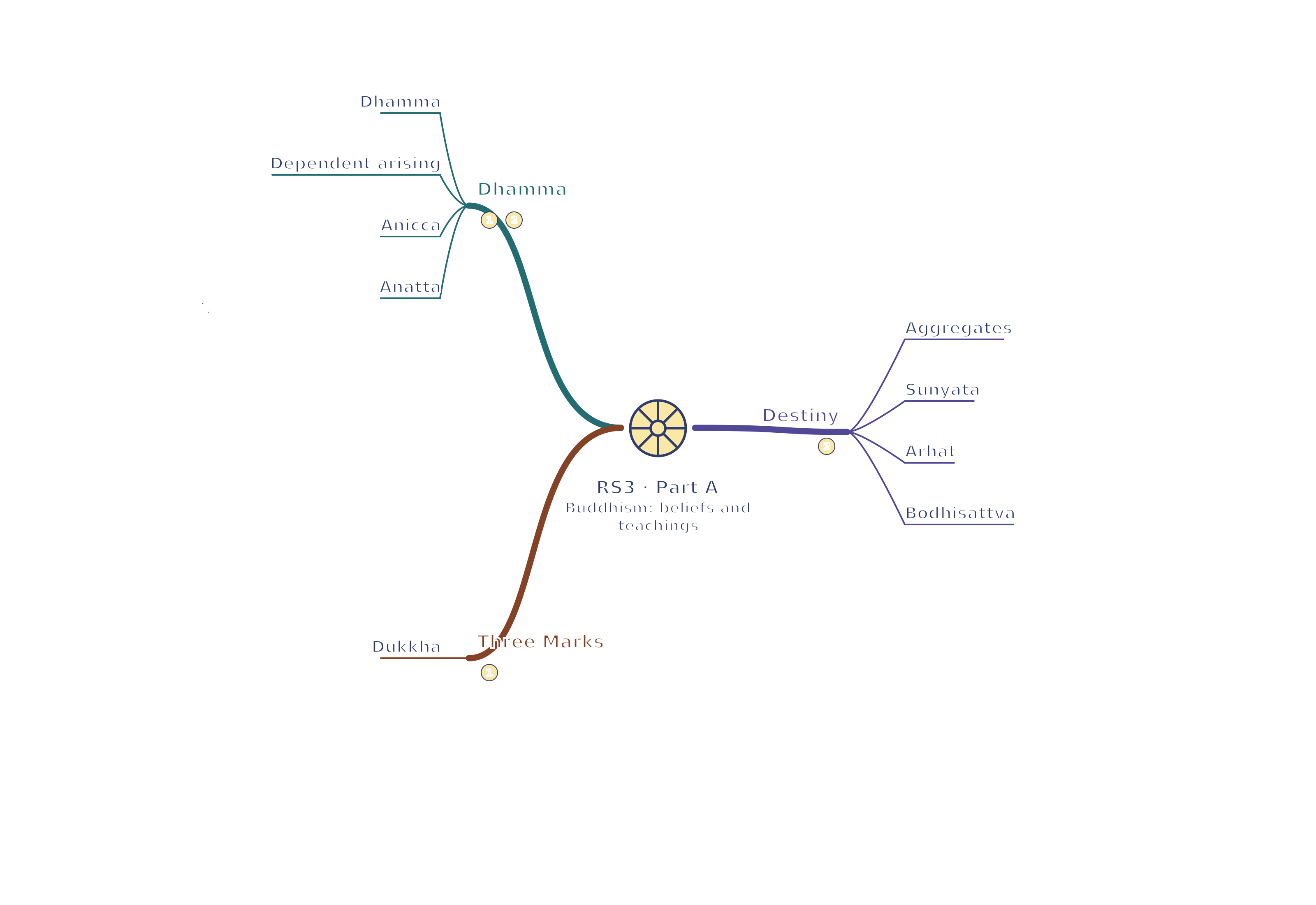
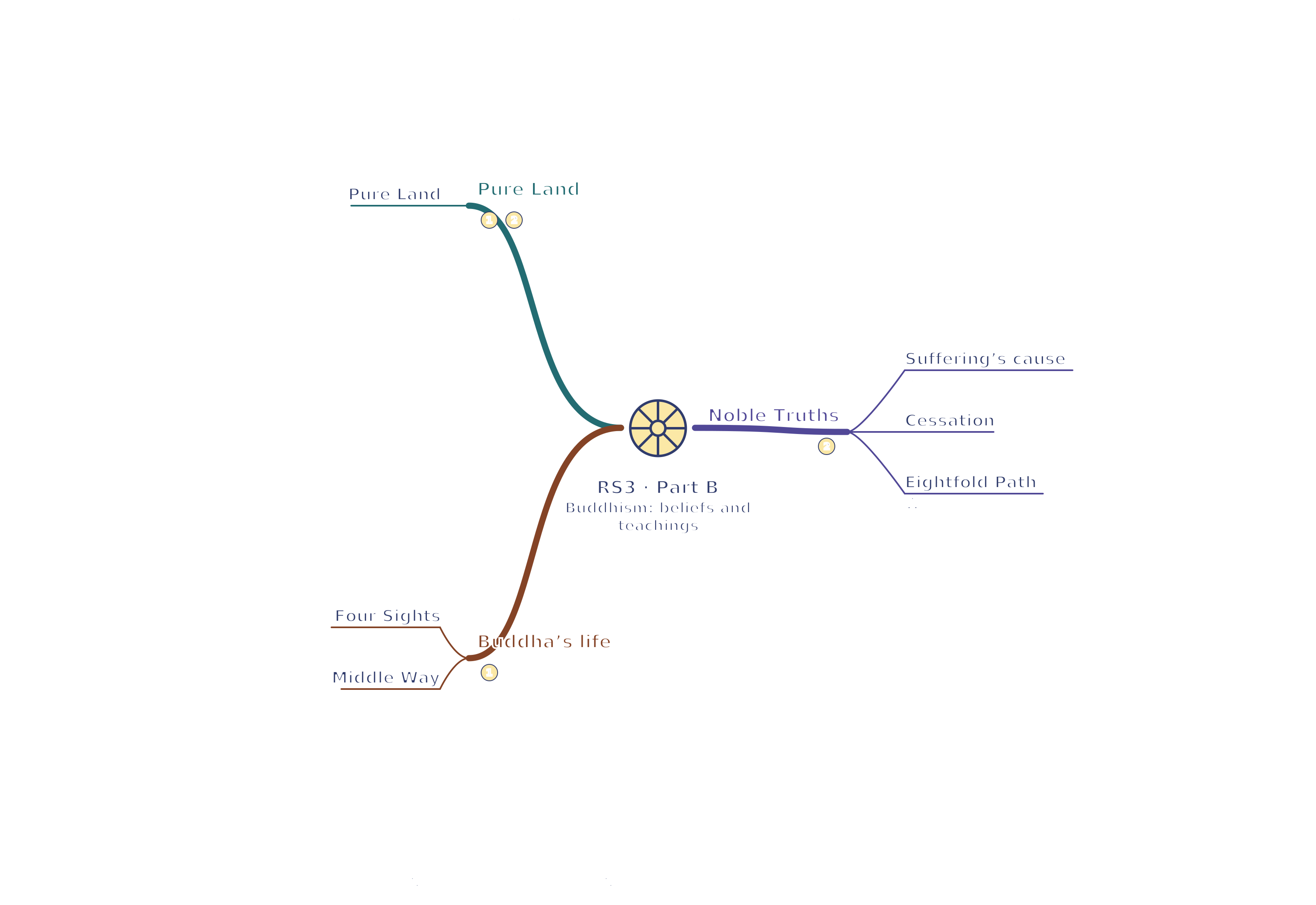
Use the branches to recall the ideas and explain their connections. Check the revision notes for the full detail.
RS3 · Part A
View RS3 · Part A mind mapOpen the full-size map to zoom. Download the PDF to print on A4 or enlarge to A3.
 Mr Kidman's Classroom