Read the notes, recall their sources and practise explaining contrasting views. The 30 quick questions support revision; also practise extended explanations and justified evaluations.
Revise the key ideas
Crime and causes
A crime breaks a law; a sin breaks a religious or moral requirement, so the categories overlap but are not identical. A lawful action can still be considered morally wrong, and an unjust law can criminalise a morally defensible action. Good intentions do not guarantee harmless outcomes. Ethical judgement considers intention, harm, responsibility and context rather than only whether someone was caught.
An action can be illegal without being judged immoral by everyone, and a harmful act can be legal. Religious ethics asks about intention, harm and responsibility as well as compliance with law.
A good intention does not guarantee a good outcome. Causing pain in necessary medical treatment may be justified by benefit, whereas cruelty inflicted for enjoyment has a different moral character.
Theft, murder and hate crime raise distinct issues of property, life and prejudice. Christian love of neighbour and Buddhist non-harming can oppose each while still encouraging fair treatment of offenders.
Poverty and upbringing can increase pressures or reduce opportunities, but they do not make criminal behaviour inevitable. Explanations help prevention and may inform sentencing without erasing victims' rights. Christians may respond through practical care; Buddhists may emphasise compassion and the conditions sustaining harm. Support, education and fair opportunity can address causes while holding people accountable.
Poverty and a harmful upbringing can restrict choices or normalise wrongdoing. These can explain behaviour without automatically removing responsibility or the victim's need for protection.
A response can combine prevention through education and support with accountability after a crime. Treating every person from a poor household as likely to offend is itself an unjust generalisation.
Mental health problems and addiction can affect judgement or self-control in some cases, but most people experiencing mental illness are not violent. Treatment and support can reduce harm; culpability depends on the circumstances, not a label alone. Addiction may lead to theft to fund dependence. Compassionate responses can combine treatment, protection for the public and fair accountability.
Addiction can impair judgement and motivate offending to obtain substances. Treatment and rehabilitation can address causes that punishment alone may not change.
Mental ill-health does not mean a person is inherently dangerous. Assessment must consider the individual, capacity and evidence rather than attach guilt to a diagnosis.
Greed may motivate theft or fraud; hatred can motivate attacks on people because of identity. A hate crime involves hostility or prejudice linked to a protected characteristic in the relevant legal context. Murder deliberately takes life, while theft takes another's property. Religious opposition can rest on dignity, neighbourly love and the Buddhist precepts against killing and taking what is not given.
Greed seeks gain beyond legitimate need; hatred can target someone because of identity. A hate crime harms the direct victim and can intimidate a wider community.
Buddhist teaching on the Three Poisons links greed and hatred with suffering. Christian love of neighbour gives a reason to resist prejudice and protect people targeted by it.
Opposing an unjust law may involve non-violent civil disobedience. Supporters argue conscience and justice can justify limited law-breaking; critics fear undermining order or causing harm. Christian concern for justice and Buddhist non-harm can support peaceful resistance while also encouraging respect for law. Consider the law's injustice, the action's proportionality and the effects on others, not simply the protester's claim.
Opposition to an unjust law may involve civil disobedience: deliberately breaking a law to challenge injustice. A defender may appeal to conscience; a critic may emphasise public order and democratic methods.
Religious respect for lawful authority does not automatically require obeying every command. Evaluate the injustice, means used, harm caused and alternatives available.
Aims of punishment
Retribution means a proportionate punishment because wrongdoing deserves a response. It differs from uncontrolled personal revenge. Some Christians relate it to justice and responsibility; others worry it can harden attitudes. Buddhists may question responses driven by hatred while accepting accountability. A fair system must consider evidence, seriousness and the offender's circumstances.
Retribution means a proportionate deserved penalty, not unlimited personal revenge. A supporter argues that it respects responsibility and the seriousness of harm.
A critic asks whether focusing only on desert neglects prevention and rehabilitation. Religious responses can value justice while rejecting vindictive treatment.
Deterrence aims to discourage crime, either in the offender or in others who observe the penalty. Supporters argue it protects potential victims; critics note that desperate people may not weigh consequences rationally and detection matters as well as severity. Claims that a harsh penalty always prevents crime need evidence. Deterrence can conflict with proportionality or rehabilitation if pursued without limits.
Deterrence aims to discourage the offender or other people from future crime. Its effectiveness depends on factors such as likelihood of detection, understanding and circumstances.
A severe penalty does not automatically deter an impulsive act or someone who expects not to be caught. Evaluation needs evidence and a distinction between severity and certainty.
Reformation aims to change the offender's attitudes and behaviour so they can return to society without reoffending. Education, counselling, addiction treatment and learning skills can help. Christians may link it with repentance and new beginnings; Buddhists with changing conditions and overcoming harmful mental states. It can protect society, but outcomes depend on effective support and the person's engagement.
Reformation aims to change conduct through education, support or treatment. It expresses the possibility that an offender can develop a less harmful way of life.
Christians can connect reform with repentance; Buddhists can connect it with changing intentions and habits. Neither implies that release should ignore risks to others.
Treatment of offenders
Prison can protect the public by restricting liberty, express accountability and provide rehabilitation. It can also separate families, expose people to harmful influences and make reintegration harder. Christians and Buddhists may support protection while insisting prisoners retain dignity. Matthew 25 includes care for prisoners. Imprisonment should be assessed by justice, safety and outcomes rather than portrayed as automatically either good or useless.
Prison can protect the public through restriction and provide a proportionate penalty. It can also disrupt family ties or expose someone to further harmful influences.
Education, treatment and preparation for release can support reformation. Humane conditions recognise dignity while a sentence maintains accountability.
Community service requires unpaid work benefiting society and can allow offenders to retain positive family or employment links. It may repair harm and develop responsibility, but it is unsuitable for some serious risks and requires supervision. A religious defence can connect service with making amends; critics may question whether it is a sufficient response in a particular case.
Community service requires unpaid work for the benefit of others. It can make consequences visible, contribute restitution and reduce the disruption associated with imprisonment.
Its suitability depends on seriousness and risk; it is not automatically appropriate for every offence. Explain which aim it serves in the particular case.
Corporal punishment deliberately inflicts physical pain as a penalty. Supporters may argue it is swift or deters; opponents stress dignity, harm and the danger of teaching violence. Many Christians appeal to love and compassion against it; Buddhist non-harm gives a strong objection. Historical use of religious texts to defend it does not imply all followers support it today.
Corporal punishment intentionally inflicts physical pain as a penalty. Supporters may claim swift deterrence; critics emphasise harm, dignity and the danger of abuse.
Some Christians have appealed to disciplinary passages, while others emphasise love and nonviolence. Buddhist non-harming can support opposition; recognising diversity does not remove the need to evaluate the argument.
Forgiveness and death penalty
Forgiveness means letting go of resentment or the demand for personal revenge; it need not mean forgetting, condoning harm or removing lawful consequences. Christians may refer to Jesus' repeated forgiveness in Matthew 18 or his response at the crucifixion. Victims can need safety and time. Forgiveness and reconciliation differ: rebuilding trust may depend on repentance, honesty and protection.
Jesus' teaching about repeated forgiveness in Matthew 18:21–22 can support refusing lasting hatred. His example on the cross gives a further source for forgiveness of enemies.
Forgiveness is not identical to reconciliation, forgetting or cancelling a sentence. A victim can forgive while maintaining distance and seeking protection.
Buddhist forgiveness can follow metta and Dhammapada 5's teaching that hatred is not ended by hatred. Letting go of resentment can reduce suffering, while compassion can extend to both victim and offender. A humanist may defend forgiveness through wellbeing and social relationships without believing it is a divine command. Neither approach requires pressuring victims or abandoning public protection.
Dhammapada 5 supports overcoming hatred without hatred. A Buddhist may pursue justice without feeding retaliatory anger, linking forgiveness with reducing suffering.
A person can reject revenge and still require restitution or reform. Compassion applies to victims as well as offenders.
The death penalty is state execution following conviction. Supporters may argue retribution, deterrence or permanent protection; opponents raise wrongful convictions, irreversibility, dignity and doubts about deterrence. Some Christians have appealed to Old Testament justice, while many reject execution through sanctity of life and forgiveness. Buddhist objections commonly stress the first precept and the possibility of change. Do not portray either religion as wholly unanimous.
Sanctity of life can support opposition to execution because even an offender retains human worth. Miscarriages of justice are especially serious when a penalty is irreversible.
Some Christians have appealed to older scriptural accounts of punishment; Catholic teaching now rejects the death penalty as inadmissible. Do not present an older justification as the current Catholic position.
Buddhist objections can appeal to the first precept and the possibility of moral change. Acknowledging the crime's seriousness does not logically require killing the offender.
The principle of utility judges actions by their overall consequences for wellbeing. Applied to execution, it asks whether any claimed deterrence or protection outweighs suffering, risks and alternatives. Sanctity-of-life arguments may reject intentional killing even if useful consequences are claimed. A justified conclusion addresses an opposing argument with reasons and evidence rather than asserting that severity proves effectiveness.
Utility evaluates consequences, such as protection, deterrence, cost, suffering and the risk of executing an innocent person. It asks about overall outcomes rather than desert alone.
An argument for execution must justify why it produces greater benefit than alternatives; an argument against it can point to irreversible harm and life imprisonment as another means of protection.
A justified conclusion should address both the rights of victims and the humanity of offenders. Stating that crime is wrong does not on its own establish the best punishment.
Test yourself
30 questions · Random sets of 10. These quick checks support revision; practise longer explanations and justified judgements too.
Mind map
Use the branches to recall the ideas and explain their connections. Check the revision notes for the full detail.
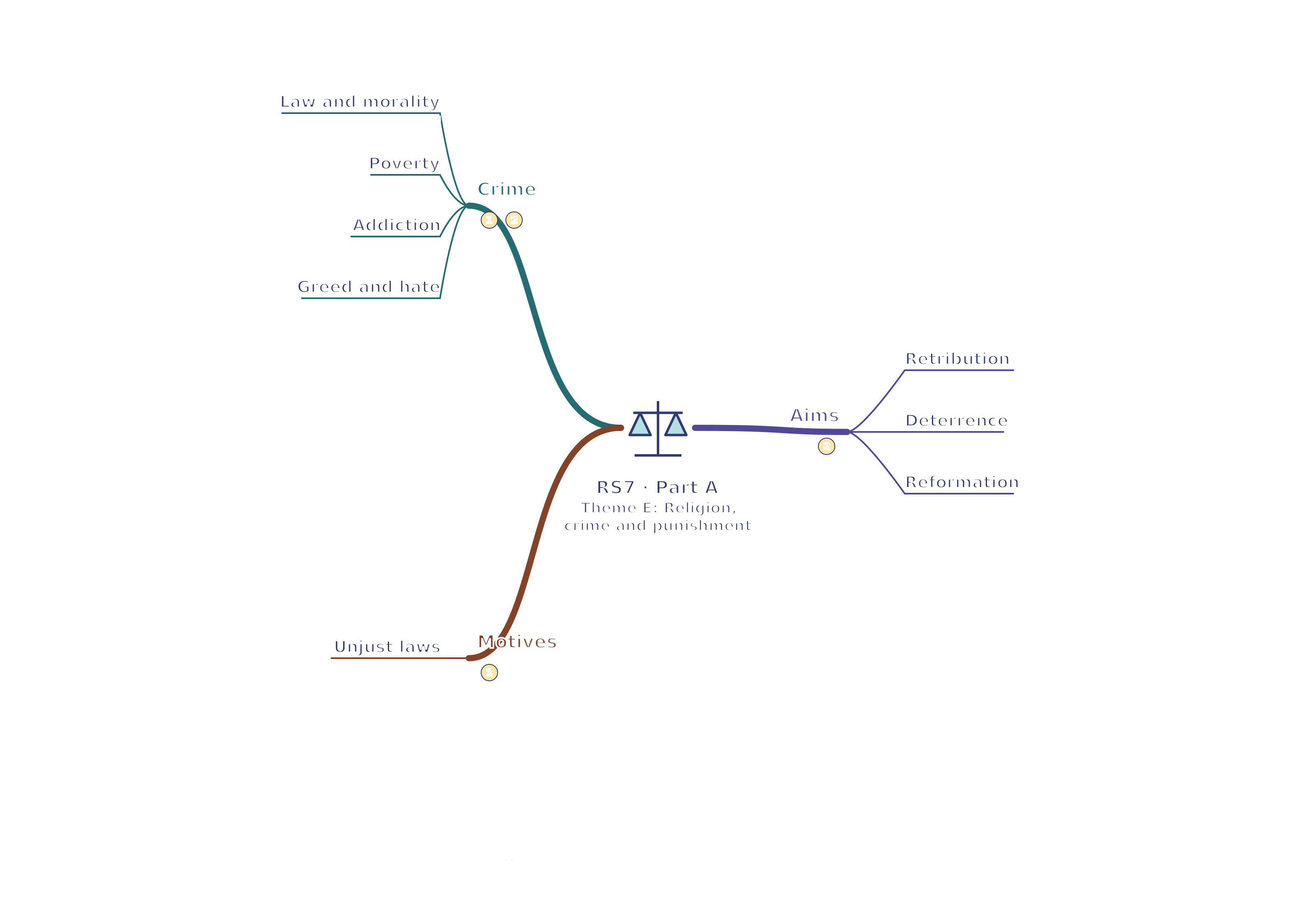
RS7 · Part A
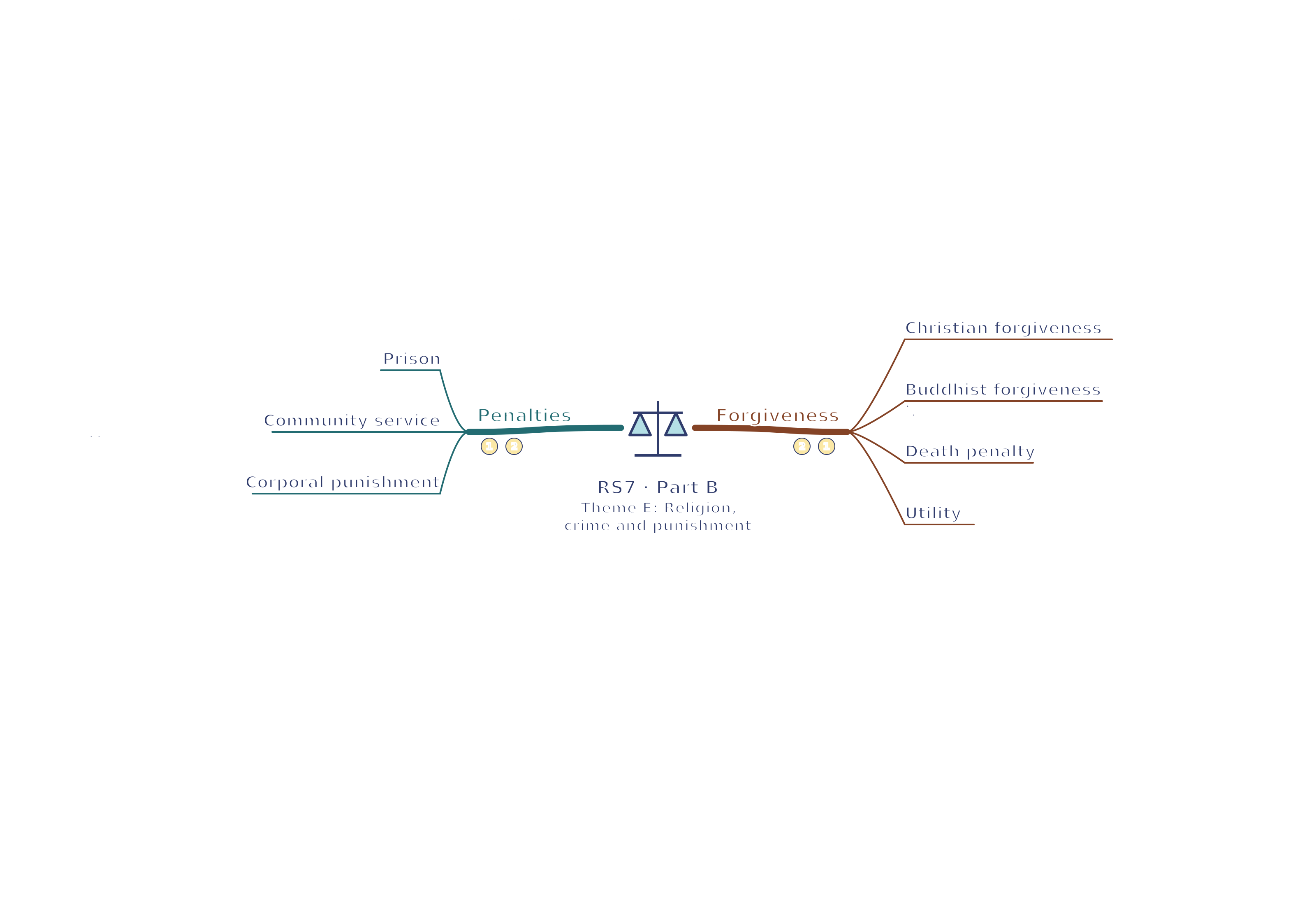
View RS7 · Part A mind mapOpen the full-size map to zoom. Download the PDF to print on A4 or enlarge to A3.
 Mr Kidman's Classroom