Read the notes, recall their sources and practise explaining contrasting views. The 30 quick questions support revision; also practise extended explanations and justified evaluations.
Revise the key ideas
Rights and equality
Human rights are basic protections and freedoms held by people because they are human. They include dignity, security and freedom of belief; they bring responsibilities to respect others' rights. Social justice concerns fairness in institutions and opportunities, not merely private kindness. Christians may ground dignity in God's image, Buddhists in shared vulnerability and compassion, and humanists in shared humanity.
Human rights concern protections and freedoms held because someone is human, not because they belong to a favoured group. Responsibilities include respecting others' rights when exercising one's own.
Social justice concerns fair treatment and access to opportunities as well as individual generosity. An unequal starting position can require changes to systems, not only equal words.
Prejudice is a judgement made without fair consideration; discrimination is unfair treatment based on identity or perceived membership of a group. A person can hold prejudice without acting on it, but stereotypes can encourage discriminatory behaviour. Equality concerns equal worth and fair treatment, not necessarily identical provision; reasonable adjustments can help people access opportunities on a fair basis.
Prejudice is an unsupported judgement about a group; discrimination is unfair treatment based on identity. A stereotype can remain prejudice even before it becomes an action.
Christian belief in creation in God's image and Buddhist compassion can motivate opposition. Religious communities can also be criticised when their practices fail to live up to these ideals.
Racial prejudice judges people through stereotypes about race or ethnicity; racial discrimination acts unfairly on those judgements. Christians may refer to the Good Samaritan (Luke 10) or Galatians 3:28's challenge to divisions. Buddhist metta extends goodwill beyond one's own group. Religious communities can challenge racism while recognising that followers themselves may fail to live up to their teachings.
Racism judges or treats people unfairly because of racial identity. It can occur in personal insults, exclusion from employment or institutions that disadvantage groups.
Acts 10:34–35 portrays God as showing no favouritism, supporting Christian challenges to racial exclusion. Buddhist metta extends goodwill beyond a favoured in-group.
Positive discrimination gives preference to a disadvantaged group, raising debates about remedying historic injustice versus individual fairness. Positive action can mean targeted support, outreach or training to remove barriers without automatically awarding positions. The two terms should not be treated as identical. Evaluation asks whether a policy is proportionate, improves fair opportunity and avoids new unjust exclusions.
Positive action can address barriers, for example through outreach or accessible training. Preferential treatment raises a further debate about whether different treatment is needed to achieve fairness.
An equality argument stresses consistent treatment; a justice argument may stress correcting entrenched disadvantage. Explain the circumstances rather than assuming either argument settles every case.
Religion and inclusion
Freedom of religion and belief includes practising a faith, changing belief or holding no religion. Expression can include worship, religious clothing and teaching. It is not an unlimited licence to coerce or harm others; restrictions need careful justification. Christians and Buddhists may defend freedom from respect and compassion, while humanists defend conscience and equal rights. Britain includes diverse religious and non-religious communities.
Freedom of religion includes practising a faith, changing beliefs and holding no religious belief. Freedom of expression can include dress, worship and communicating beliefs.
Christian mission and Buddhist teaching can be practised with respect for others' freedom. Expression that coerces, threatens or denies others protection raises different ethical issues from respectful persuasion.
A careful evaluation balances expression and the rights of others. Disagreement with a belief does not itself establish that its peaceful practice should be suppressed.
Christians differ about women's roles in religious leadership. Some churches ordain women, arguing gifts and spiritual equality support inclusion; Catholic and Orthodox churches reserve priestly ordination to men, appealing to tradition and their understanding of Jesus' ministry. Galatians 3:28 supports equality in Christ but is interpreted differently regarding offices. Distinguish equal human worth from disputes over religious roles.
Galatians 3:28 can support equal dignity in Christ. Christians differ over whether equality requires identical roles in leadership or allows distinct responsibilities.
The Catholic Church reserves priestly ordination to men, while many Protestant churches ordain women. Distinguish equal human worth from the disputed question of access to a particular religious office.
Buddhist women and men are regarded as capable of spiritual progress, yet opportunities for full ordination differ between traditions and places. Some communities have restored or developed full ordination for women; others dispute lineage requirements. Mahayana teachings about awakening and Buddhist compassion can support inclusion. Historical inequalities should be acknowledged rather than assuming doctrine automatically makes every institution equal.
Buddhist women can practise ethics, meditation and wisdom and pursue liberation. Buddha-nature teachings can support arguments for equal spiritual potential.
Opportunities for full monastic ordination differ among traditions and communities. A comparison should recognise both barriers and efforts to expand participation rather than claim one universal arrangement.
Christian churches differ over same-sex relationships: some affirm same-sex marriage or partnerships, while others uphold marriage as male–female and distinguish orientation from permitted sexual conduct. Sources, tradition and the command to love are interpreted differently. Buddhists often assess relationships through non-harm, commitment and avoidance of misconduct, with cultural differences. Explain views respectfully and distinguish teaching from discriminatory treatment.
Christian views on same-sex relationships differ over the interpretation of scripture, sexual ethics and church marriage. Some affirm committed same-sex relationships; others distinguish respect for people from approval of particular conduct.
Buddhist discussion can focus on avoiding sexual harm, coercion and exploitation, while local cultures and teachers differ. Neither tradition should be described as entirely uniform.
An answer about treatment should distinguish doctrinal disagreement from abuse or unfair exclusion. Equal dignity and freedom of belief both require consideration.
Wealth and poverty
Wealth can provide security and resources for service; attachment or greed can distort priorities. Matthew 6:24 warns against serving both God and wealth, while the rich man account in Mark 10 challenges attachment. Buddhists identify greed as a poison and value generosity without requiring every layperson to give away all possessions. The issue includes how wealth is gained and used, not simply owning money.
Matthew 6:24 warns against making wealth a rival master. This can challenge accumulation as life's highest purpose without proving that all ownership is forbidden.
Buddhist right livelihood and generosity examine how resources are obtained and used. Supporting family and sharing with others can be compatible with lay life, while greed increases attachment.
Absolute poverty means lacking basic necessities; relative poverty means living with substantially fewer resources than the usual standard in a society. Causes may include low wages, unemployment, illness, conflict, inequality or limited education. Avoid blaming everyone in poverty for poor choices. Personal effort matters, but fair opportunities and support are also needed to overcome structural barriers.
Absolute poverty concerns unmet basic needs; relative poverty concerns disadvantage compared with a society's usual living standards. Both can restrict participation and dignity.
Low pay, illness, unemployment, war and exclusion can interact. Explaining causes helps select responses: food relief meets hunger, while fair employment and education may address longer-term insecurity.
People with wealth may have duties to pay fairly, contribute through taxes and support relief or development. The parable of the sheep and goats in Matthew 25 connects care for vulnerable people with service to Christ. Buddhist dana is generosity, supported by compassion and the first perfection. These teachings can motivate help without requiring a recipient to share the donor's religion.
Matthew 25 links care for hungry, sick and imprisoned people with serving Christ. A wealthy person may therefore have responsibilities beyond optional gifts that bring personal recognition.
Dana can involve money, time, skills or care. Giving without expecting prestige challenges attachment and connects resources with compassion.
Exploitation and charity
Fair pay recognises the work and needs of workers rather than taking advantage of desperation. Exploitation can involve unsafe conditions, very low wages or coercion. James 5:4 criticises withholding workers' wages; Buddhist right livelihood discourages harmful or dishonest work. Buying responsibly and supporting ethical employers can help, though supply chains and affordability create practical difficulties.
James 5:4 condemns withholding wages, providing a source for fair treatment of workers. An agreed contract does not remove moral questions where desperate workers face coercion or dangerous conditions.
Right livelihood gives a Buddhist reason to avoid earning through harm or deception. Consumers and employers can both consider the effects of economic choices.
Excessive interest can trap a borrower in debt when repayments grow beyond realistic ability to pay. Ethical objections focus on profiting from vulnerability and denying a route out of poverty. People-trafficking involves recruitment or movement through coercion or deception for exploitation; it is not the same as all migration. Responses include fair lending, protection for victims and challenging coercive employment.
Excessive interest can compound debt beyond repayment, transferring resources from someone already vulnerable. Fair lending and advice can protect autonomy while helping someone recover.
Trafficking concerns exploitation through coercion or deception and can occur without crossing an international border. It must not be confused with all migration or voluntary travel.
Christian concern for dignity and Buddhist non-harming can support protection, safe assistance and challenges to those profiting from exploitation.
People in poverty may seek education, work, support and responsible budgeting where opportunities exist, but barriers such as disability, care duties and discrimination can limit choices. Religious responsibility applies to both individuals and society. Effective support can strengthen autonomy rather than create dependence; demanding self-help without addressing barriers can be unjust. Evaluate circumstances instead of assuming one explanation fits every household.
Self-help can include learning skills, seeking work or advice and managing money where choices are available. These efforts need realistic access to opportunities.
Disability, care commitments, discrimination and inadequate local employment can limit options. Support that removes a barrier can strengthen responsibility rather than replace it.
Charity can provide emergency relief and fund long-term change. Christian Aid links Christian concern with poverty and justice; Buddhist giving can support compassionate aid, and secular organisations may share these goals. Giving can be criticised if it ignores causes, lacks accountability or undermines local agency. A strong judgement considers effective partnerships, need, dignity and both immediate assistance and sustainable change.
Emergency aid and sustainable development serve different timescales and can work together. Partnership with local people can improve relevance and preserve agency.
A criticism of charity is that occasional gifts may leave exploitative structures intact; a response is that urgent needs still require care while wider reform is pursued.
Judge giving by need, effectiveness, accountability and dignity rather than the donor's publicity. Christian, Buddhist and non-religious organisations can cooperate despite different foundations for their ethical commitments.
Test yourself
30 questions · Random sets of 10. These quick checks support revision; practise longer explanations and justified judgements too.
Mind map
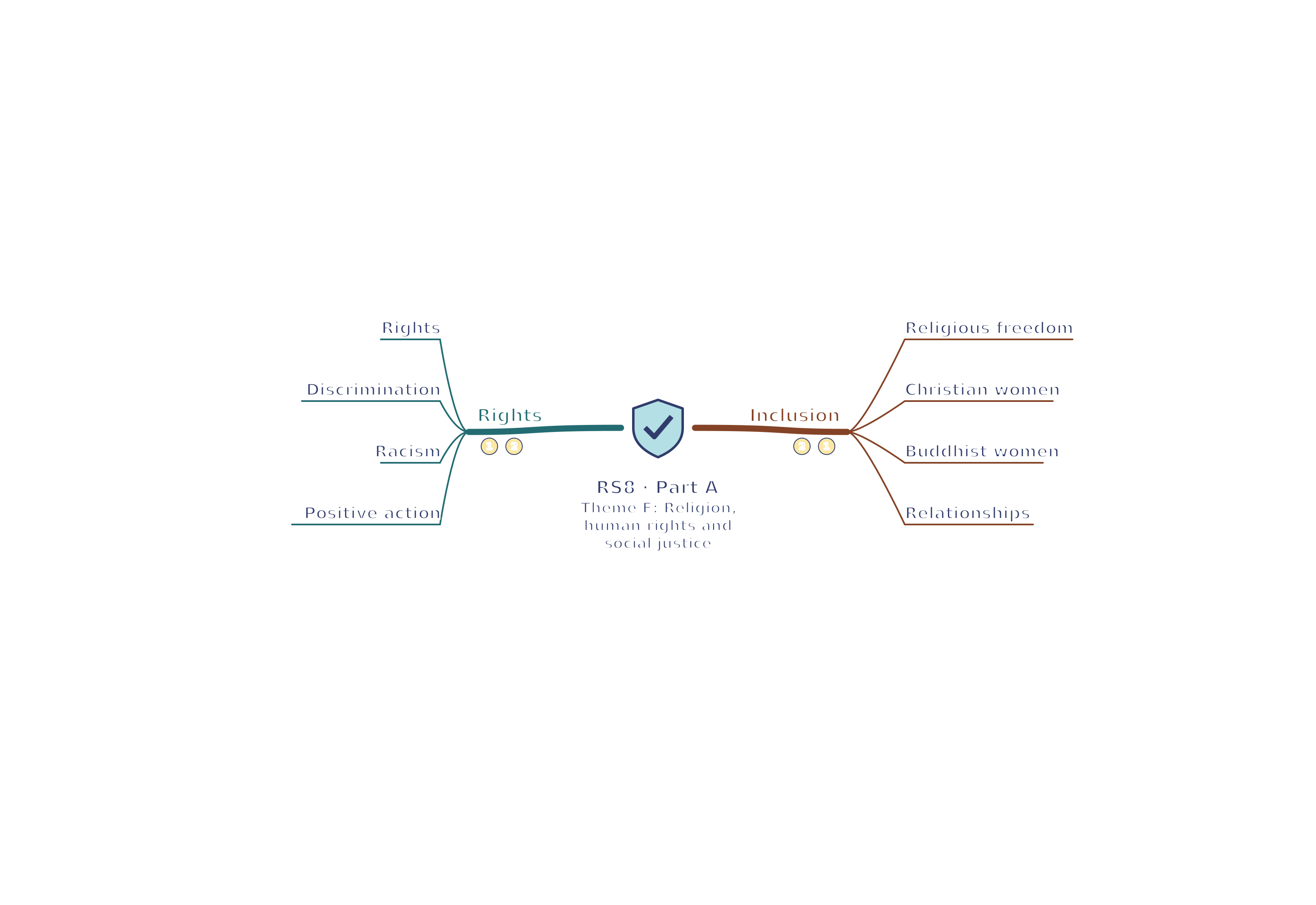
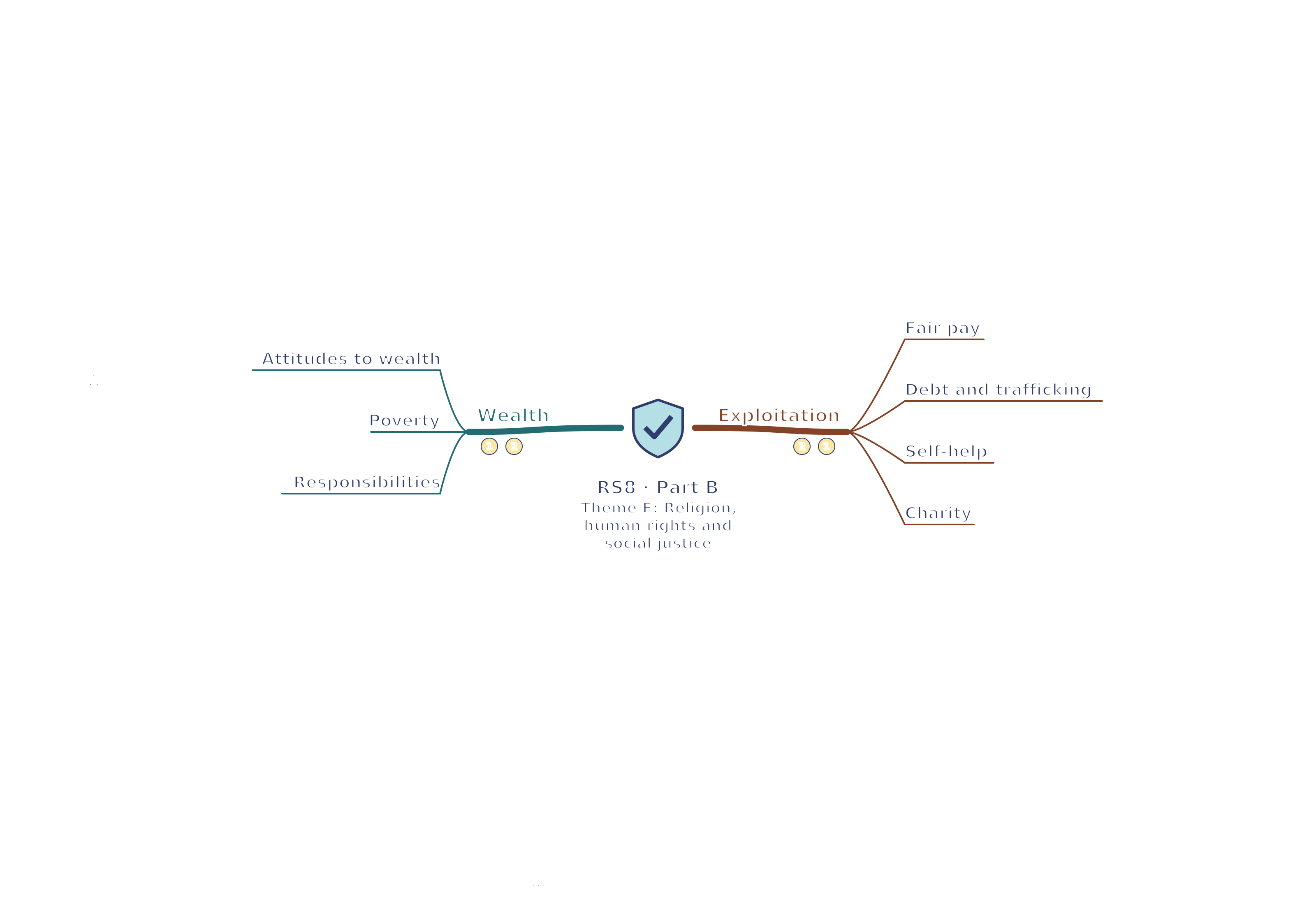
Use the branches to recall the ideas and explain their connections. Check the revision notes for the full detail.
RS8 · Part A
View RS8 · Part A mind mapOpen the full-size map to zoom. Download the PDF to print on A4 or enlarge to A3.
 Mr Kidman's Classroom