Read the notes, recall their sources and practise explaining contrasting views. The 30 quick questions support revision; also practise extended explanations and justified evaluations.
Revise the key ideas
Worship and prayer
Worship expresses respect and devotion to God. Liturgical worship follows a set order, often including shared readings, responses and Eucharist. It can unite a congregation across generations and keep teaching consistent. Catholic, Orthodox and many Anglican services are liturgical, but practice varies within denominations; a formal order does not imply worship is insincere.
In a liturgical service, a worshipper may hear Bible readings, join set responses, confess sin and receive Communion. Shared wording can teach beliefs as well as unite participants.
A criticism is that familiar words can become mechanical; a reply is that repetition can deepen understanding. Evaluate the quality of participation rather than assuming either structure or spontaneity guarantees sincerity.
Non-liturgical worship has no fixed prescribed order and often centres on preaching, Bible reading and hymns. Informal worship may include spontaneous prayer, contemporary music and charismatic expressions. These approaches can support personal involvement and flexibility. The categories overlap: a service can contain prepared and spontaneous elements without becoming contradictory.
In a non-liturgical service, preaching can explain a Bible passage and apply it to present choices. Hymns and personal testimony can allow the congregation to respond to its meaning.
Charismatic worship may include raised hands, spontaneous prayer or speaking in tongues, understood by participants as expressions of the Spirit. These practices are not found in every informal service.
Private worship takes place outside a communal service and can include Bible study, silent reflection, prayer and music. It allows honesty and attention without an audience. Communal worship offers support and shared teaching, so many Christians value both. The Bible provides accounts of Jesus, moral teaching and words used in public and personal prayer.
Matthew 6:6 encourages prayer without public display. Christians may use this to explain why private devotion matters even when nobody else sees it.
Regular private Bible reading can shape decisions between services, while communal worship supplies teaching and support. Their strengths can complement each other rather than being mutually exclusive.
Prayer is communication with God through praise, confession, thanksgiving and requests. Set prayers connect Christians with a wider tradition; informal prayer uses the person's own words for a situation. Some value the discipline of set wording; others prioritise spontaneity. Prayer may offer comfort and moral direction without being a guarantee that every request is granted.
Petition asks for one's own needs; intercession asks on behalf of others. Praise recognises God's nature, thanksgiving expresses gratitude, and confession acknowledges wrongdoing.
A Christian praying for peace might also volunteer to support refugees. This illustrates prayer guiding action rather than replacing responsibility for practical help.
The Lord's Prayer is attributed to Jesus and appears in Matthew 6 and Luke 11. It honours God, asks for daily needs and forgiveness, and connects receiving forgiveness with forgiving others. It can be used in services and private prayer. Its concern for daily bread can also encourage practical care for people whose basic needs are unmet.
Addressing God as Father expresses relationship and trust; honouring God's name expresses reverence. Asking for God's kingdom and will links prayer with trying to live according to divine priorities.
Daily bread concerns dependence on God for ordinary needs. Asking for forgiveness alongside forgiving others connects worship with repairing relationships.
Requests about temptation and deliverance from evil can encourage moral vigilance and reliance on God. Different Christian traditions use slightly different wording without abandoning these central themes.
Sacraments
A sacrament is an outward sign associated with inward grace. Catholic and Orthodox Christians recognise seven sacraments; many Protestants recognise baptism and Communion, while some communities do not practise sacramental rites. Sacraments can mark belonging, commitment and God's action. Differences concern what a rite does, not simply how elaborate it looks.
Many Protestant churches give particular importance to baptism and Eucharist because of their connection with Jesus. Catholics also recognise confirmation, reconciliation, anointing of the sick, marriage and holy orders.
Quakers and the Salvation Army generally do not practise baptism and Communion as sacramental rites. They can emphasise inward faith and service without claiming that outward ceremonies are necessary channels of grace.
Baptism uses water and Trinitarian words to mark entry into Christian life. Water symbolises cleansing from sin and a new beginning, linked with Jesus' baptism and death and resurrection. Methods include pouring water and immersion. Christians disagree about whether baptism is necessary for salvation and whether infants or only professing believers should receive it.
Matthew 28:19 links baptism with making disciples and the Father, Son and Holy Spirit. Romans 6 connects baptism with Christ's death and new life, helping explain immersion symbolism.
A baptism may include a candle symbolising Christ's light and a declaration of faith. Customs vary, so explain the meaning of a feature rather than assuming every ceremony includes it.
Infant baptism welcomes a baby into the Church; parents and godparents promise to nurture faith. Catholics connect baptism with removal of original sin. Believers' baptism follows a personal profession of faith, often with full immersion. Baptists argue commitment should be a conscious choice. Supporters of infant baptism emphasise God's initiative and the community's responsibility for the child.
In infant baptism, promises by parents and godparents emphasise the community's responsibility to nurture faith before the child can make an informed profession.
In believers' baptism, testimony and immersion can express a conscious turning towards Christ. Baptists may argue that a rite should follow belief; supporters of infant baptism may answer that God's grace comes before mature understanding.
Holy Communion or Eucharist recalls Jesus' Last Supper using bread and wine. Catholics teach transubstantiation: the substance becomes Christ's body and blood while appearances remain. Orthodox Christians affirm Christ's real presence as a mystery; many Protestants understand the meal as remembrance or spiritual participation. These distinctions influence reverence, preparation and how often Communion is celebrated.
Luke 22:19–20 links bread and wine with Jesus' body and blood and the instruction to remember him. Communion can express gratitude for sacrifice and unity among participants.
At a Catholic Mass, the Eucharist is central and the consecrated elements receive particular reverence. Many Protestant services place greater emphasis on shared remembrance, though Protestant understandings also vary.
Do not equate symbolic remembrance with an empty or meaningless ceremony. A symbol can shape commitment, memory and community even where a change of substance is rejected.
Pilgrimage and festivals
Pilgrimage is a journey to a place of religious importance for spiritual growth, prayer or community. Lourdes in France is linked to Bernadette's reported visions of Mary and includes care for sick pilgrims and prayer for healing. Iona in Scotland is associated with early Celtic Christianity, quiet reflection and an ecumenical community. Christians may value local service as much as travelling.
At Lourdes, pilgrims may join processions, pray at the grotto and assist people who are ill or disabled. The experience can offer support and spiritual healing without guaranteeing a physical cure.
At Iona, retreat, shared worship and reflection can renew faith and commitment to peace or justice. Some Christians question costly travel when local worship and service are available; others see renewed commitment as a lasting benefit.
Christmas celebrates the incarnation and birth of Jesus, with church services, Nativity representations and generosity. Easter commemorates the crucifixion and resurrection through Holy Week and Easter worship. For Christians in Britain, festivals can sustain faith and family identity amid secular celebrations. Giving and hospitality can express their meaning; consumer spending alone does not define religious significance.
Christmas practices may include a Nativity service, carols and support for people alone or in need. These can express incarnation as God's closeness to vulnerable human life.
Good Friday recalls crucifixion, while Easter Sunday celebrates resurrection. Holy Week worship can connect sorrow, sacrifice and hope rather than treating Easter only as a seasonal holiday.
Festivals in Britain can bring together religious and secular participation. Compare shared customs with the specific Christian beliefs that give the celebrations religious meaning.
Church and society
The local Church includes both people and buildings and supports the wider community. Food banks provide essential supplies, while street pastors offer practical care and a listening presence at night. These actions can reflect love of neighbour and Matthew 25's association between serving vulnerable people and serving Christ. Help should not depend on a recipient converting.
Food banks can supply urgent essentials while also signposting advice and support. Love of neighbour provides a reason to help according to need, including people with different beliefs.
Street pastors are trained volunteers offering practical help and a listening presence at night. Explain this as community care rather than claiming they replace police or medical services.
Mission is carrying out the Church's work in the world; evangelism specifically communicates the Christian message to invite faith. Church growth may involve outreach, new congregations and personal witness. Some emphasise spoken proclamation, others service and relationships, and many combine them. Respectful evangelism recognises freedom of belief rather than coercing vulnerable people.
Matthew 28:19–20 commissions followers to make disciples and teach. This supports evangelism and Church growth through preaching, outreach and personal example.
Some Christians emphasise personal conversion; others emphasise making the Gospel visible through service. Mission can combine both, but aid offered to vulnerable people should not become a means of coercion.
The worldwide Church can seek reconciliation across conflict, help persecuted Christians and defend religious freedom for everyone. Reconciliation rebuilds damaged relationships and differs from forgetting harm. Support may include prayer, advocacy and material aid. Forgiveness does not require denying victims' suffering; work for peace can involve truth, justice and protection as well as dialogue.
Reconciliation aims to rebuild relationships after harm; forgiveness concerns a response to wrongdoing. Dialogue, acknowledgment of victims and changes that prevent renewed harm can help reconciliation become credible.
Persecution can include violence, exclusion or restrictions on worship because of faith. Christians may respond with practical aid, advocacy, prayer and support for freedom of belief.
The example of forgiving enemies can encourage Christians to resist cycles of retaliation. Protecting victims and pursuing fair accountability can remain part of that response.
Christian Aid is a Christian development charity working with partners to address poverty, emergencies and injustice, helping people according to need rather than religion. Its work links immediate aid with longer-term change and campaigning. Religious motivation can inspire service; non-religious charities can share these aims. In explanations, connect the organisation's actions with Christian teaching rather than merely naming it.
Emergency relief meets immediate needs after a crisis; development aims to improve livelihoods and resilience over time. Christian Aid works with local partners, so communities can contribute knowledge about their own needs.
The Good Samaritan in Luke 10:25–37 portrays care crossing a social boundary. This supports assistance based on need rather than restricting help to members of the donor's religion.
Test yourself
30 questions · Random sets of 10. These quick checks support revision; practise longer explanations and justified judgements too.
Mind map
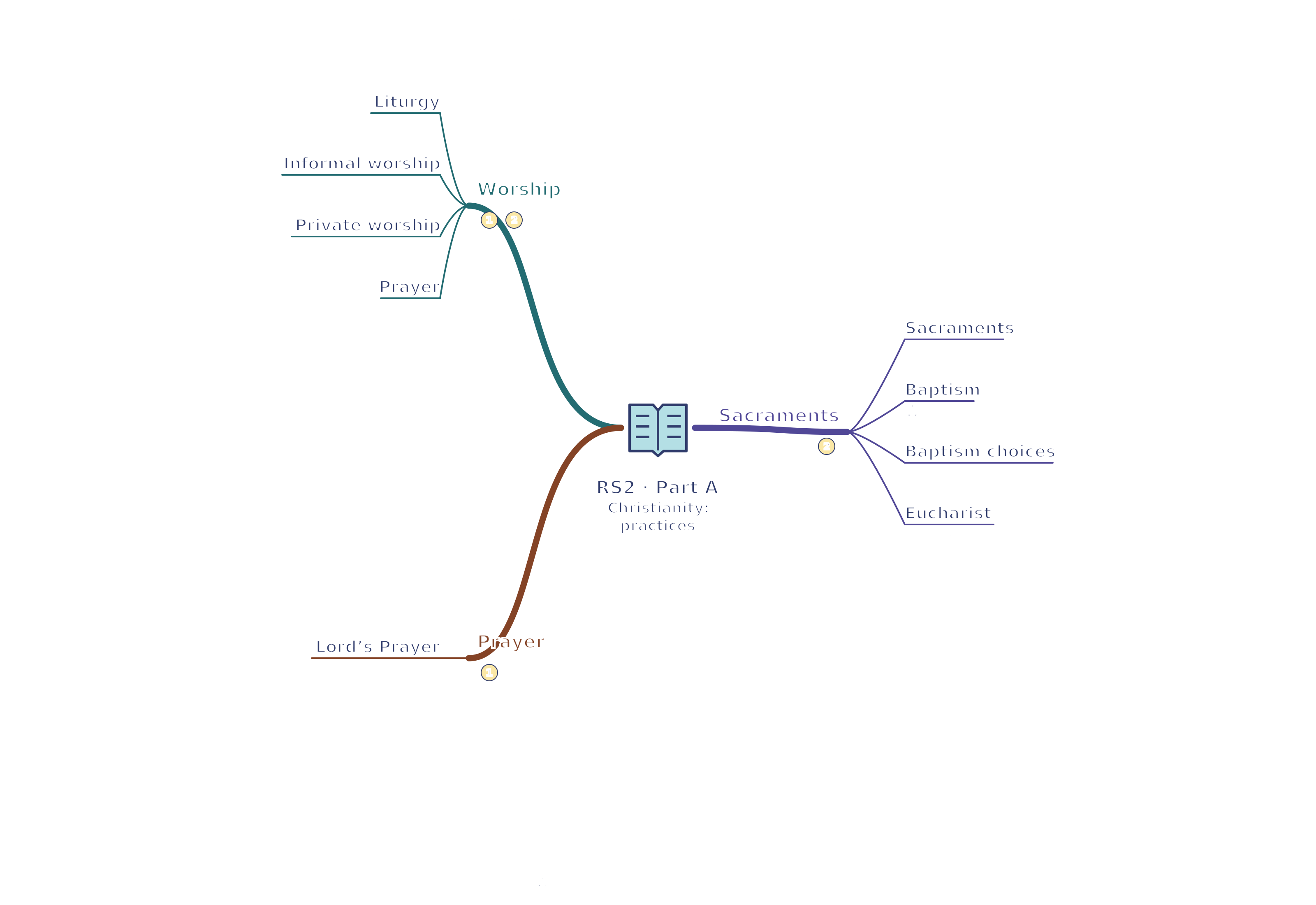
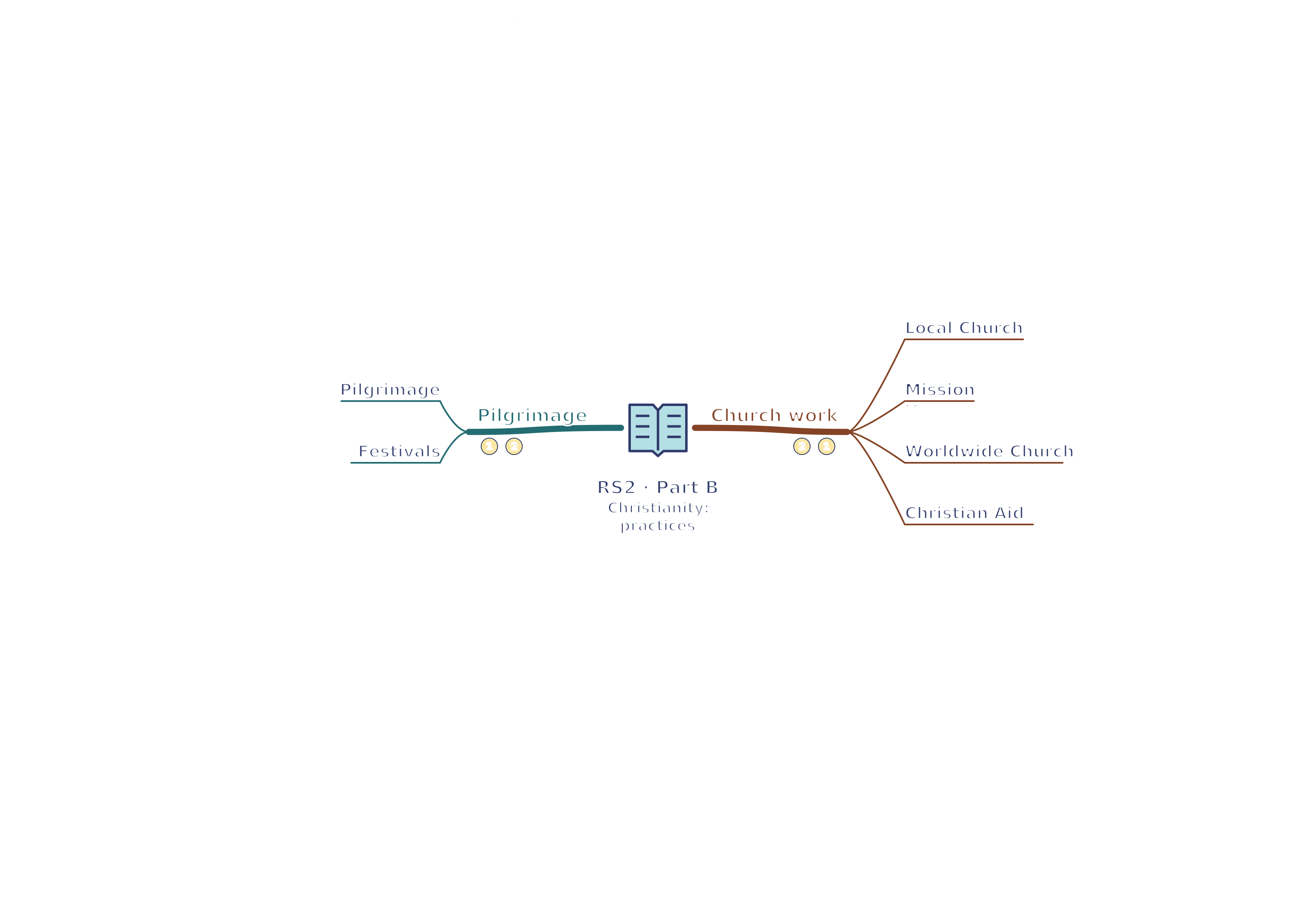
Use the branches to recall the ideas and explain their connections. Check the revision notes for the full detail.
RS2 · Part A
View RS2 · Part A mind mapOpen the full-size map to zoom. Download the PDF to print on A4 or enlarge to A3.
 Mr Kidman's Classroom