Read the notes, recall their sources and practise explaining contrasting views. The 30 quick questions support revision; also practise extended explanations and justified evaluations.
Revise the key ideas
God and creation
Christians believe in one God who is omnipotent (all-powerful), loving and just. Justice means judging fairly; love is shown in forgiveness and care. Evil raises a challenge: why does a powerful, loving God permit suffering? Christians respond in different ways, including free will, spiritual growth and the limits of human understanding.
Omnipotence means God has power over creation; it does not mean Christians expect God to grant every request. A loving God can be trusted and addressed in prayer, while a just God gives moral choices lasting importance.
The problem of suffering brings these attributes into tension: if God both wants and can prevent suffering, why does it occur? Distinguish suffering caused by human wrongdoing from suffering caused by disease or natural events before evaluating a response.
The Trinity is one God understood as Father, Son and Holy Spirit, not three separate gods. The Father creates and sustains; the Son is God revealed in Jesus; the Spirit is God's active presence. These persons are distinct without dividing God. Trinitarian baptism and prayer express this belief in daily worship.
At Jesus' baptism in Matthew 3:13–17, the Son is baptised, the Spirit descends and the Father's voice is heard. Christians use this account to support belief in the Trinity; explain the roles rather than treating it as three competing divine beings.
Prayer to the Father through the Son and in the Spirit expresses unity and distinction. The Trinity is a belief about God's nature, not three stages in which one person replaces another.
Genesis 1 presents God bringing order and life into being, with the Spirit present. John 1:1–3 connects creation with the Word, understood by Christians as the Son. Some Christians read Genesis as a literal sequence; others read it as theological teaching about purpose and dependence on God. Many accept scientific accounts while believing God is the ultimate creator.
Genesis 1:1–3 presents God as the source of creation and describes God's Spirit present over the waters. Creation by God's command suggests authority and intentional order rather than a world independent of God.
John 1:1–3 identifies the Word with God and describes creation through the Word. Christians connect the Word with Jesus, so the Son's role is not limited to his earthly birth.
A literal reading treats the sequence of creation as historical description; a non-literal reading can treat the days as conveying theological meaning. Both can support gratitude and responsibility for a world believed to come from God.
Jesus and salvation
Incarnation means God becoming human in Jesus. Christians believe Jesus is both divine and human, the Son of God, rather than merely an unusually good teacher. The birth narratives express God's closeness to humanity. This belief gives Jesus' teaching authority and supports the view that God understands human experience and suffering.
John 1:14 presents the Word becoming human. This supports incarnation by linking Jesus' human life with the divine Word already described as involved in creation.
The virgin birth narratives in Matthew 1 and Luke 1 are important scriptural foundations for Christian belief in Jesus' divine identity. Incarnation concerns his whole human life, not only the circumstances of his birth.
The crucifixion is Jesus' execution on a cross. Christians understand his suffering and death as central to salvation, showing sacrificial love and overcoming sin. Luke 23 portrays forgiveness towards his executioners; this can inspire Christians to forgive. The event does not mean Christians must ignore injustice or refuse protection for victims.
Jesus' death can be understood as obedience and self-giving rather than proof that God abandoned humanity. A Christian may respond by accepting personal costs when caring for others.
Luke 23:34 portrays Jesus asking forgiveness for his executioners. This can support forgiveness of enemies while leaving room for safeguarding, accountability and protection of victims.
Resurrection means Jesus being raised from death, distinct from resuscitation or reincarnation. Christians see it as evidence of victory over death, confirmation of Jesus' identity and hope for life beyond death. The Gospel accounts describe an empty tomb and encounters with the risen Jesus. Belief can encourage courage, worship and hope during bereavement.
In 1 Corinthians 15, Paul links the resurrection of Christ with Christian hope of resurrection. If Christ is raised, death and sin are not understood as having ultimate victory.
Some Christians read resurrection accounts as descriptions of a bodily event; some emphasise their spiritual meaning. When comparing views, explain what each believes the accounts establish about Jesus and Christian hope.
Ascension means Jesus returning to the Father after the resurrection. Acts 1 presents the risen Jesus commissioning his followers and promising the Holy Spirit before his departure. Christians associate it with Christ's authority and continuing presence through the Spirit. It differs from resurrection: one concerns rising from death, the other returning to heaven.
Acts 1:6–11 places the ascension after encounters with the risen Jesus. His followers receive a mission and a promise of the Spirit, so departure does not mean the end of their responsibility.
Belief that Christ has authority with the Father can encourage prayer and mission. Christians may understand his continuing presence through the Spirit rather than through an ordinary earthly body.
Sin is thought or action that separates a person from God's will. Original sin refers to the fallen human condition associated with Adam and Eve; Christians differ about inherited guilt and how literally to read the story. It is not the claim that every newborn has committed a personal crime. Awareness of sin can lead to confession, repentance and seeking forgiveness.
Genesis 3 describes disobedience to God and its consequences. Literal and symbolic readings differ, but both can be used to explain why humans need restoration and why wrongdoing is more than breaking a social rule.
Repentance includes an intention to change conduct. Saying sorry while planning the same harm again does not express the same moral response as admitting responsibility and making amends.
Salvation means being rescued from sin and its consequences and restored to a relationship with God. God's law guides behaviour but Christians acknowledge human failure. Grace is God's freely given favour, not a reward someone can earn mechanically. The Holy Spirit helps believers live faithfully. Many Protestants emphasise faith; Catholics emphasise faith expressed through love, sacraments and action, all dependent on grace.
Salvation through law emphasises guidance about right conduct and awareness of sin; law alone does not remove every failure. Grace emphasises God's initiative rather than treating salvation as a payment earned by a score of good deeds.
The Holy Spirit is believed to guide and strengthen Christians to live faithfully. Service, prayer and resistance to temptation can be explained as responses to divine help.
Ephesians 2:8–10 connects salvation with grace and faith and also describes good works as part of Christian life. Different Christian emphases on faith and action should not be reduced to the claim that one tradition thinks behaviour never matters.
Atonement is the restoration of the relationship between humanity and God through Christ. Christians understand Jesus' life, death and resurrection as addressing sin; explanations include sacrifice, victory over evil and an example of love that transforms people. John 3:16 links God's love with the gift of the Son and eternal life. These explanations need not be treated as identical.
The sacrificial understanding of atonement sees Christ's death as dealing with sin. A victory understanding emphasises overcoming evil and death; a moral-example understanding emphasises love that changes people.
John 3:16 connects God's love, the giving of the Son, belief and eternal life. An explanation should show why this supports salvation rather than simply append the reference to an unrelated argument.
Life after death
Christians believe death is not the end. Resurrection may be understood as a transformed bodily life rather than a return to ordinary earthly existence. Some emphasise the soul living on; others stress the future resurrection of the whole person. Belief can influence funeral practices, moral choices and hope, but does not remove grief.
In 1 Corinthians 15, resurrection is associated with transformation: future life is not simply the present body continuing unchanged. This helps distinguish resurrection from both medical revival and rebirth into another ordinary earthly life.
Hope beyond death can motivate courage and care for mourners. It does not establish that Christians should ignore current suffering or treat earthly life as worthless.
Judgement is God's assessment of human life. Christians differ about the relationship between faith and deeds, but judgement often motivates accountability. Matthew 25:31–46 connects care for hungry, sick and imprisoned people with serving Christ. It supports practical compassion rather than simply memorising beliefs. Christians may understand judgement as occurring at death, at the end of time, or both.
The sheep and goats account in Matthew 25:31–46 describes judgement in relation to care for people in need. Feeding a hungry person can therefore be explained as serving Christ through practical action.
Judgement gives a reason for moral responsibility even when wrongdoing escapes human detection. Christians differ over the relationship between divine mercy, faith, repentance and actions.
Heaven is life in God's presence, often understood as complete peace and communion rather than simply a physical place above the clouds. Christians differ about its imagery and who is saved. The hope of heaven can comfort believers, encourage perseverance and frame life as having a purpose beyond immediate pleasure or success.
Descriptions of heaven may use images of a banquet, peace or God's presence. Explain their religious meaning before deciding whether a Christian reads them as literal geography.
Belief in eternal life with God can encourage perseverance through suffering; it can also motivate the hope that relationships and injustice will ultimately be healed.
Hell is understood as separation from God; interpretations include punishment, self-chosen separation and destruction rather than endless conscious suffering. Some Christians hope that all people will ultimately be reconciled to God. Catholic teaching also includes purgatory, purification before heaven, which is not the same as hell; many Protestants reject it. Do not present one interpretation as universal.
Eternal punishment, final destruction and separation from God are different interpretations of hell. An evaluation must identify the interpretation being challenged, particularly when discussing whether punishment is consistent with love.
Purgatory in Catholic teaching concerns purification of those destined for heaven. It is distinct from final rejection of God and is not accepted by every Christian tradition.
A strong explanation connects belief, evidence and influence: for example, resurrection gives hope, so a Christian may support a bereaved family. Use a relevant Bible passage with an explanation of its meaning, not a quotation alone. For evaluation, weigh an opposing interpretation and reach a justified judgement. Christianity includes Catholic, Orthodox and diverse Protestant traditions within a religiously diverse Britain.
To explain an influence, connect the belief to a reason and then a specific action: judgement encourages accountability, so a Christian might return money taken dishonestly even if nobody noticed.
To compare traditions, identify both a shared foundation and a difference in interpretation. Catholic, Orthodox and Protestant Christians can share belief in Jesus while differing about authority, sacraments and some accounts of salvation.
Test yourself
30 questions · Random sets of 10. These quick checks support revision; practise longer explanations and justified judgements too.
Mind map
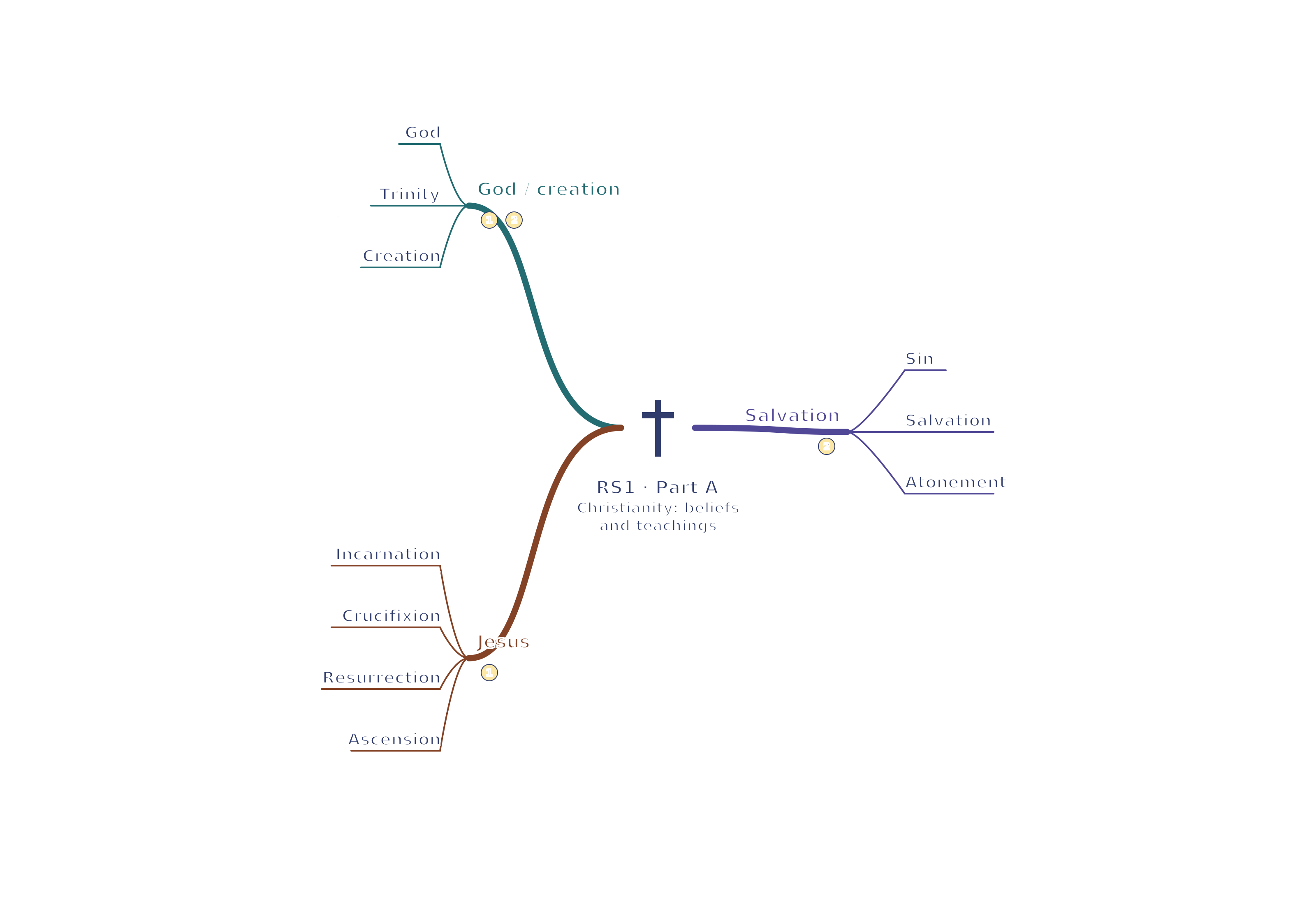
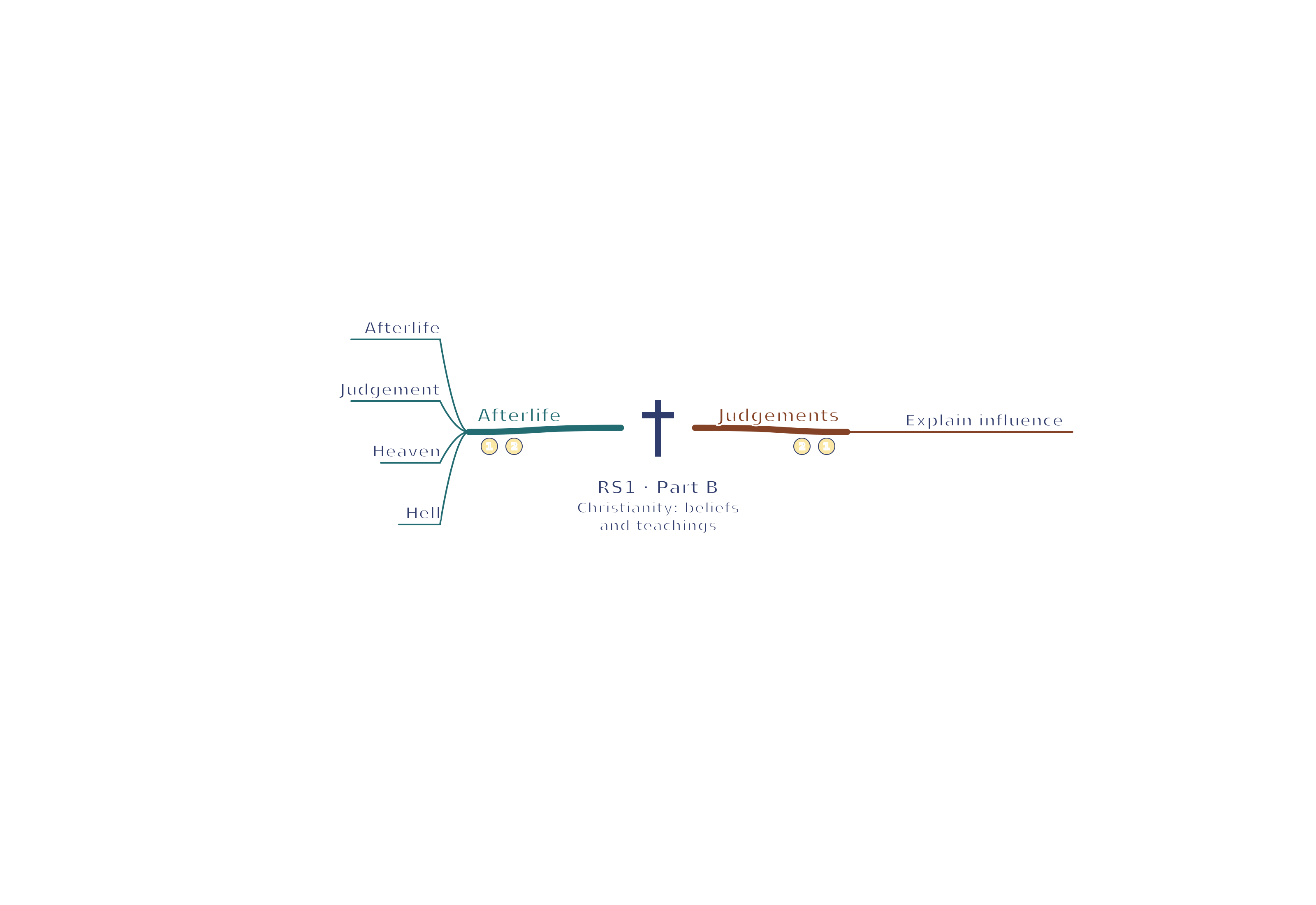
Use the branches to recall the ideas and explain their connections. Check the revision notes for the full detail.
RS1 · Part A
View RS1 · Part A mind mapOpen the full-size map to zoom. Download the PDF to print on A4 or enlarge to A3.
 Mr Kidman's Classroom